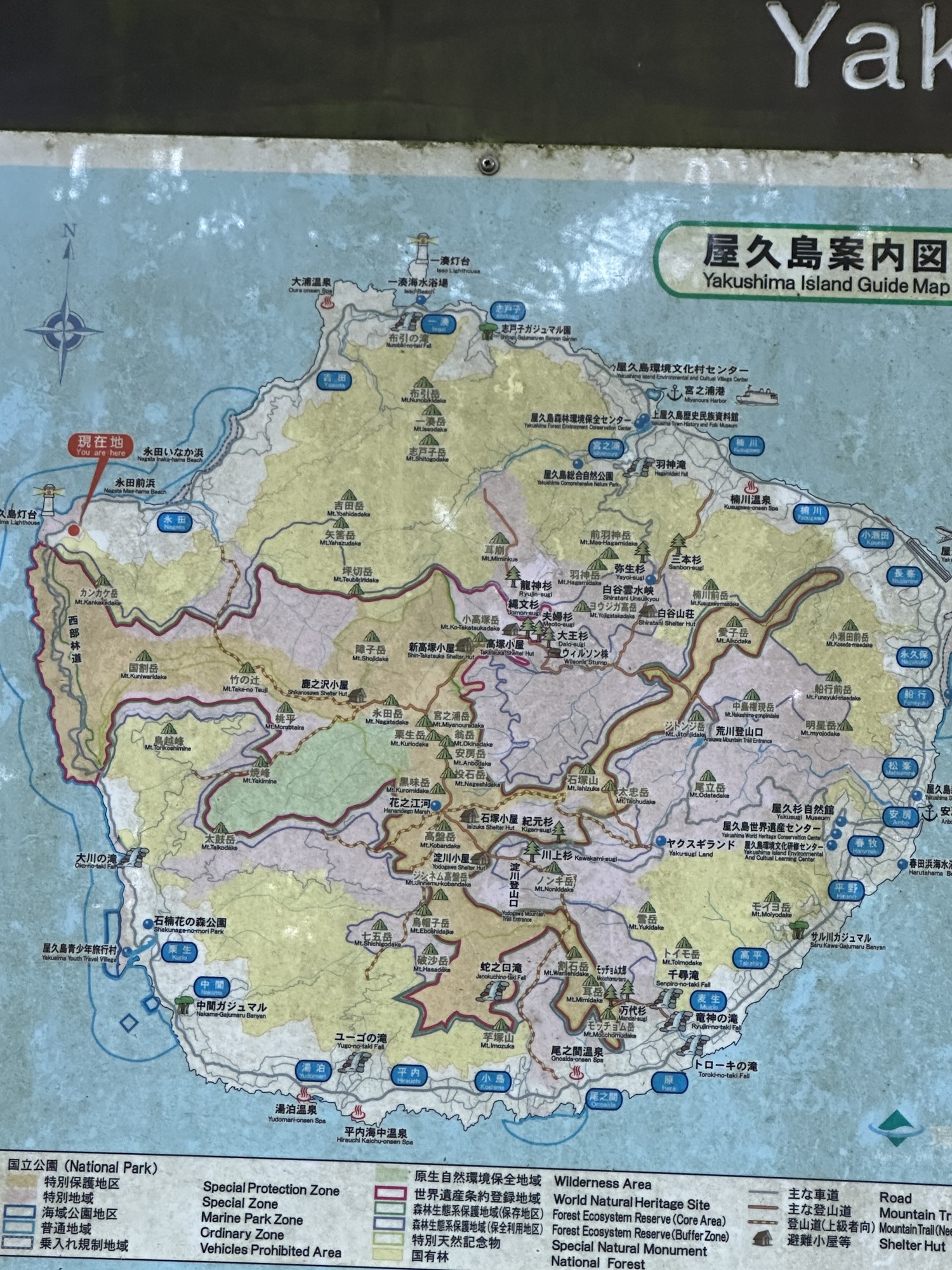
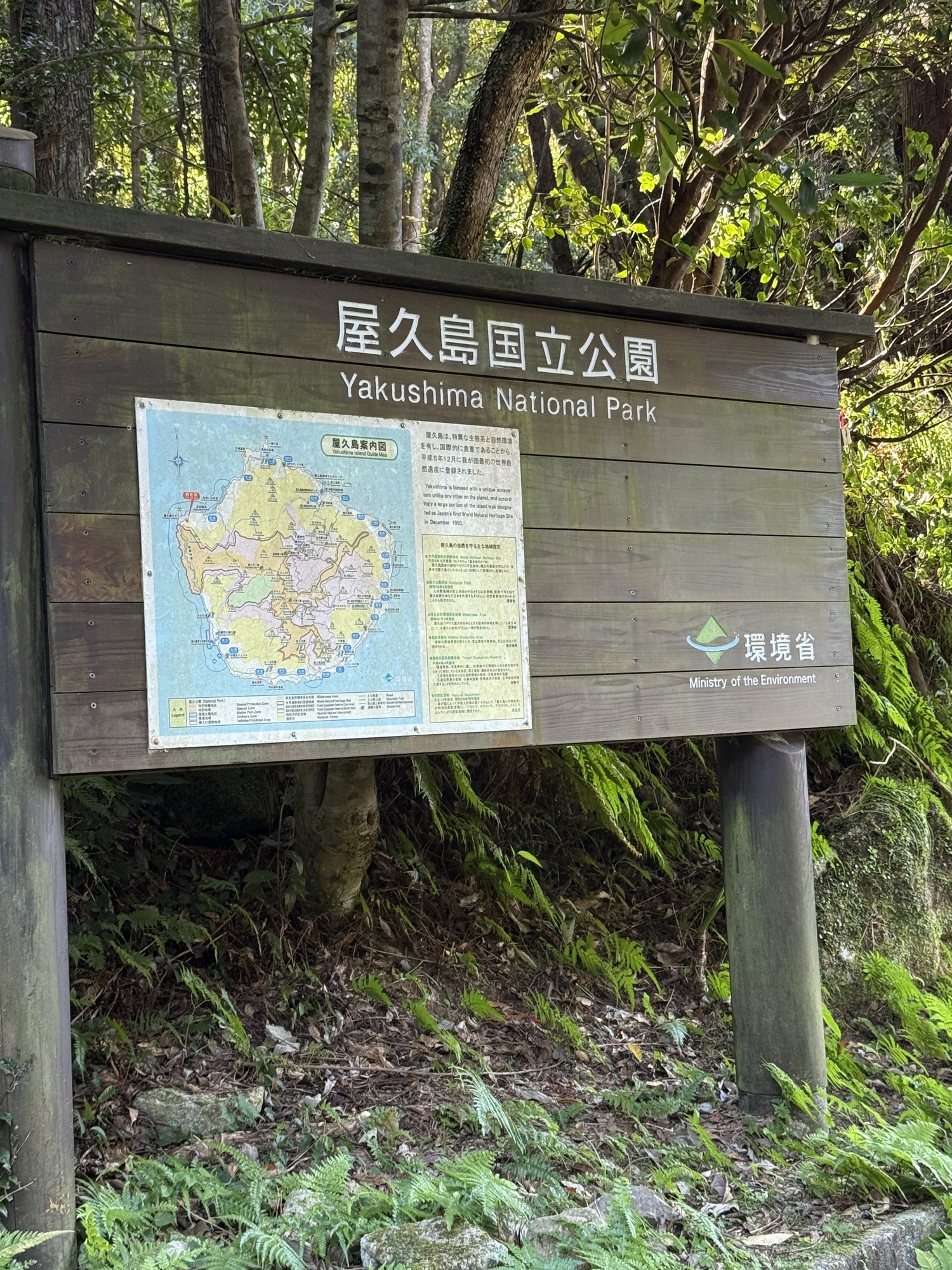
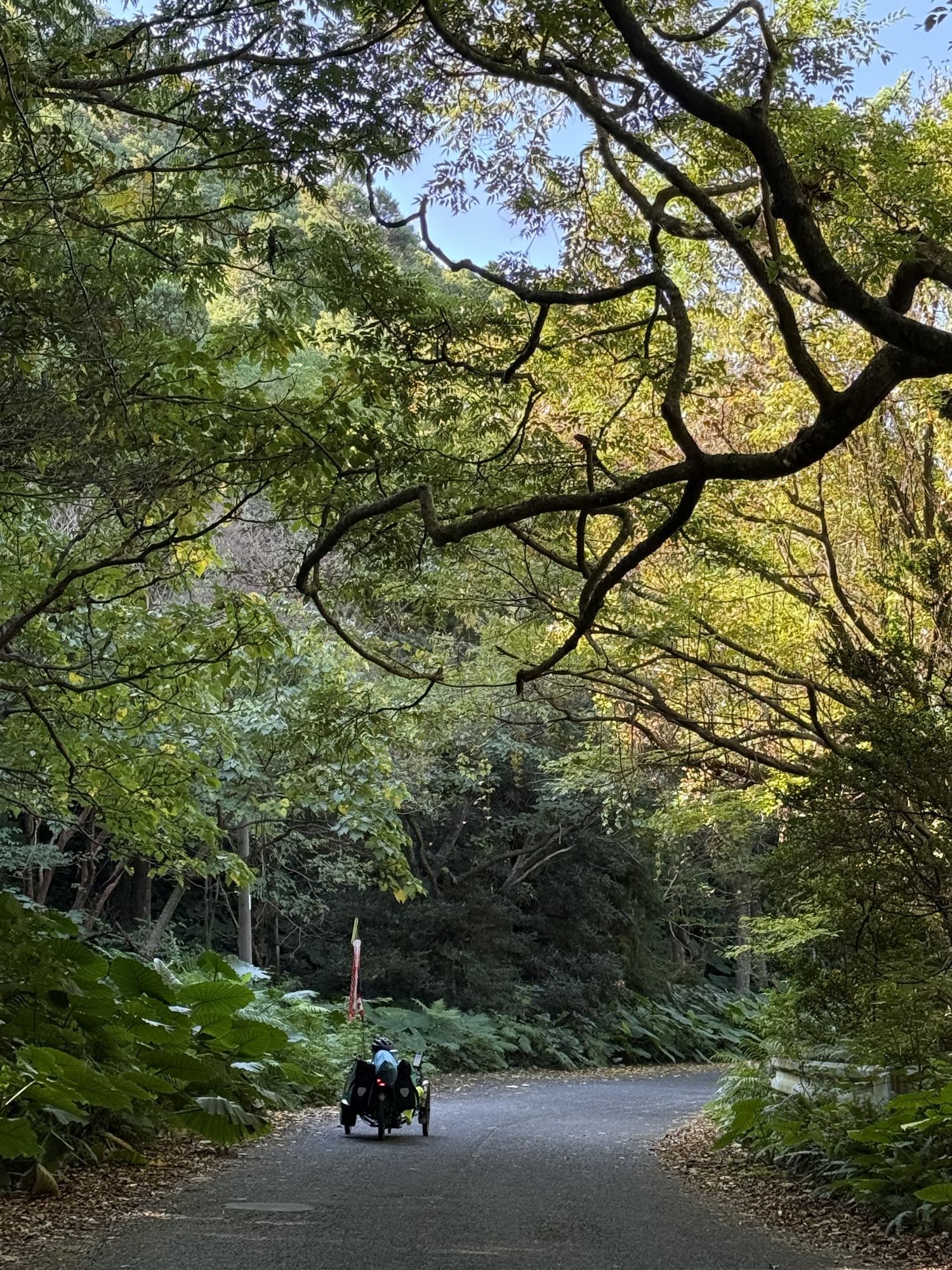
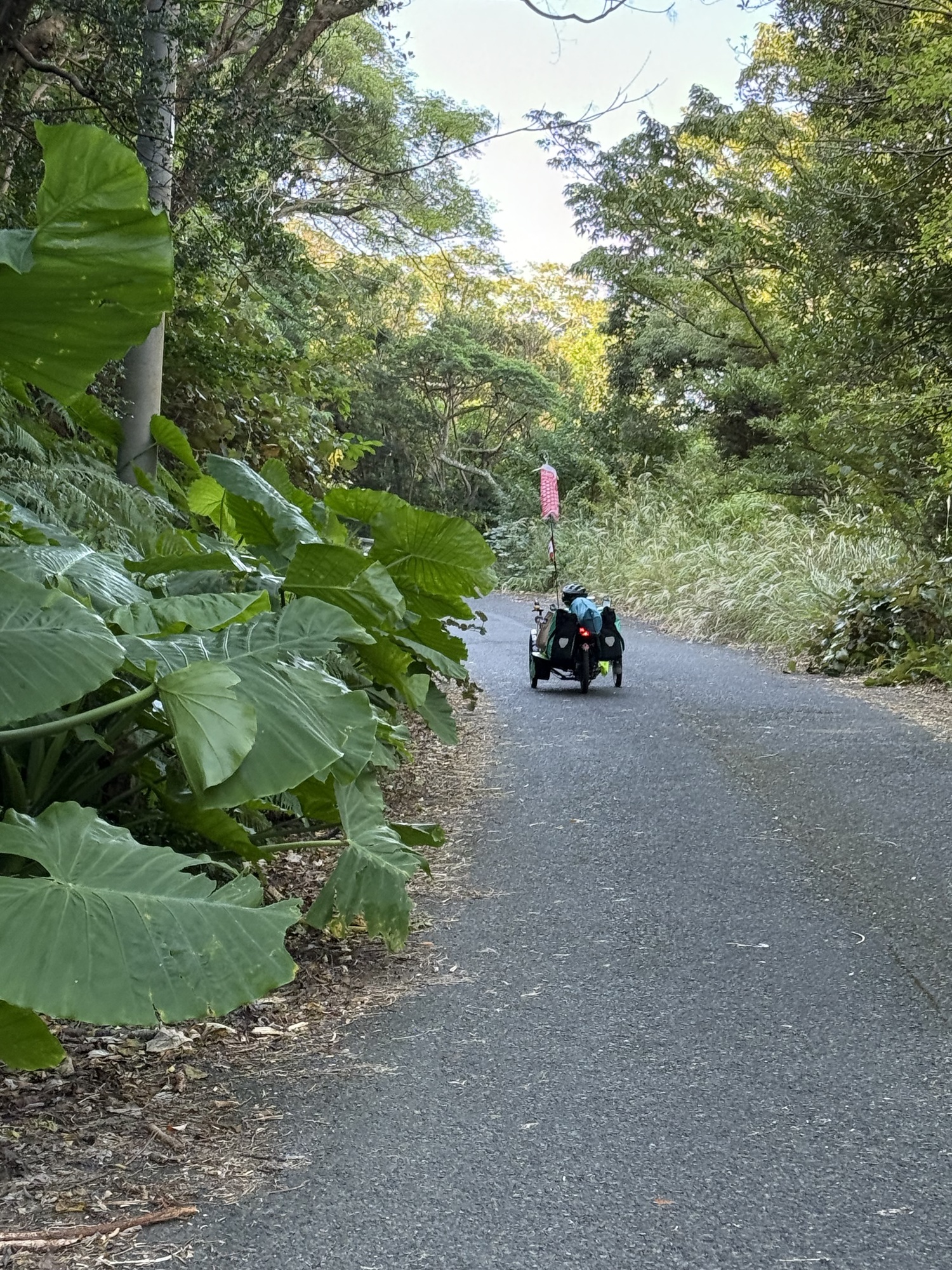
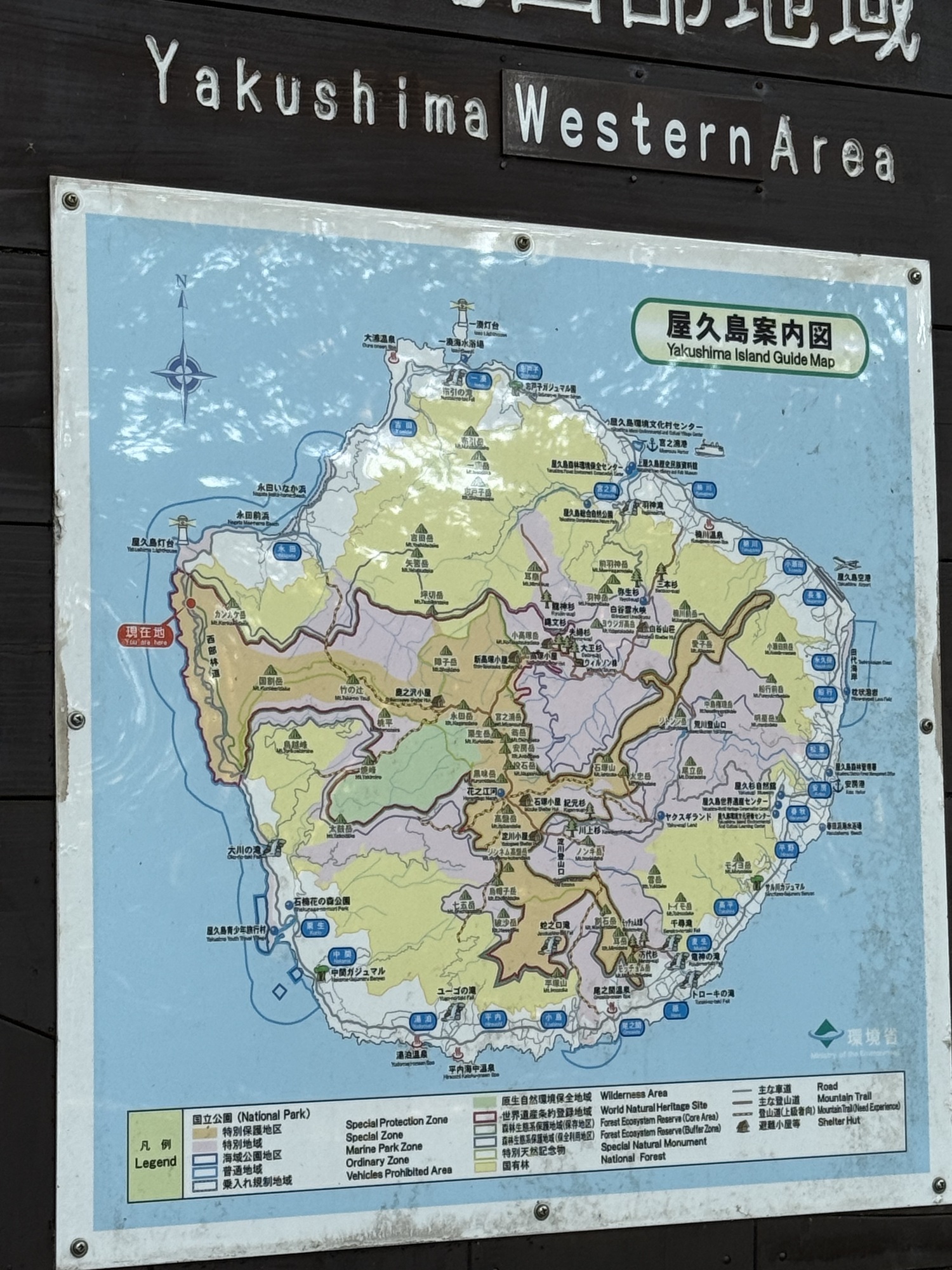
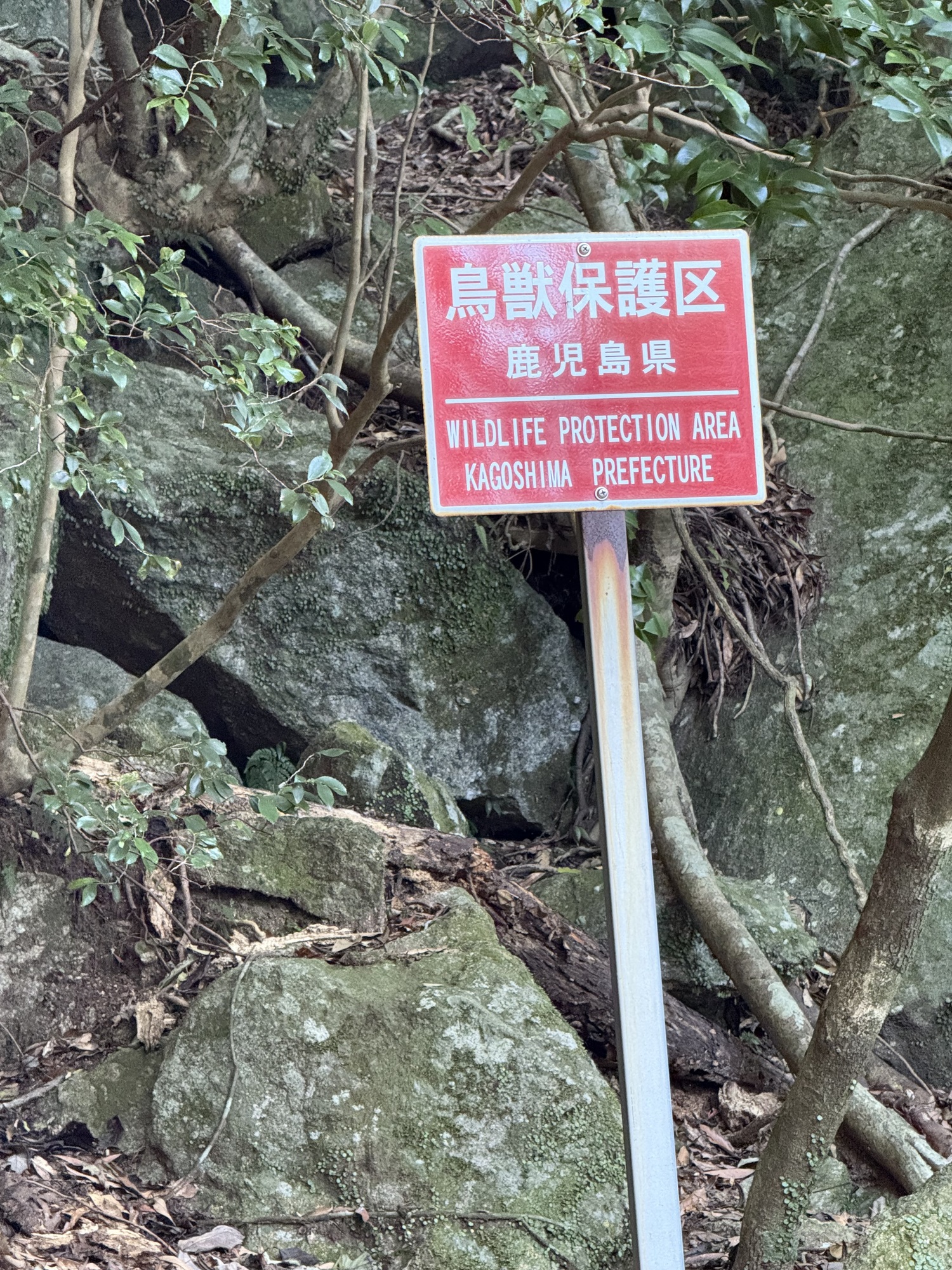
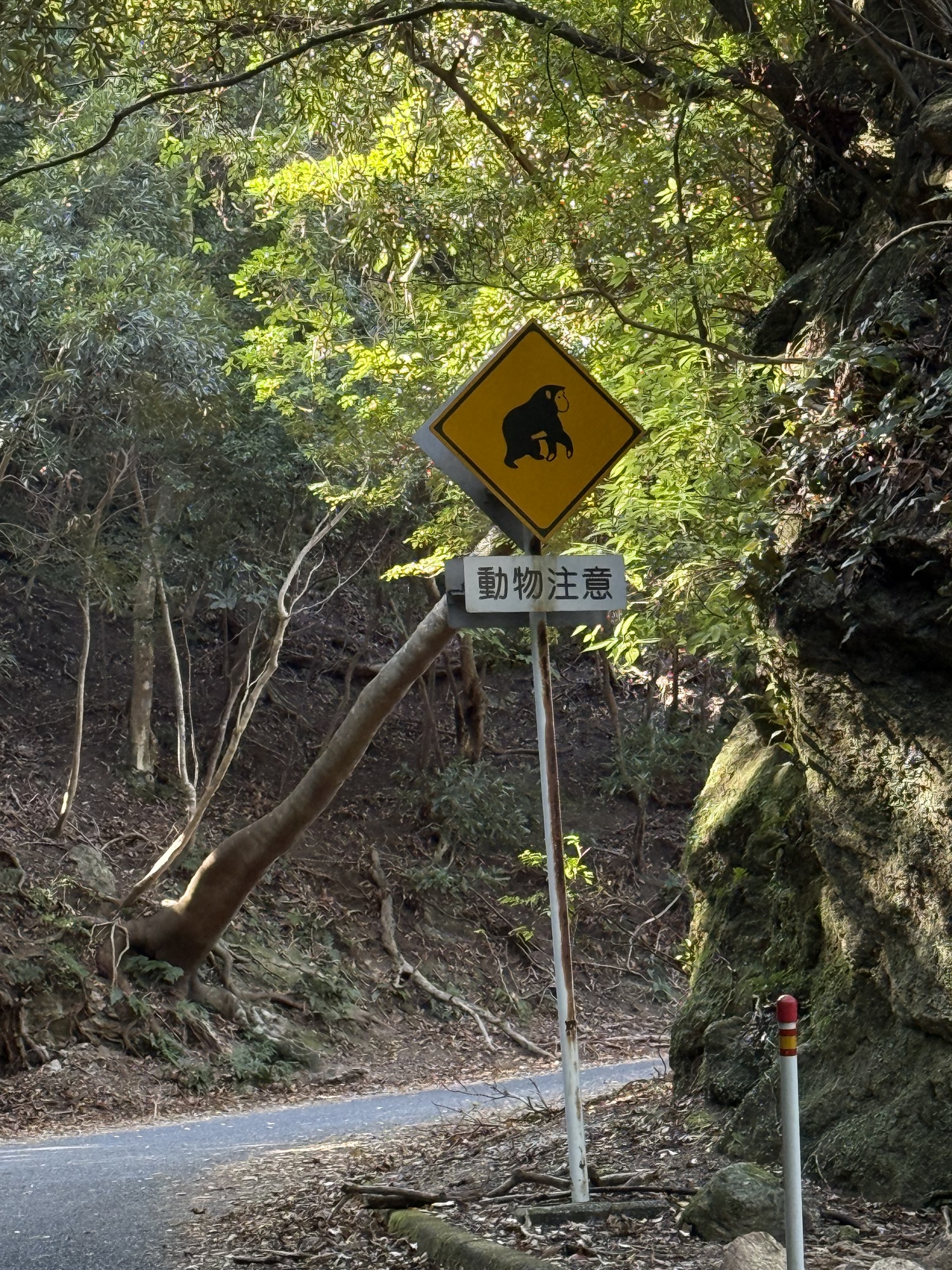
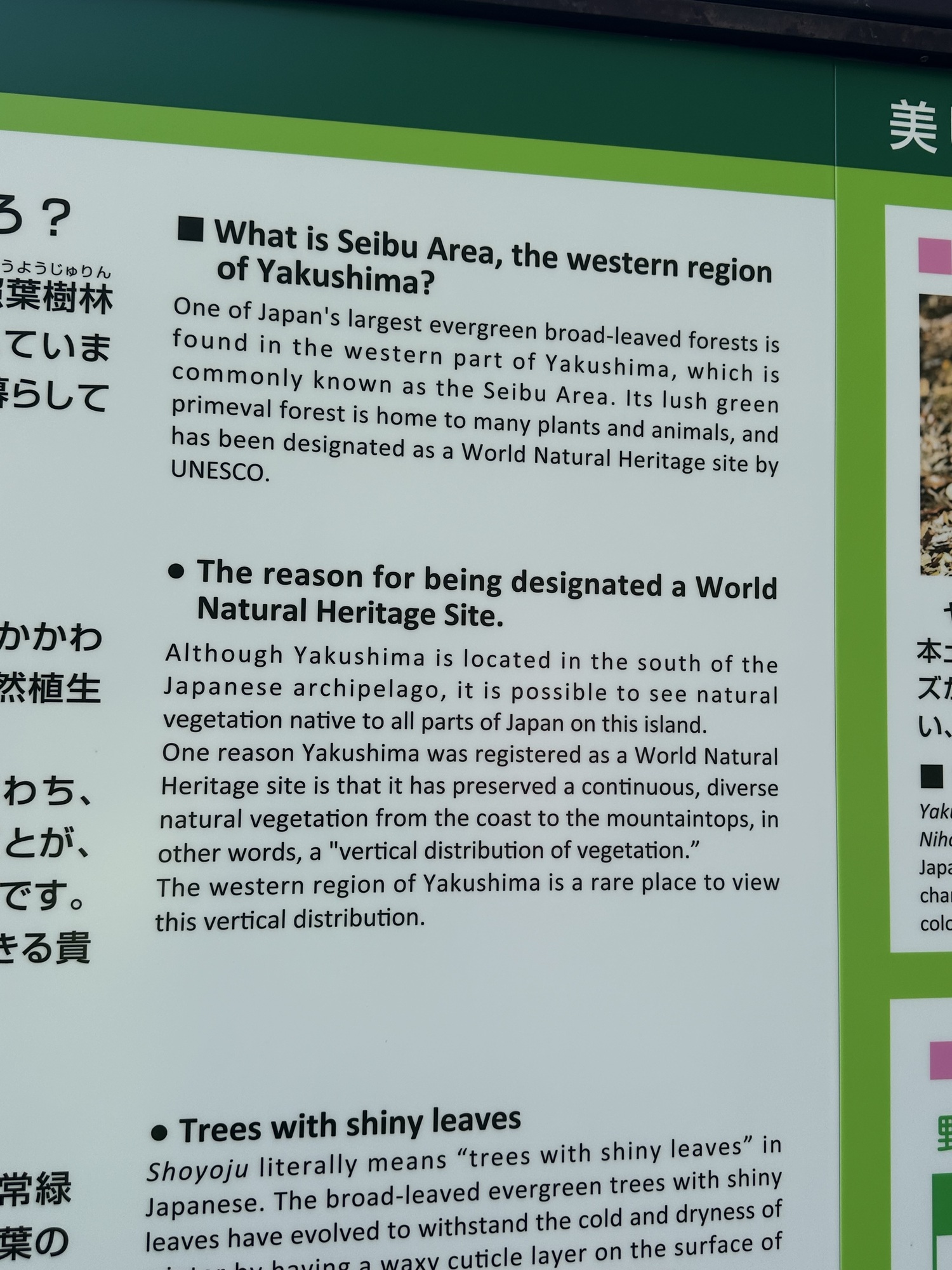
Today will be an exciting day for us. We have been looking forward to riding the west coast of Yakushima, a special part of the island. This area is undeveloped with no commerce or housing and is devoted to maintaining the habitat of monkeys and Sitka deer as well as the nesting beach of the loggerhead and green turtles. The natural environment remains untouched, an unspoiled wonderland. We know that there will be no services like stores, restaurants or accommodation. It will be a day of being in nature, riding lots of hills and just enjoying the experience of being here.
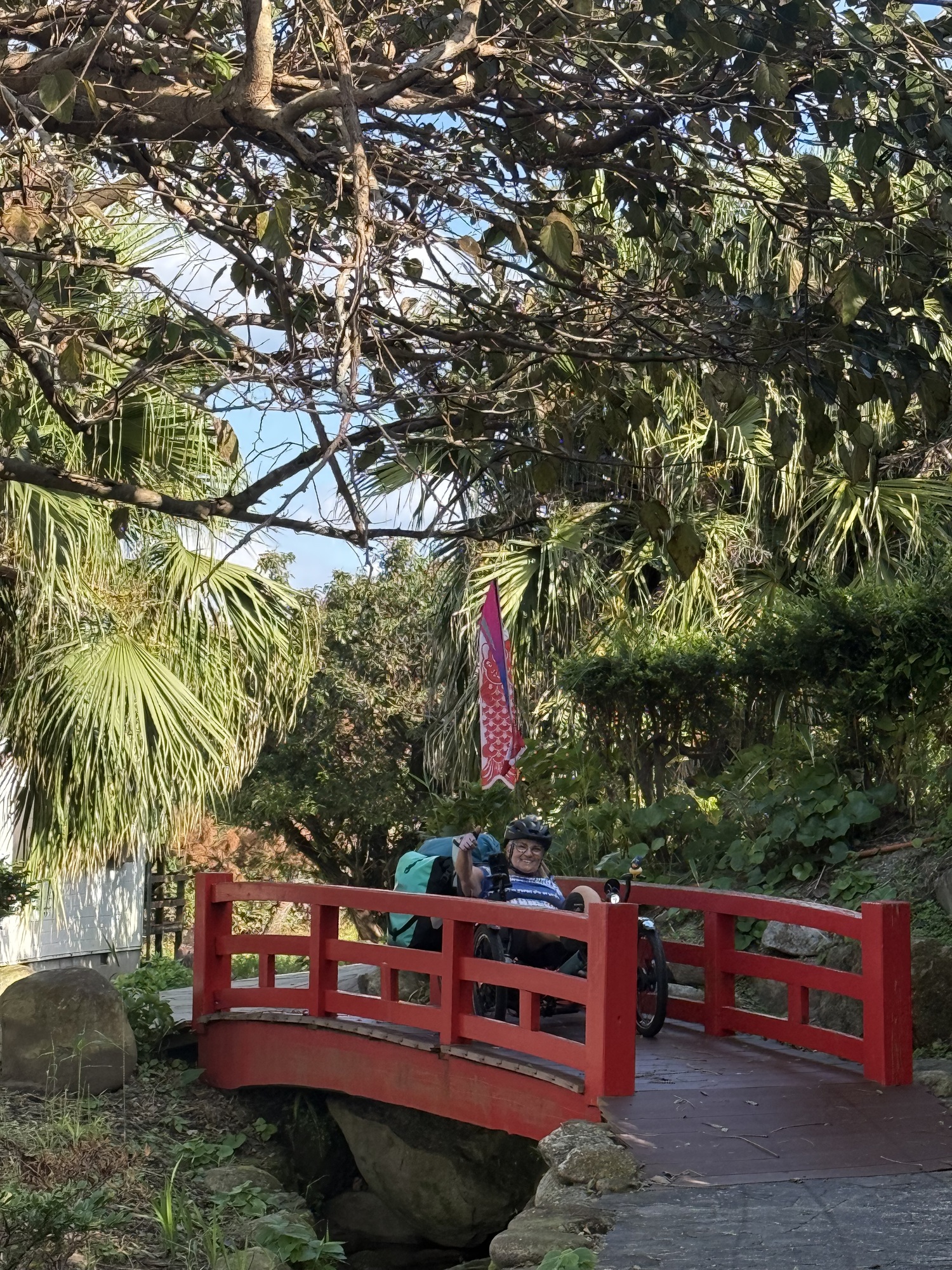
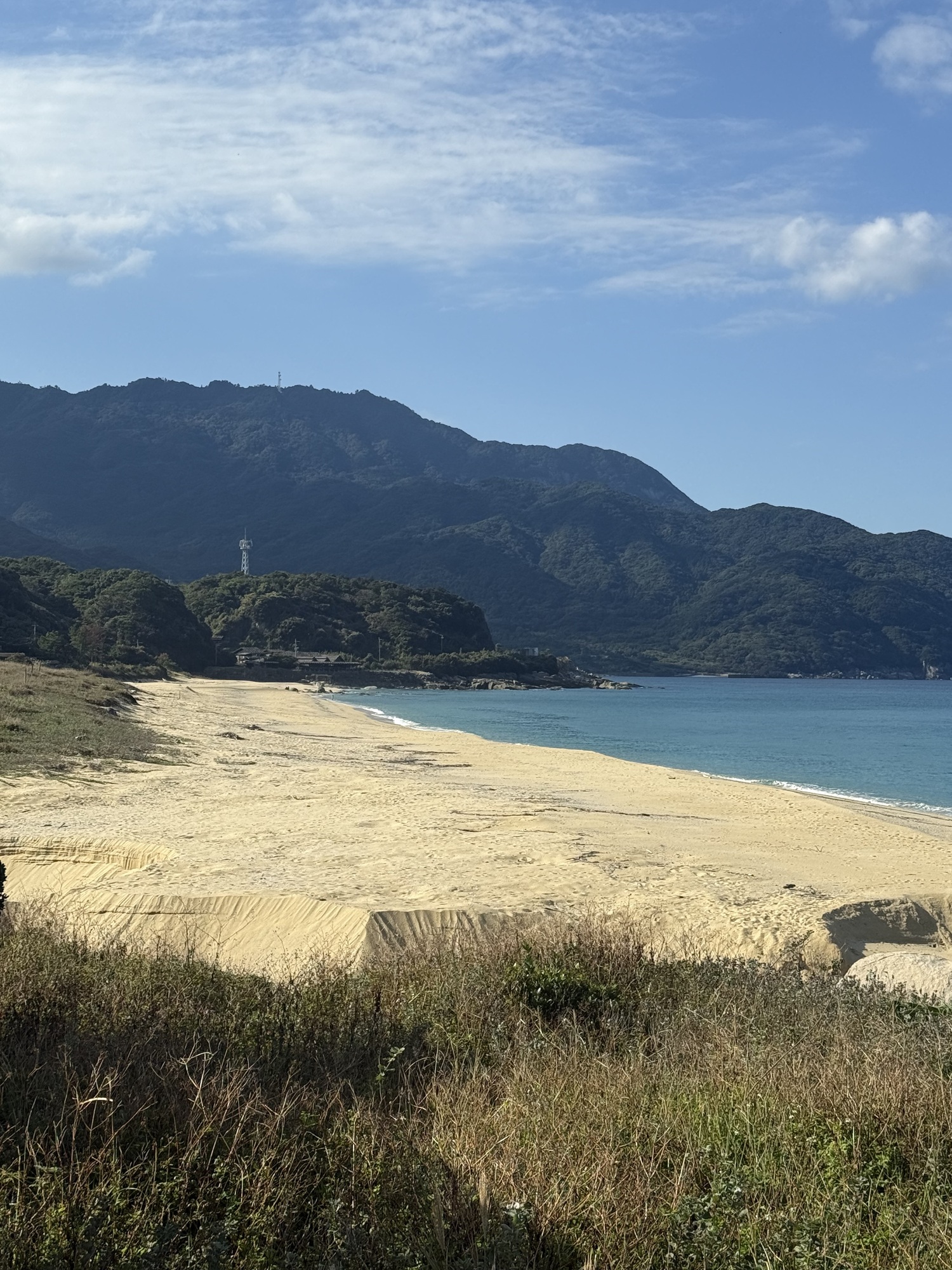
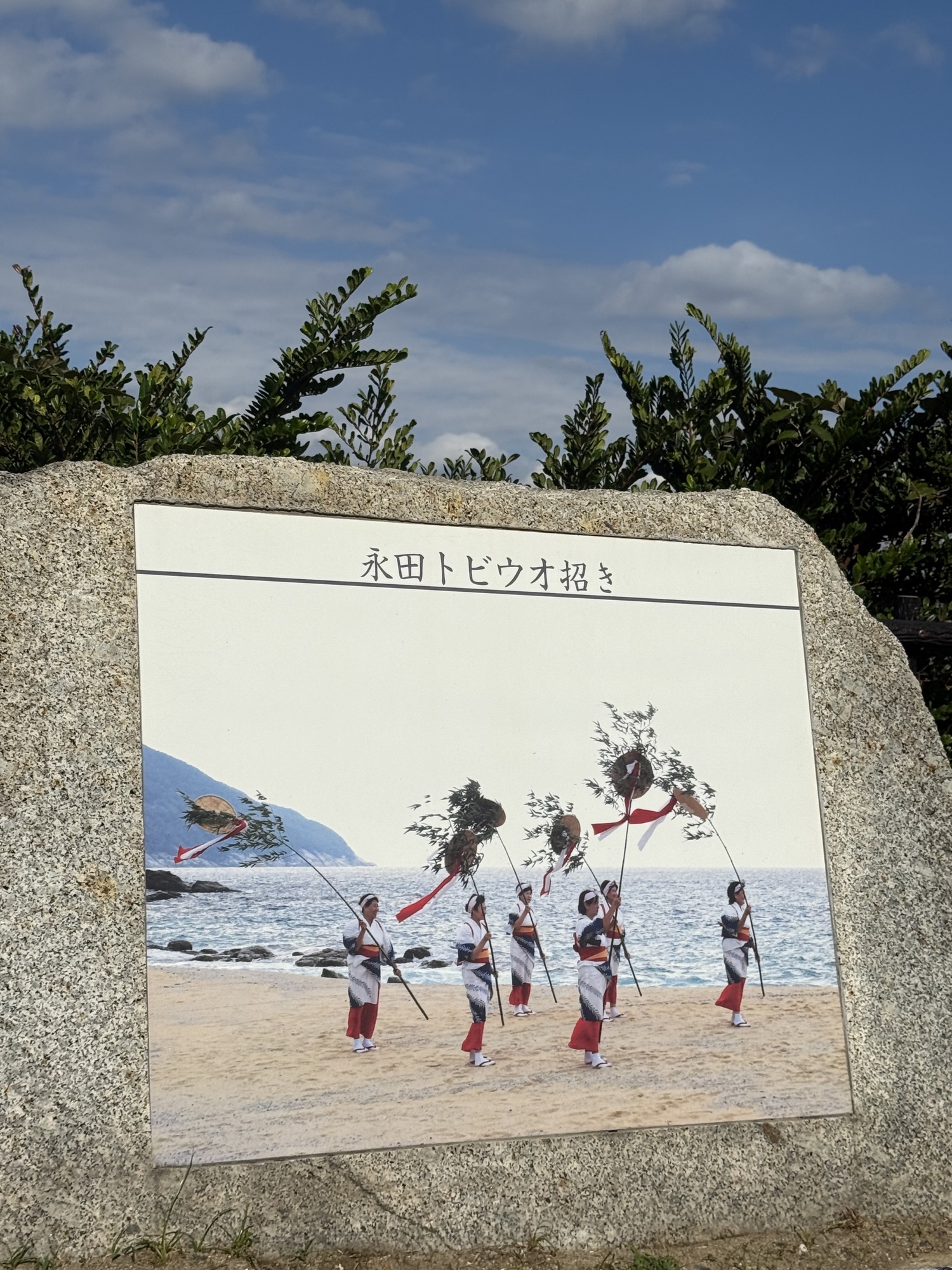
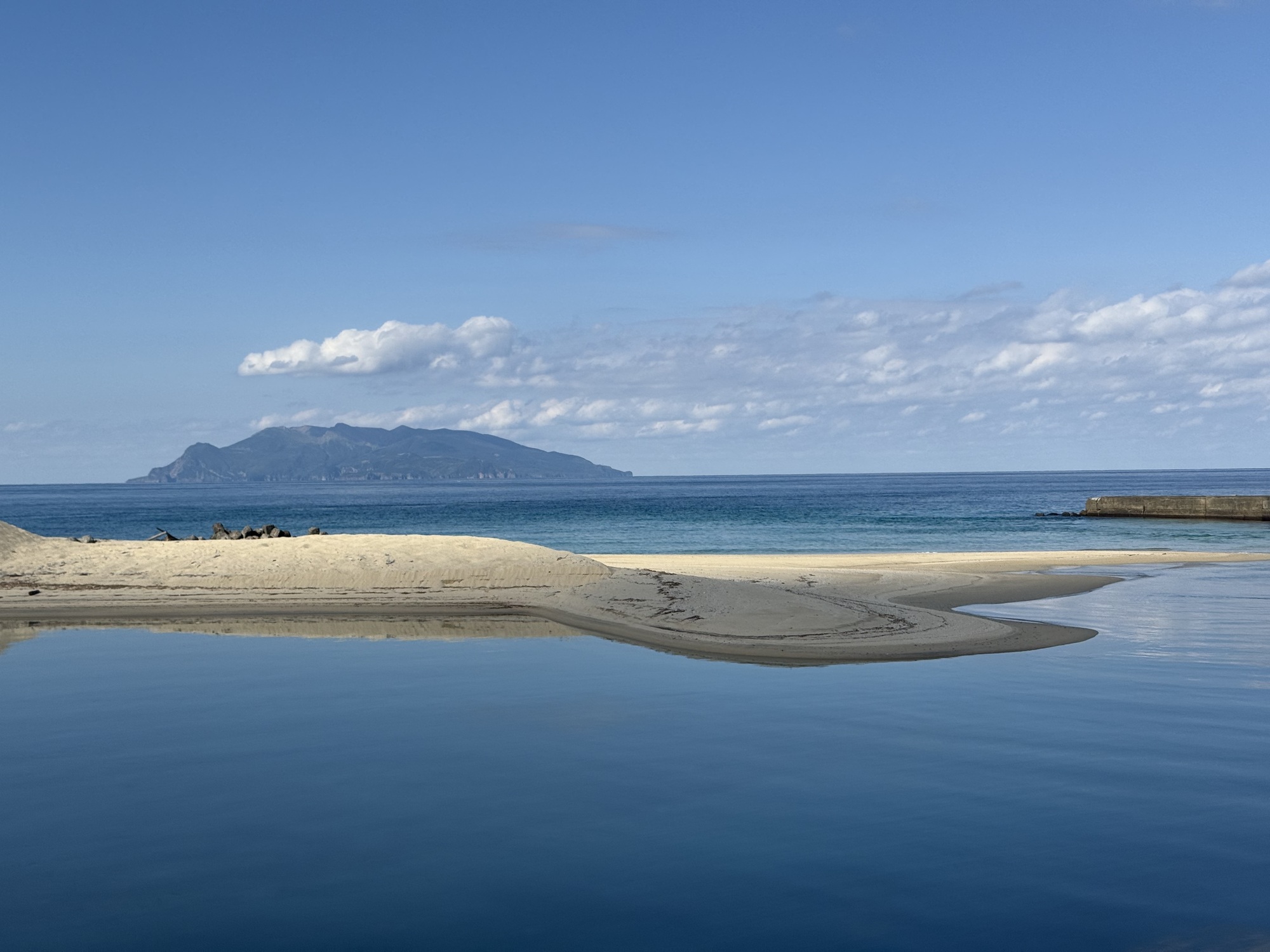
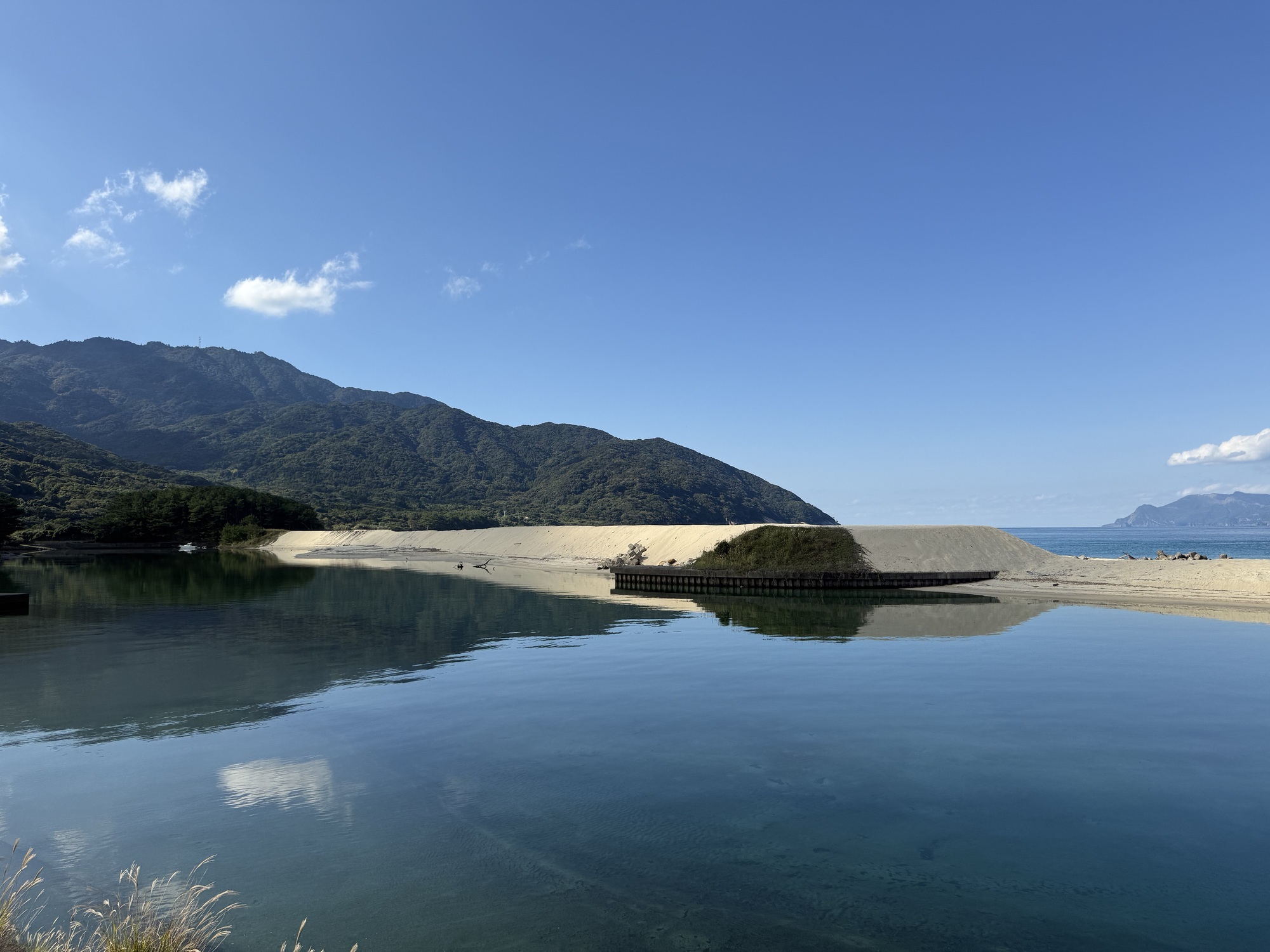
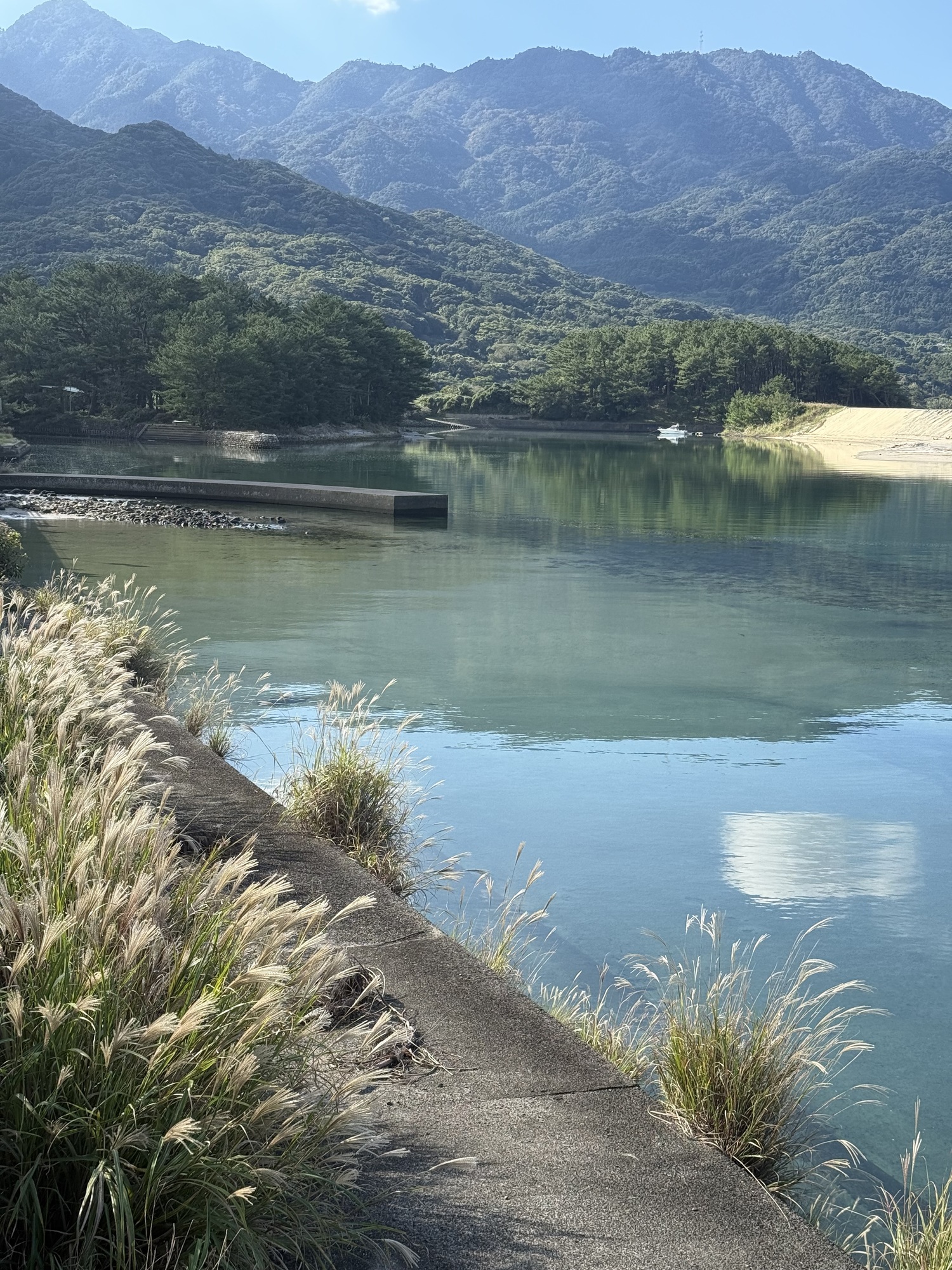
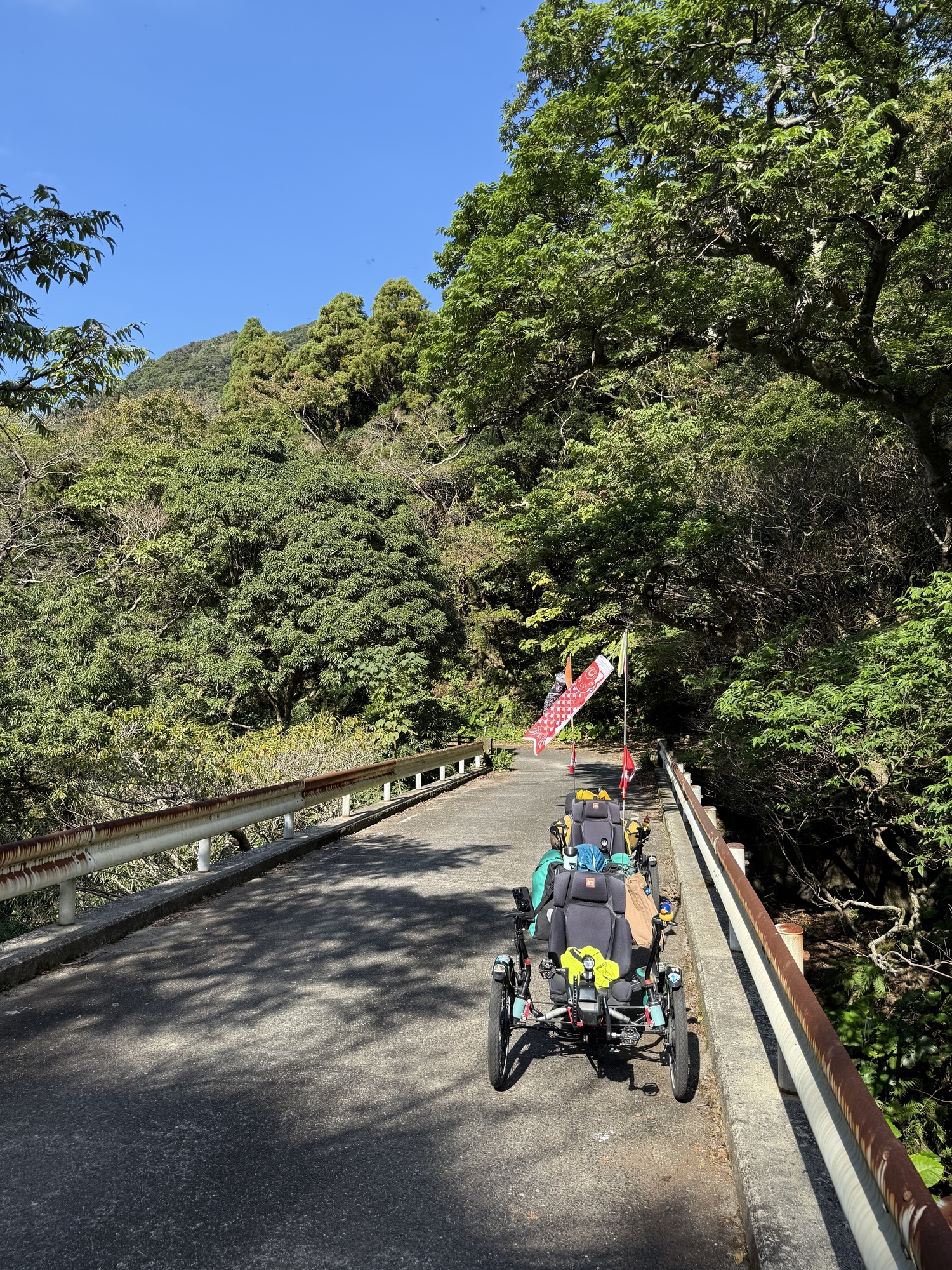
Riding over this wee bridge is a charming way to leave our accommodation and explore Nagata Beach. This beach is an important nesting sight for the endangered loggerhead and green turtles.
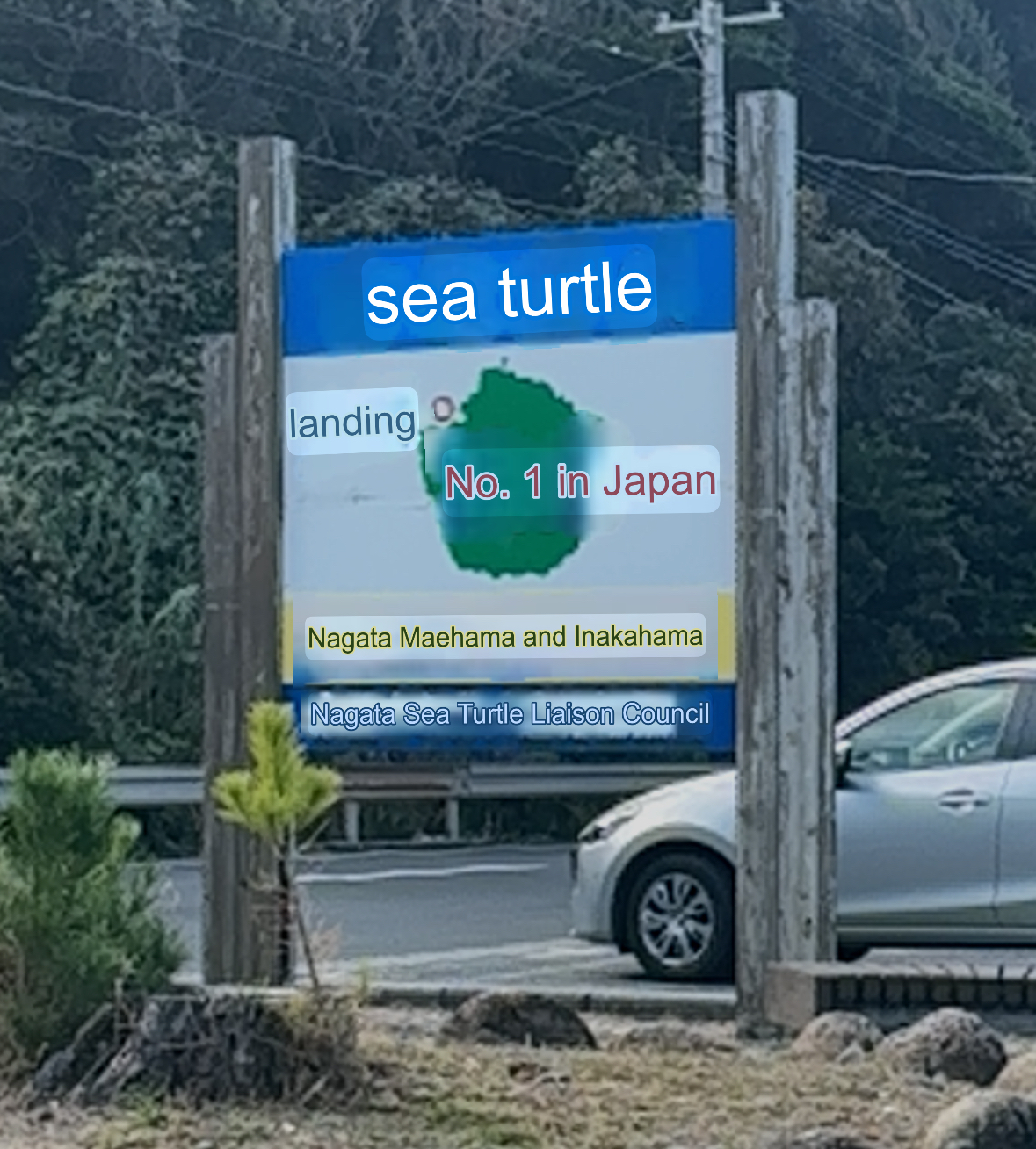
The loggerhead population accounts for nearly 95% of the turtles on Yakushima. Between May and July, female turtles return to the area where they were born, 20 to 30 years earlier, on Nagata Beach where we stayed. The turtles come ashore several times for the next few months to lay between 100 and 120 eggs each time. The survival rate for a hatchling turtle is believed to be as low as 1 in 5,000. Some nights on Nagata Beach, there can be up to 30 turtles laying their eggs.
Prior to the late 1970’s when legislation was introduced to protect the turtles, locals harvested turtle eggs as a source of protein. Now, locals volunteer to help keep the beaches clean and protect the eggs, As well, there are laws governing how people can observe the turtles during May to late August. For example, one cannot enter the beach at night from May 1 to 31 unless you are accompanied by an official guide. If you go to the beach without a guide, you are likely to disturb these turtles at a crucial time and you can expect to be arrested and/or fined for this.
Imagining what the beach must be likewhen it is nesting time for the turtles.
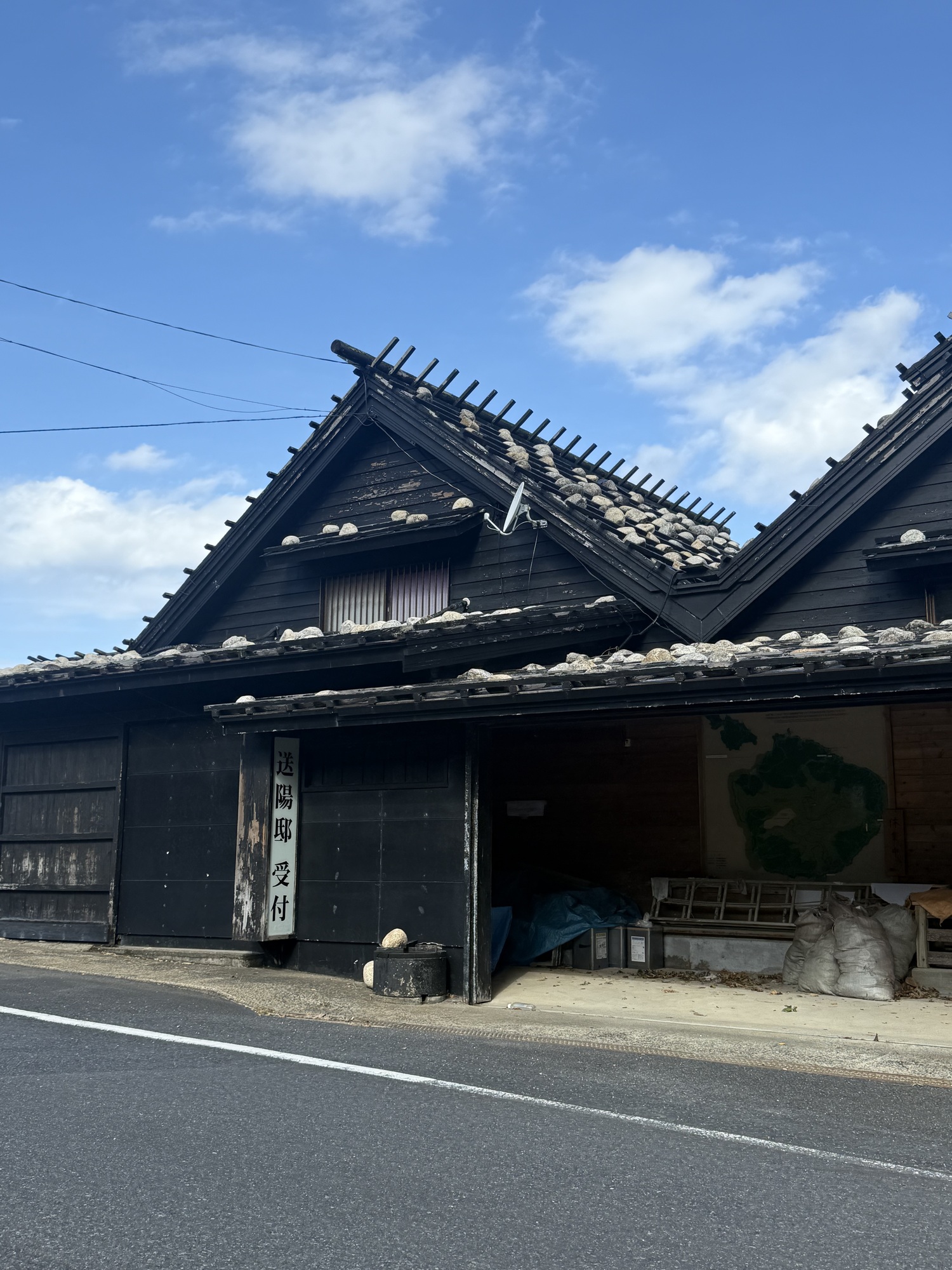
We see this occasionally…rocks distributed over the roof on the roof tiles. This building is part of an abandoned resort and all of the buildings are covered with rocks.
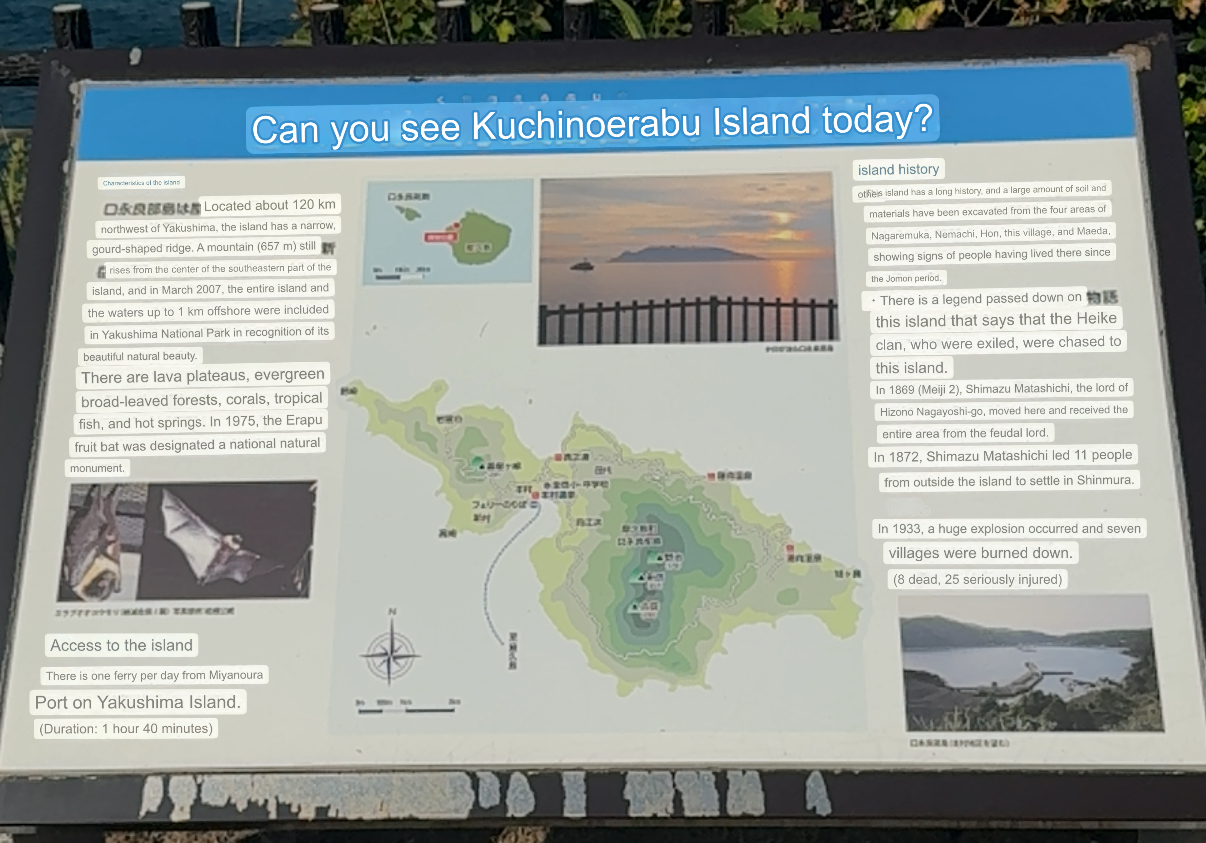
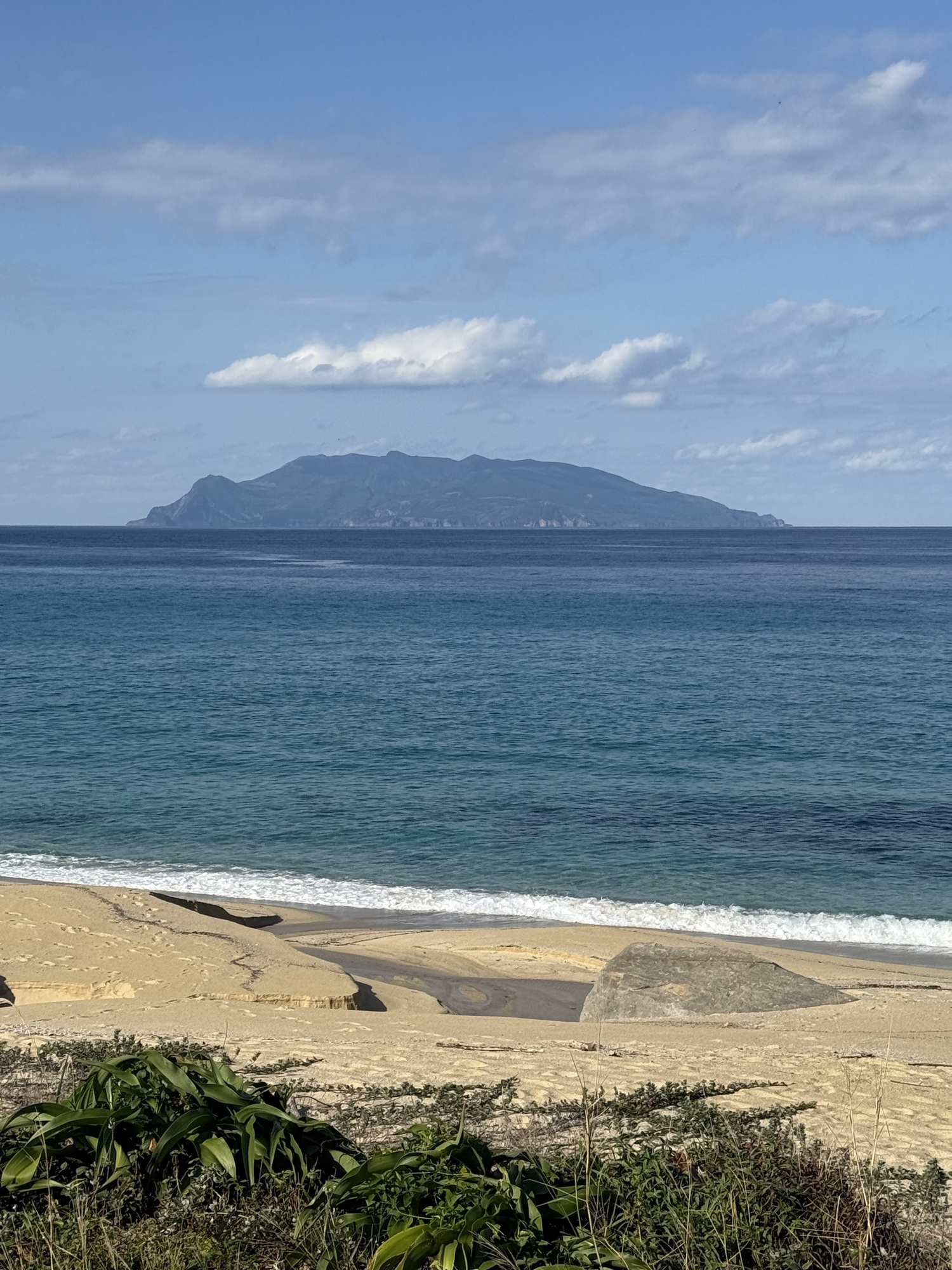
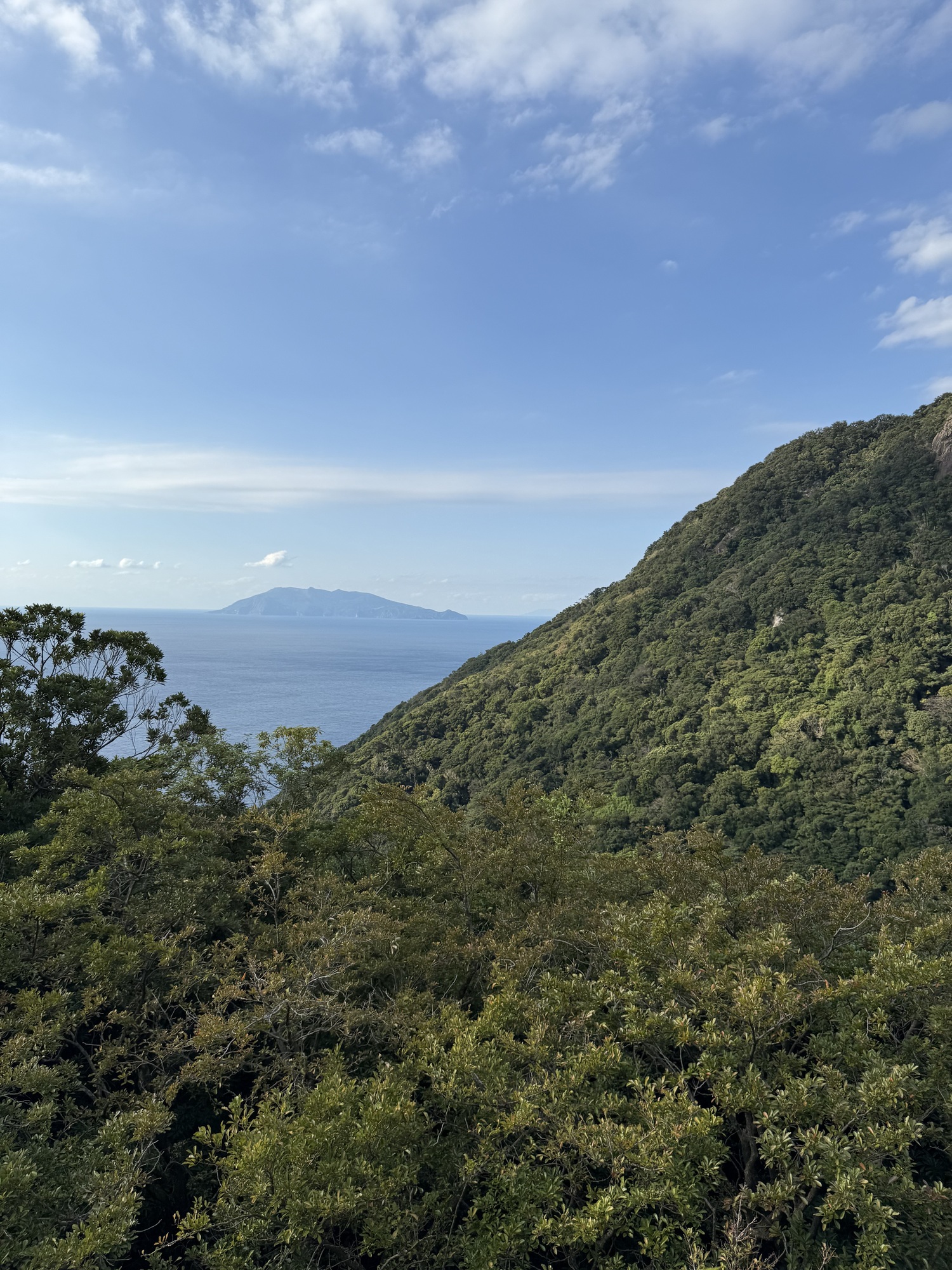
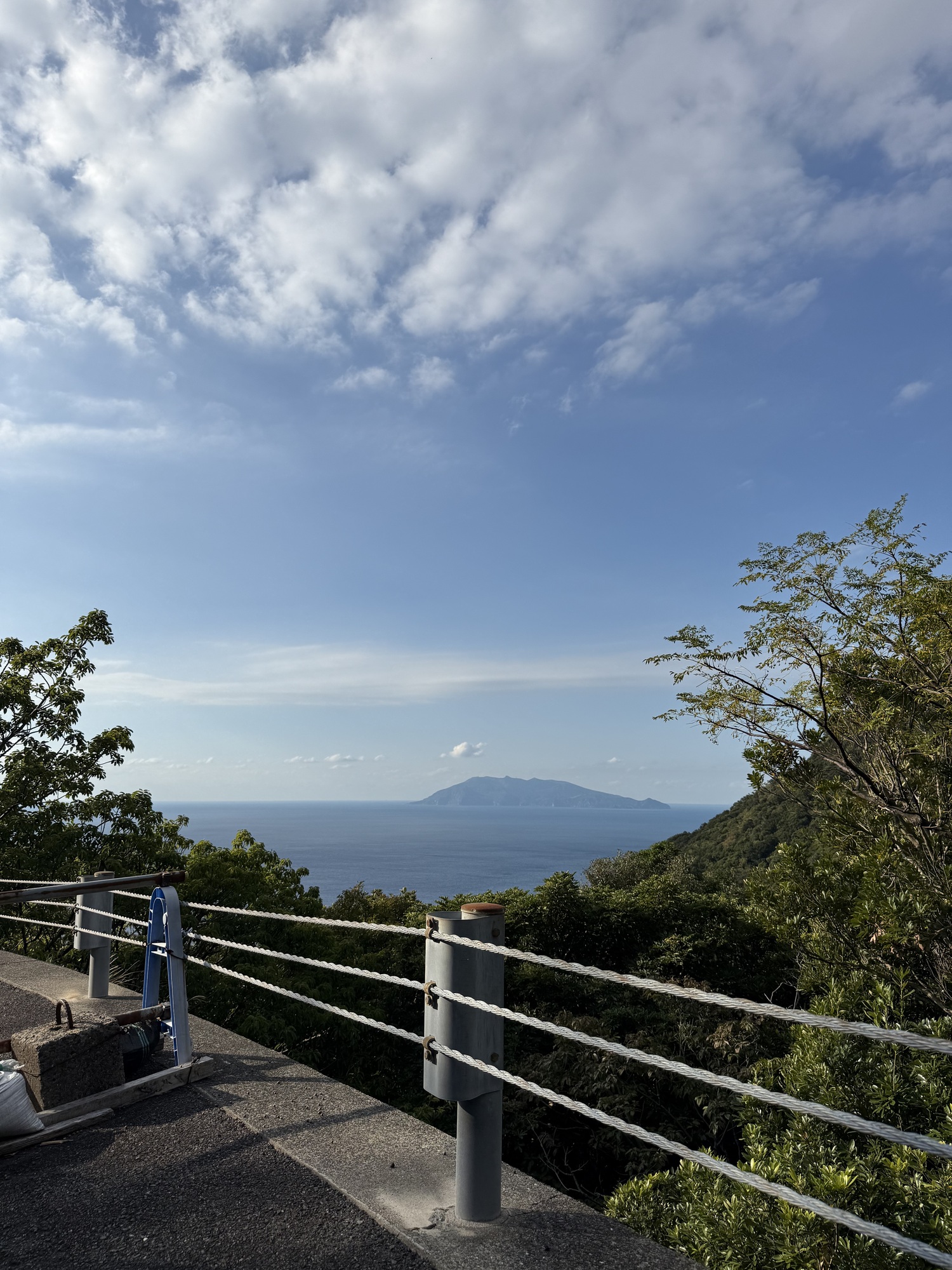
Kuchinoerabu Island is 14 km from Yakushima, has 147 residents, 2 volcanic craters and an active volcano, Shindake, which has eruptions frequently. In 2014 it erupted and sent an ash cloud 30,000 feet into the sky. While hiking on Yakushima, we saw a sign with warnings about this Volcano and what to do if an eruption occurred, such as protecting yourself from falling ash, etc There is a daily ferry that runs once a day, taking 1 1/2 hours from Yakushima.
Kuchinerabu is within the borders of the Kiroshima-Yaku National Park. There is much folklore and stories from this island. Craig Arnold, an American poet disappeared while hiking up the volcano. His body was never found.
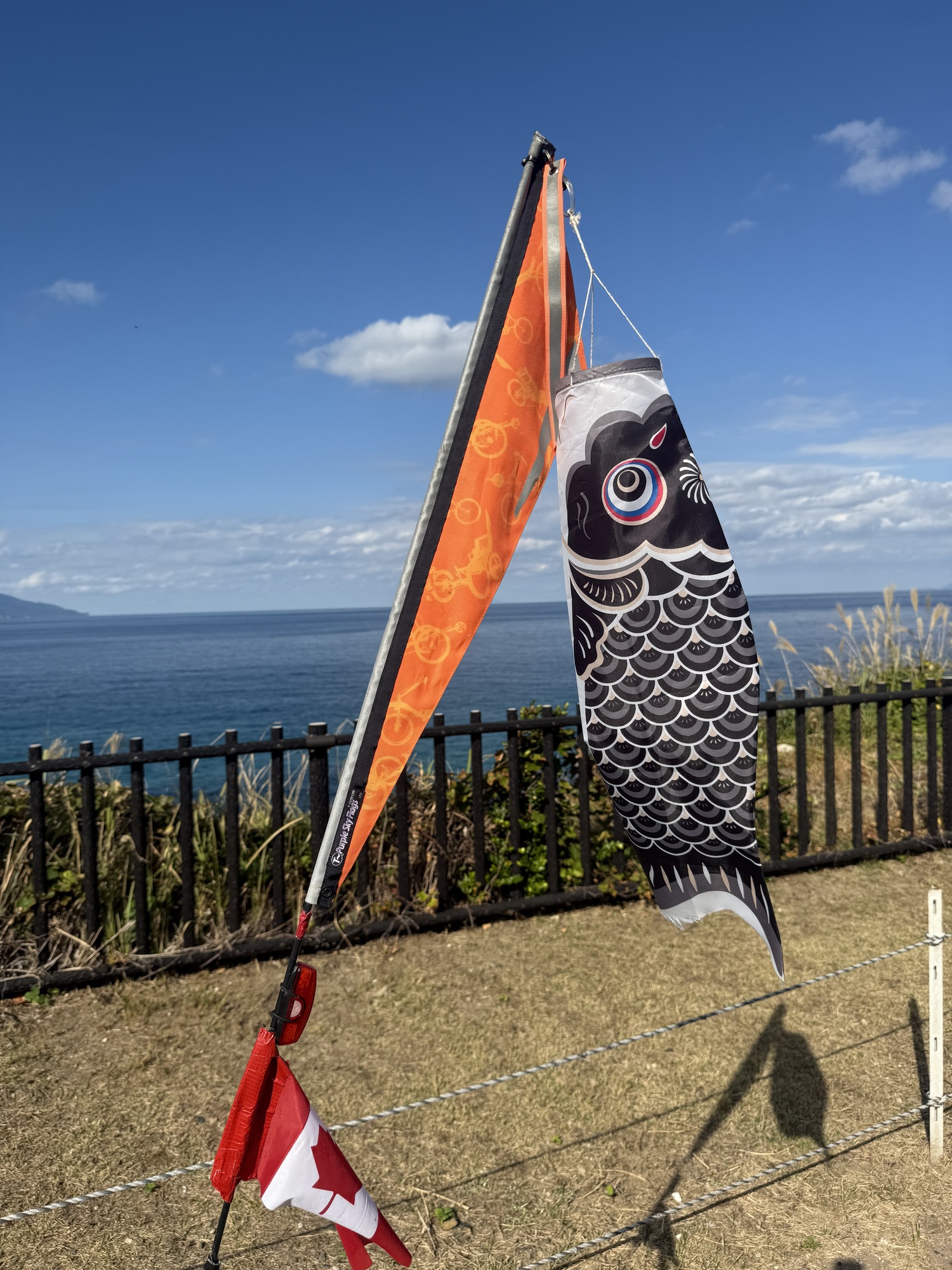
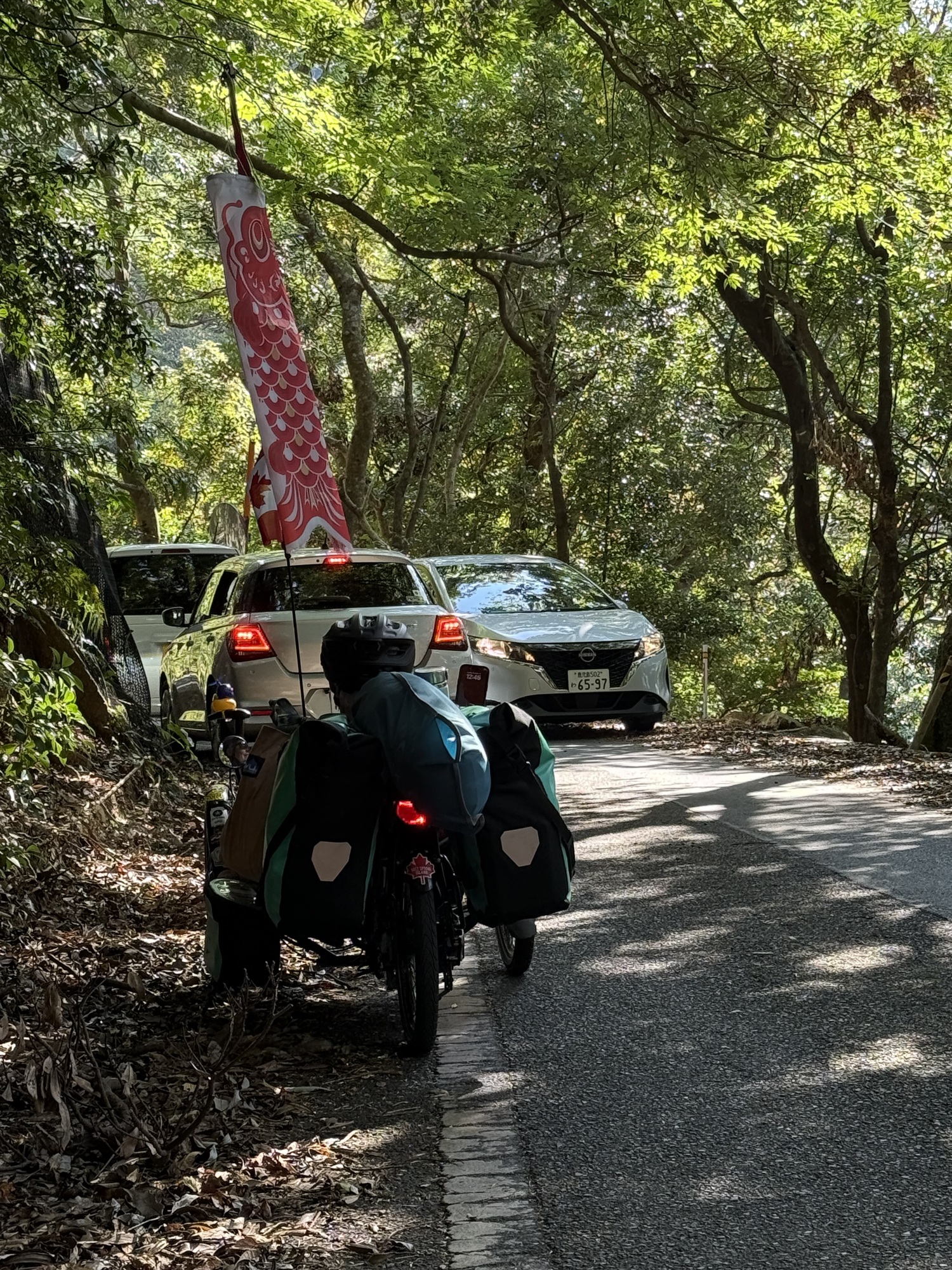
We really like having a Koinobori suspended on a pole on each of our trikes. Locals smile and are so happy that we have them.. It is good that this year we bought the right ones…this is Barry’s and it is for boys.
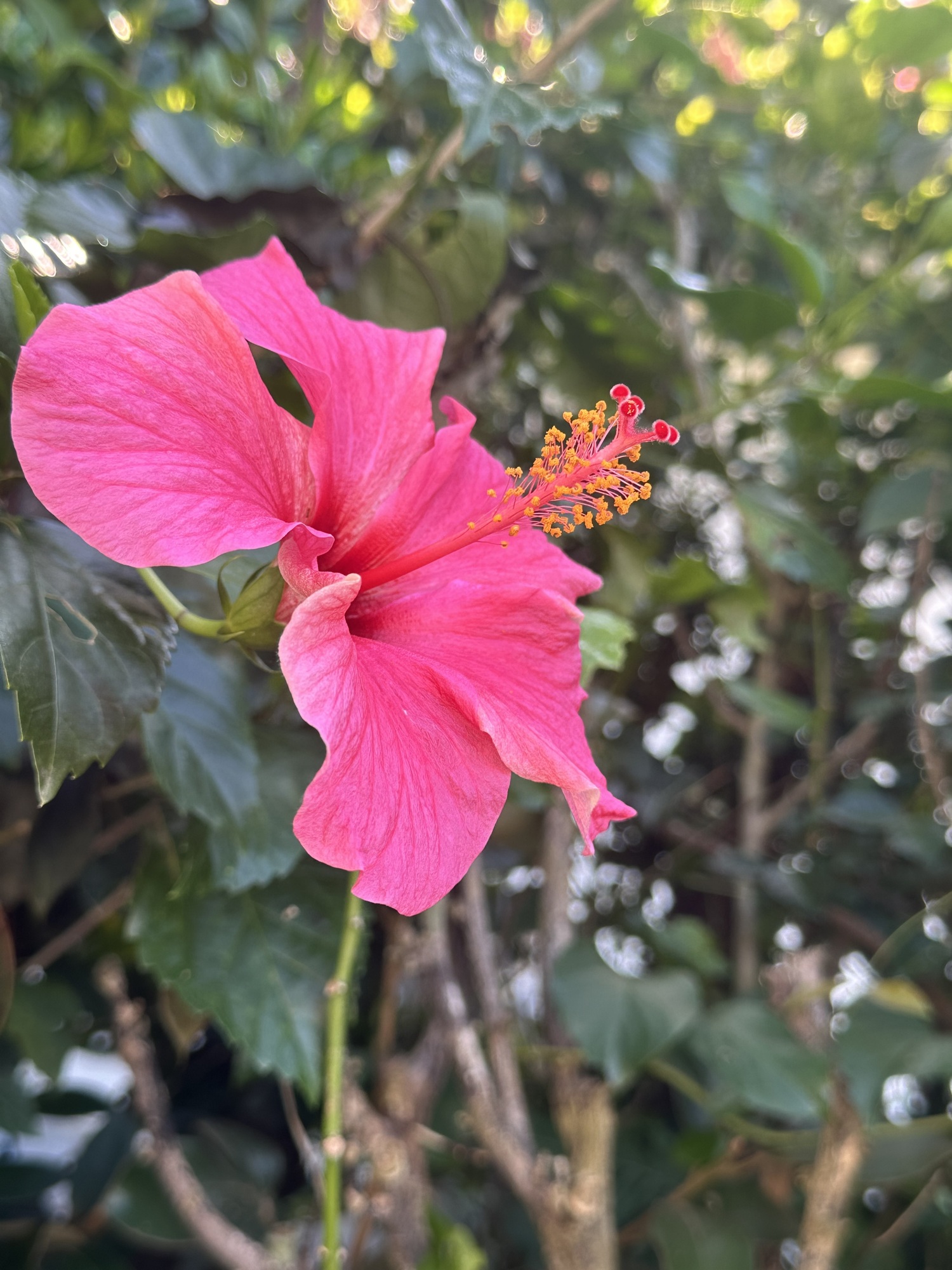
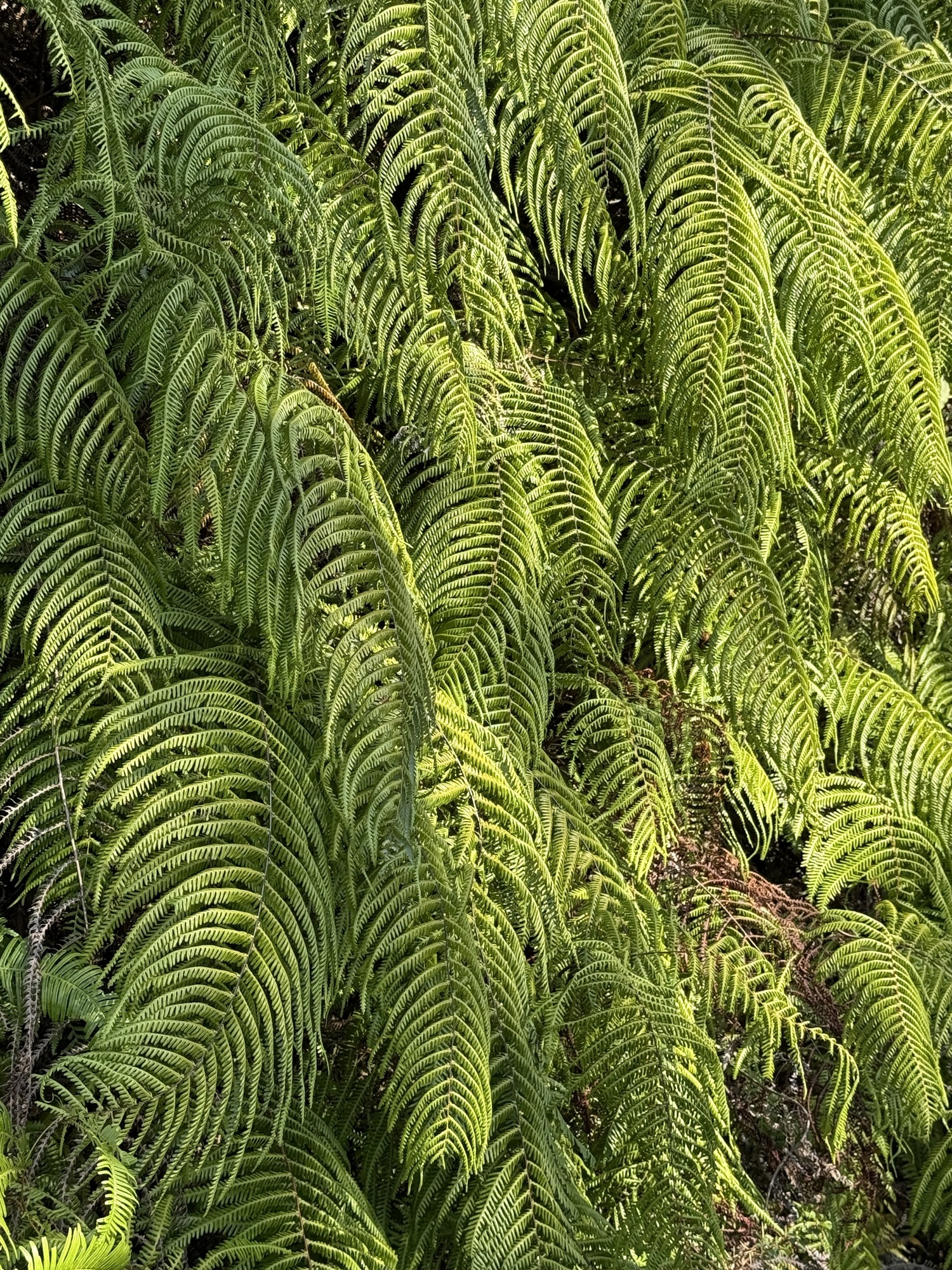
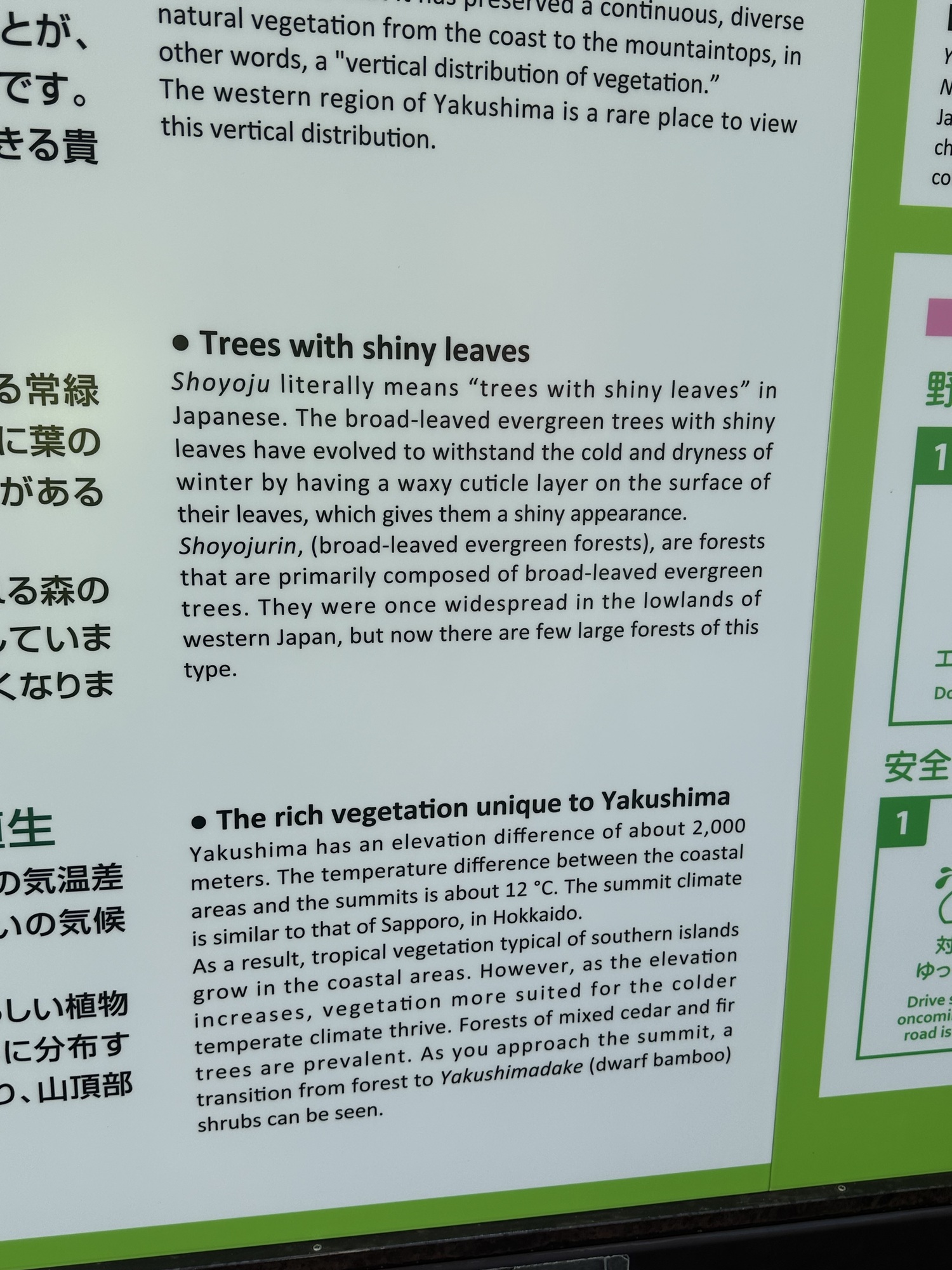
The plants of Yakushima number at about 1900 species. Of the 1900, about 1200 are species of flowering plants. Yakushima was recognized by UNESCO in 1993 as having the best example of bioversity in East Asia. Yakushima has the complete floral range of Japan, from Okinawa to Hokkaido on this small island.
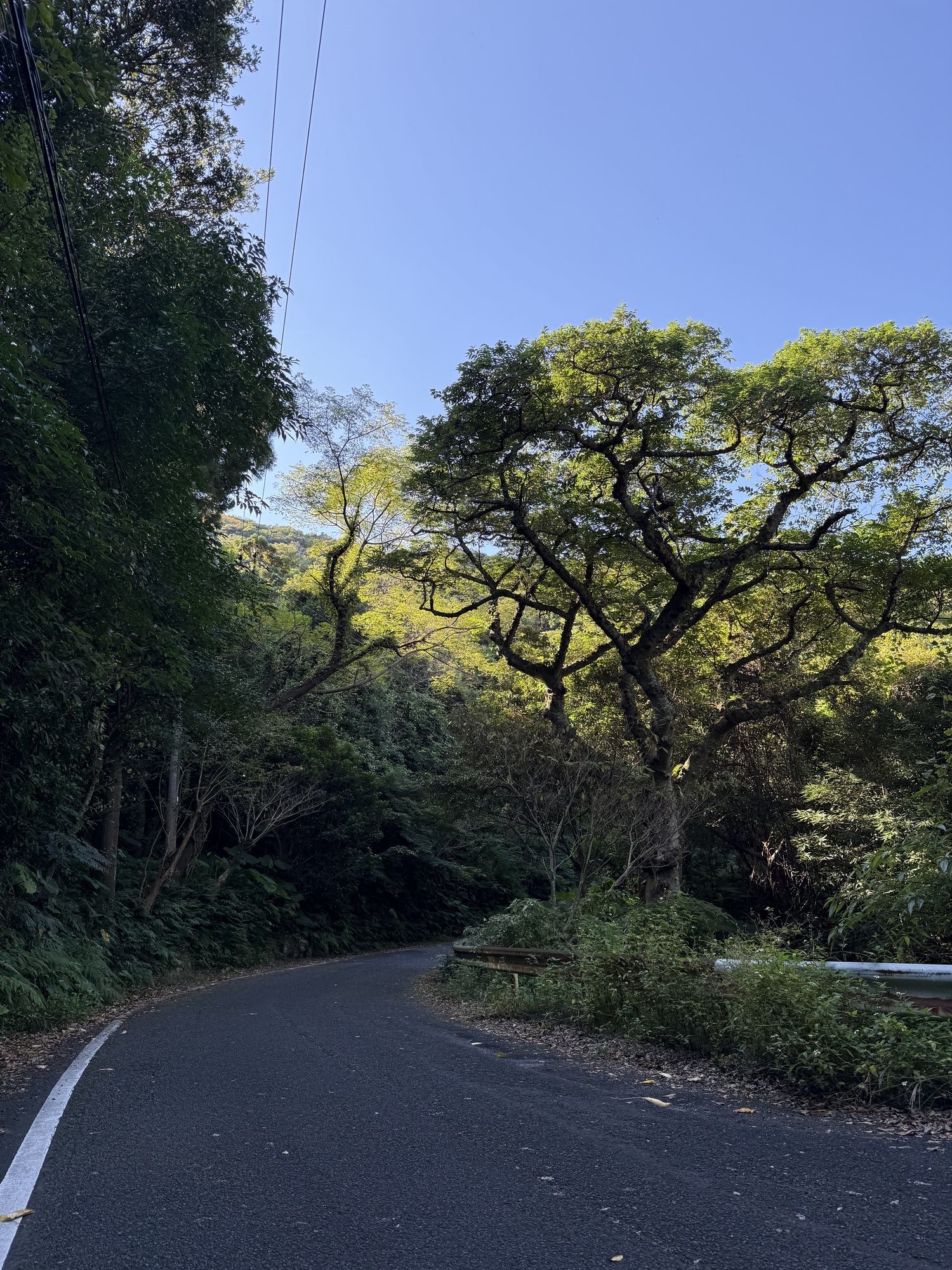
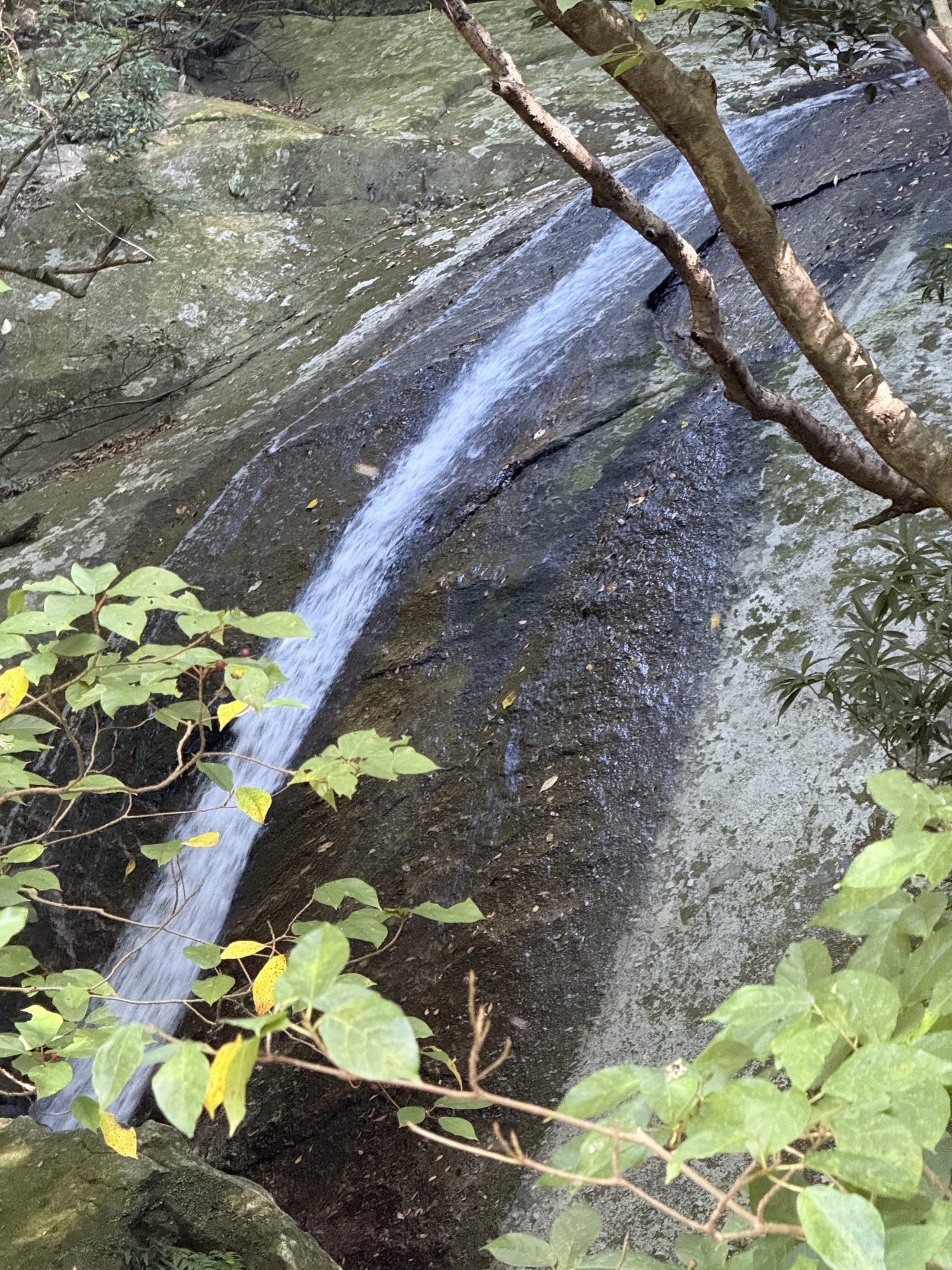
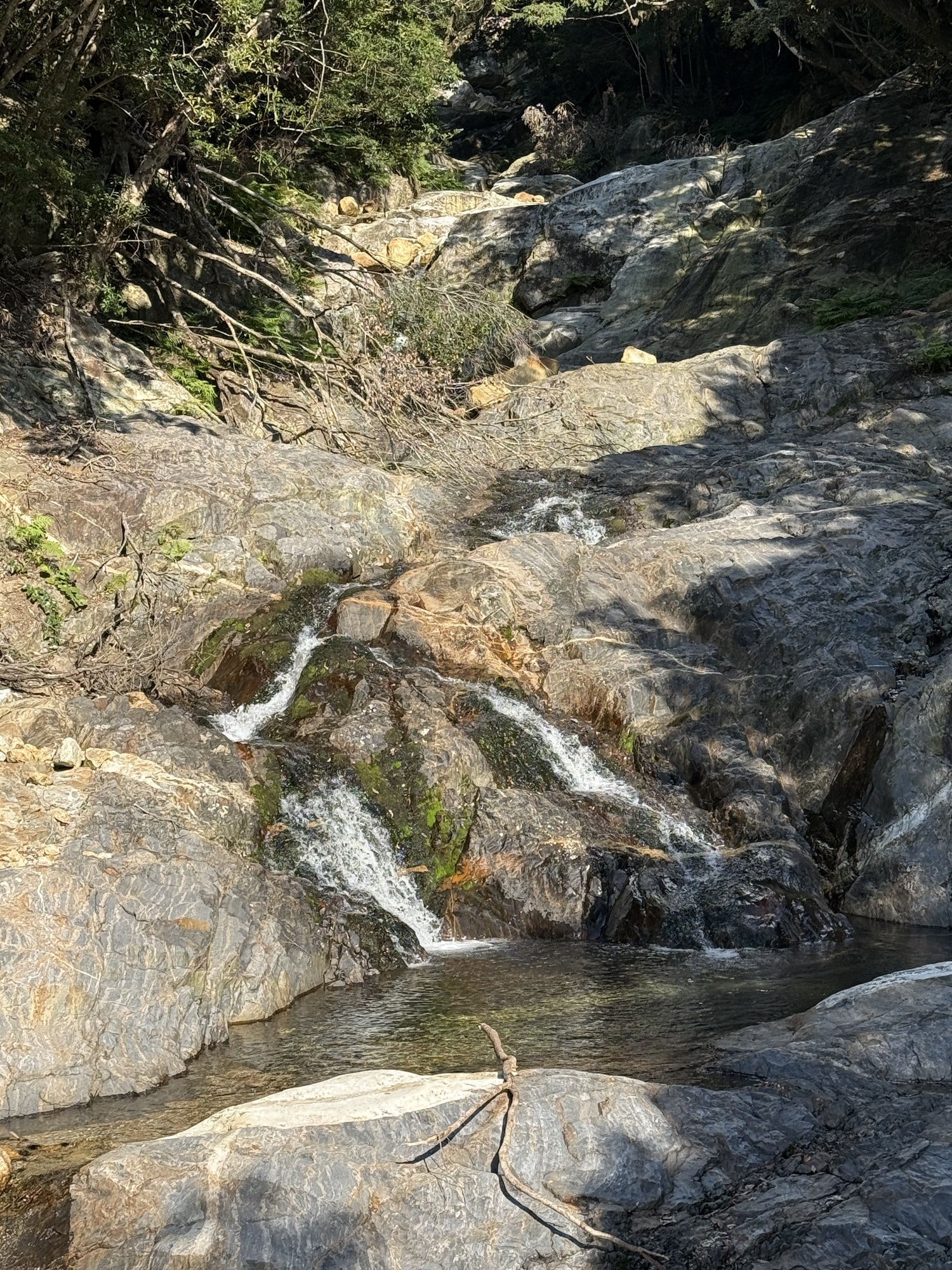
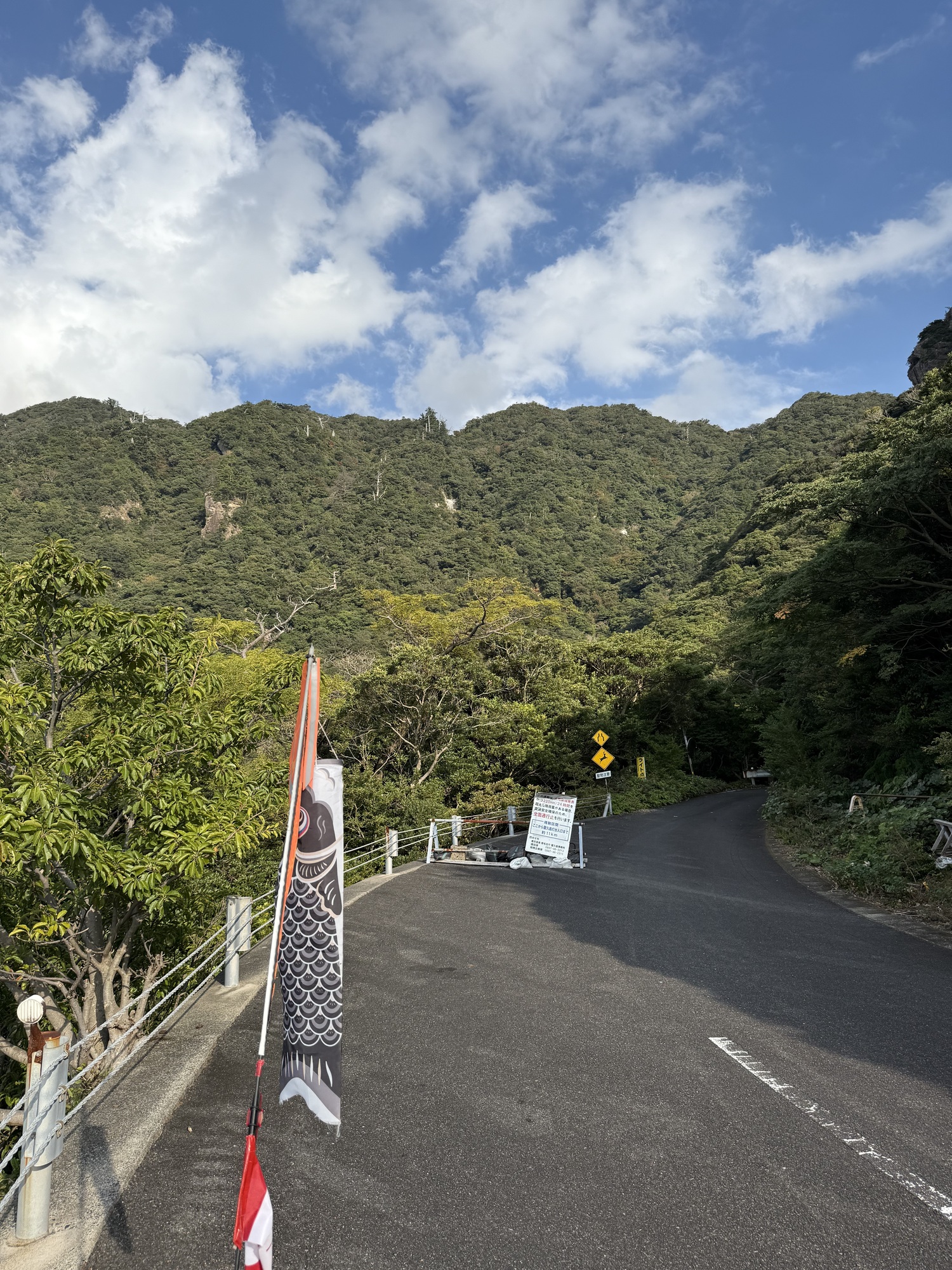
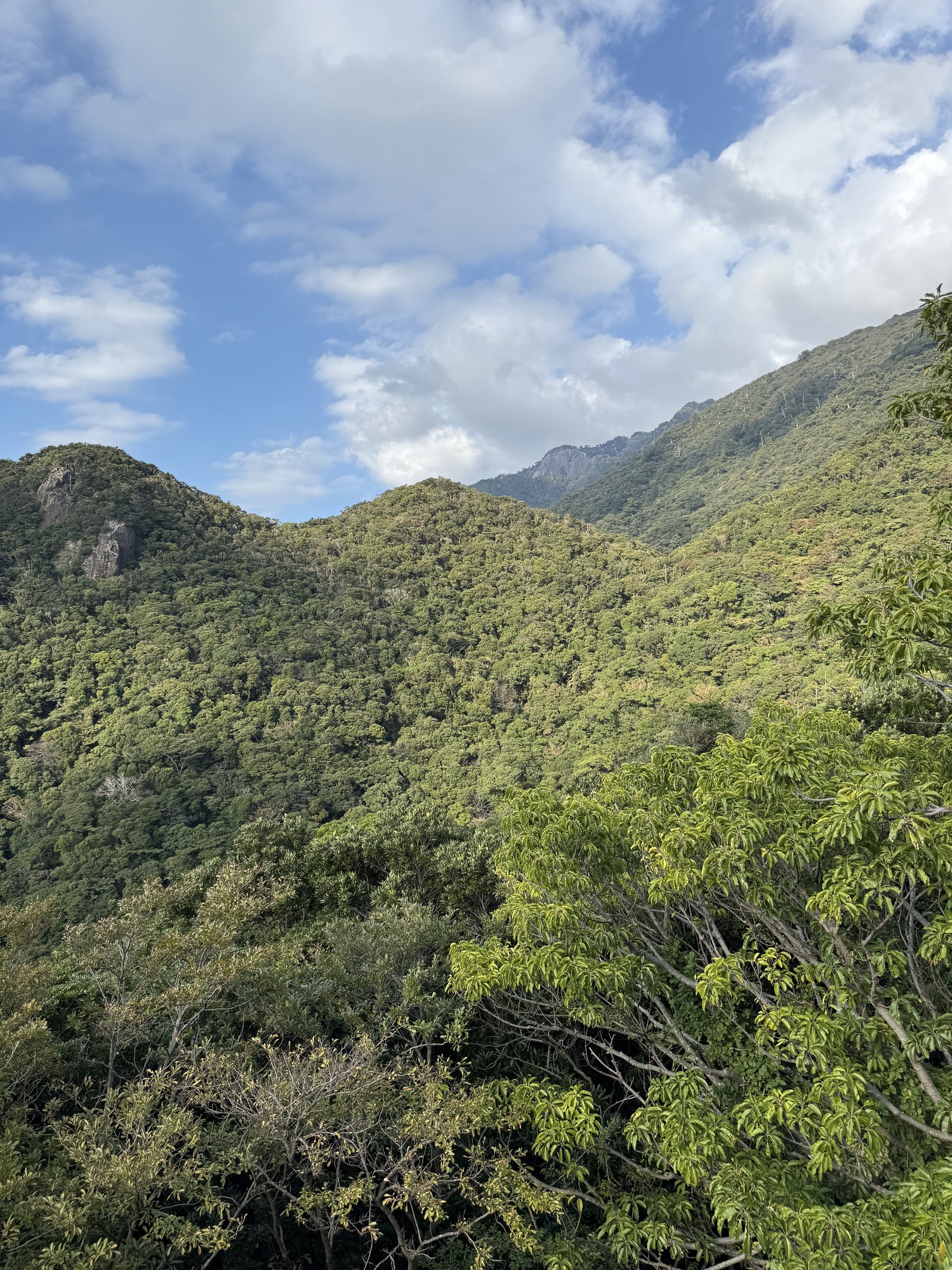
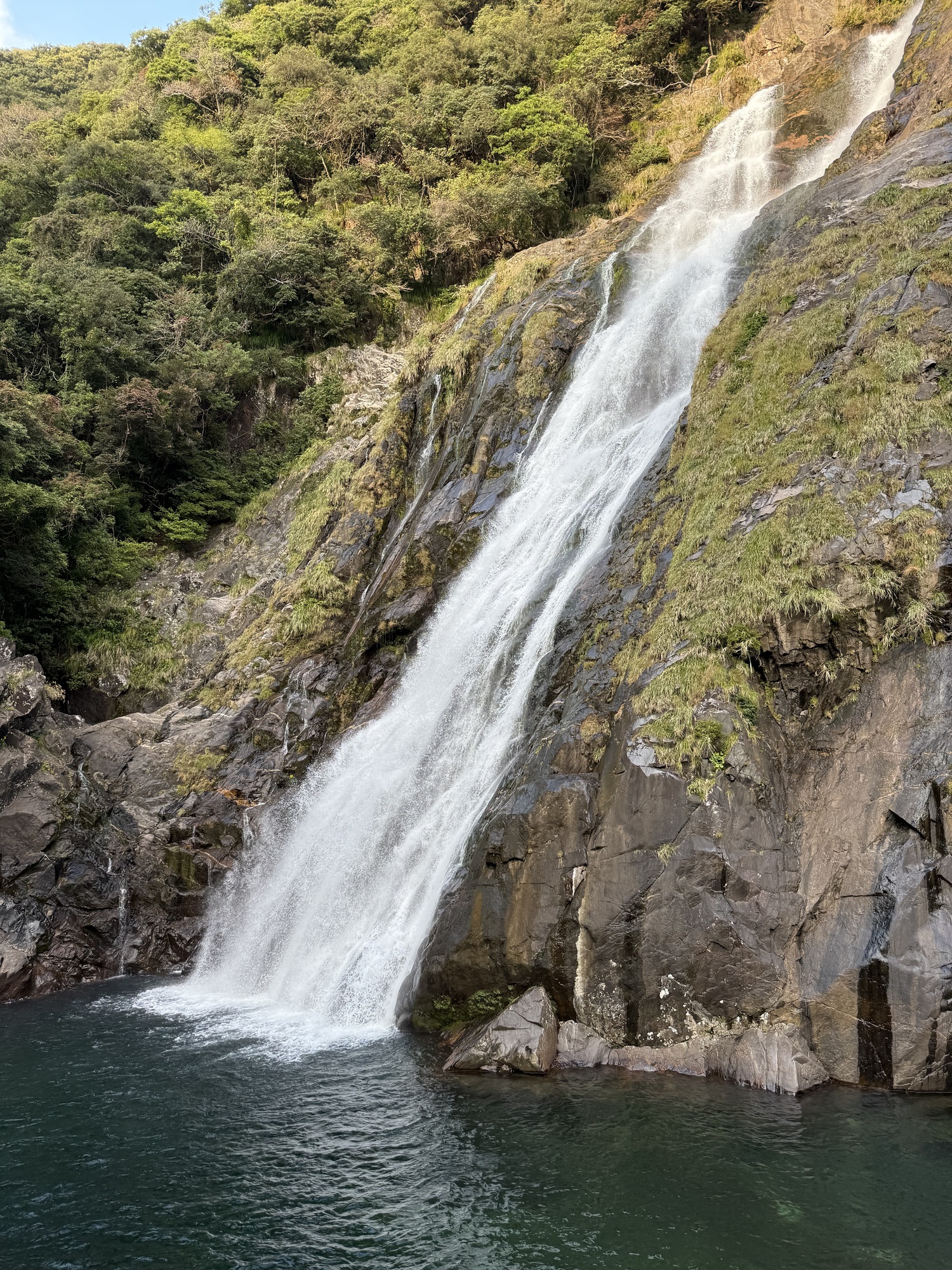
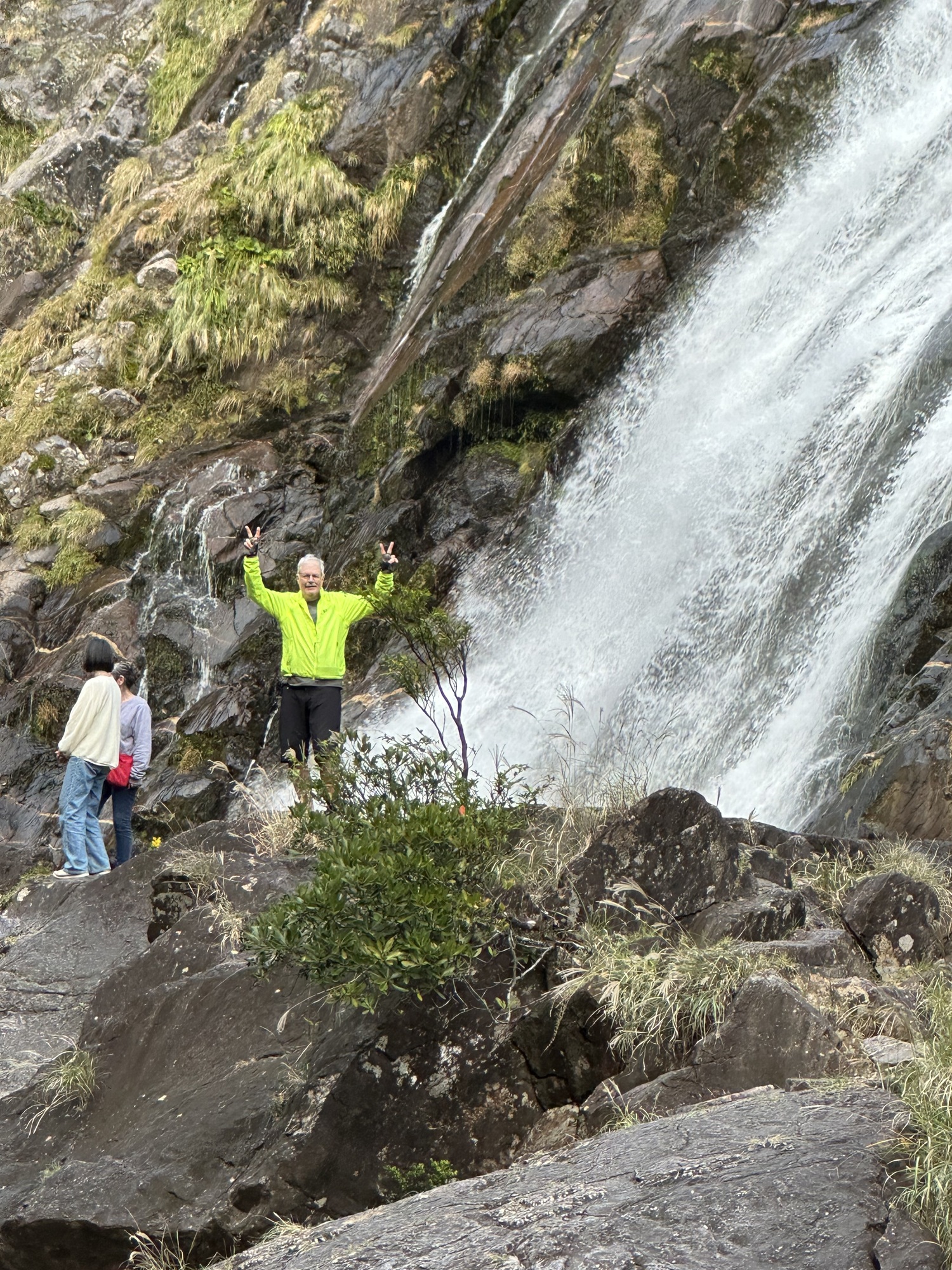
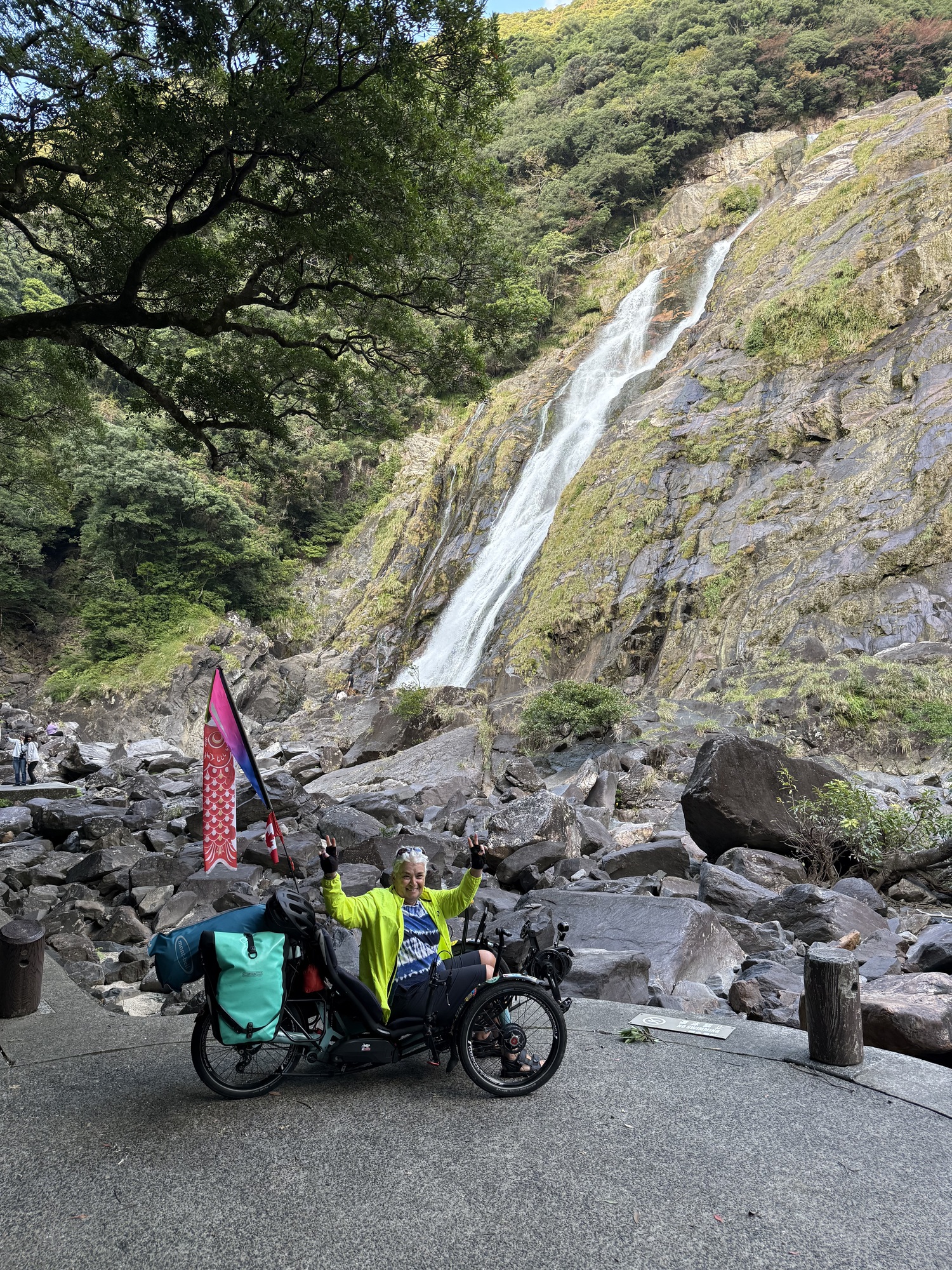
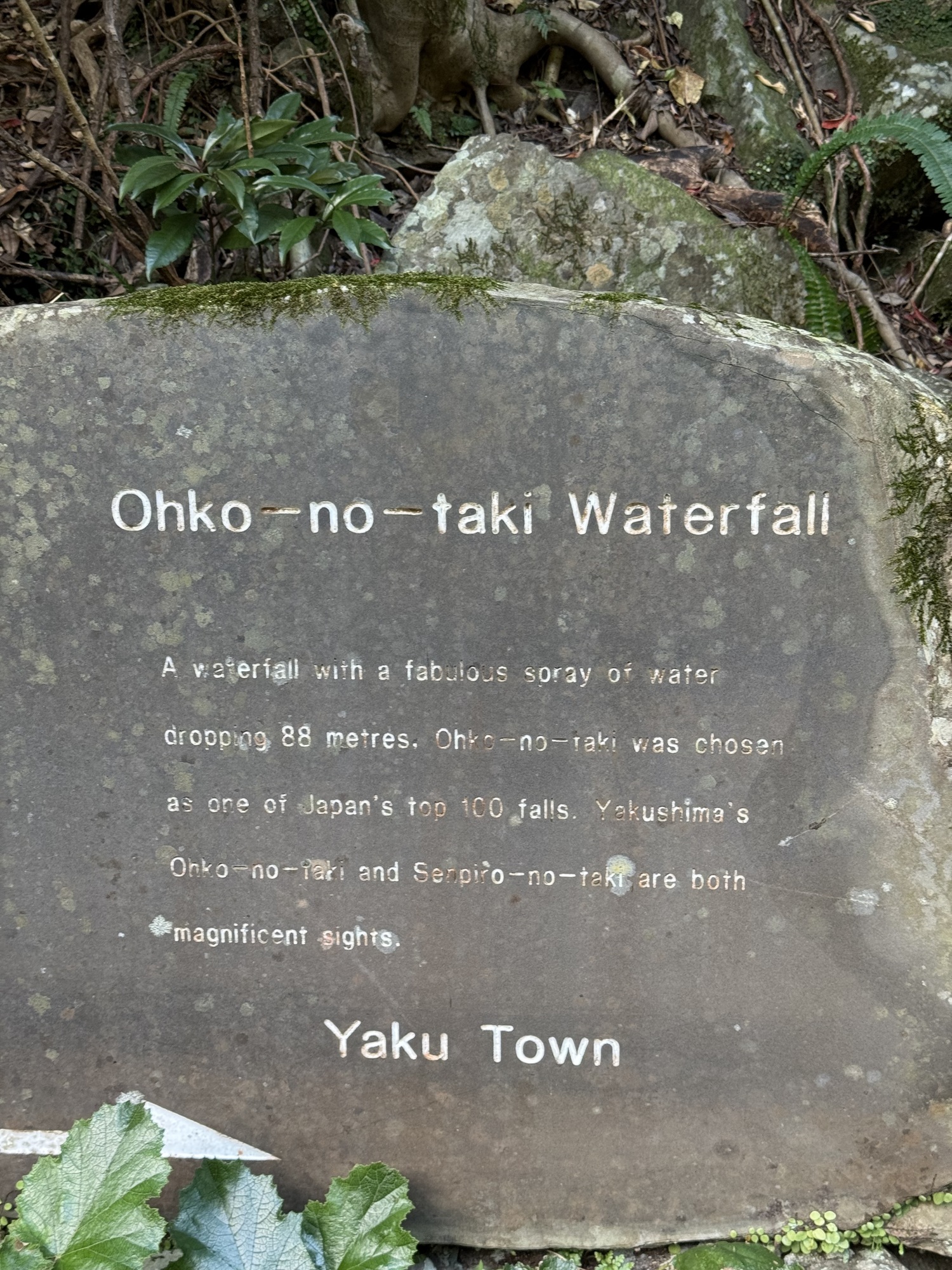
The road around the island is on the coast and the rest of the island is mountainous wrapped in a dense forest. It often goes straight up from the road. We get to see lots of waterfalls.
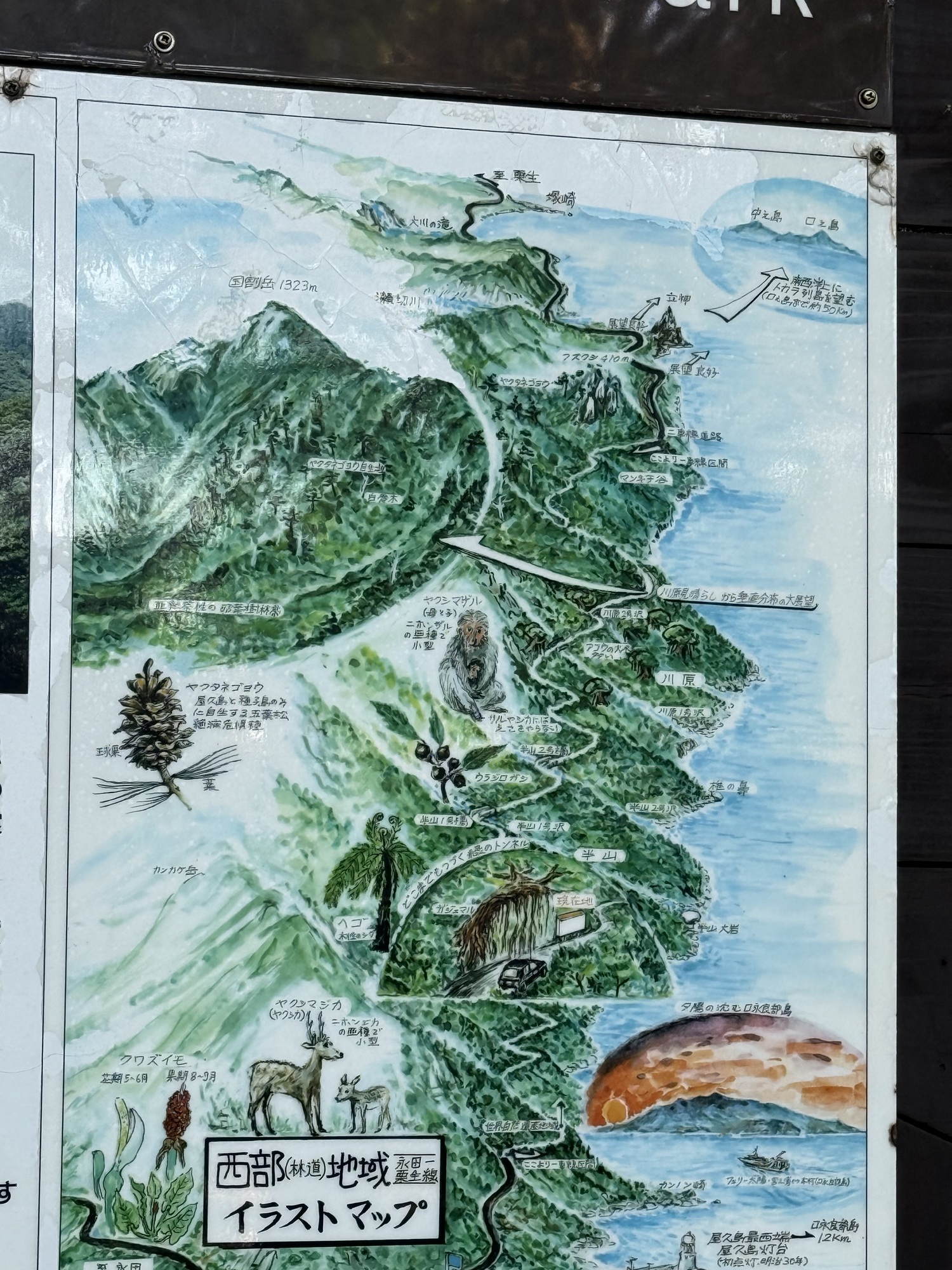
We are making our way….slow but sure. The hills along the coast are a major part of the day. There is no settlement inland. It is mountainous with areas designated for hiking and mountain climbing.
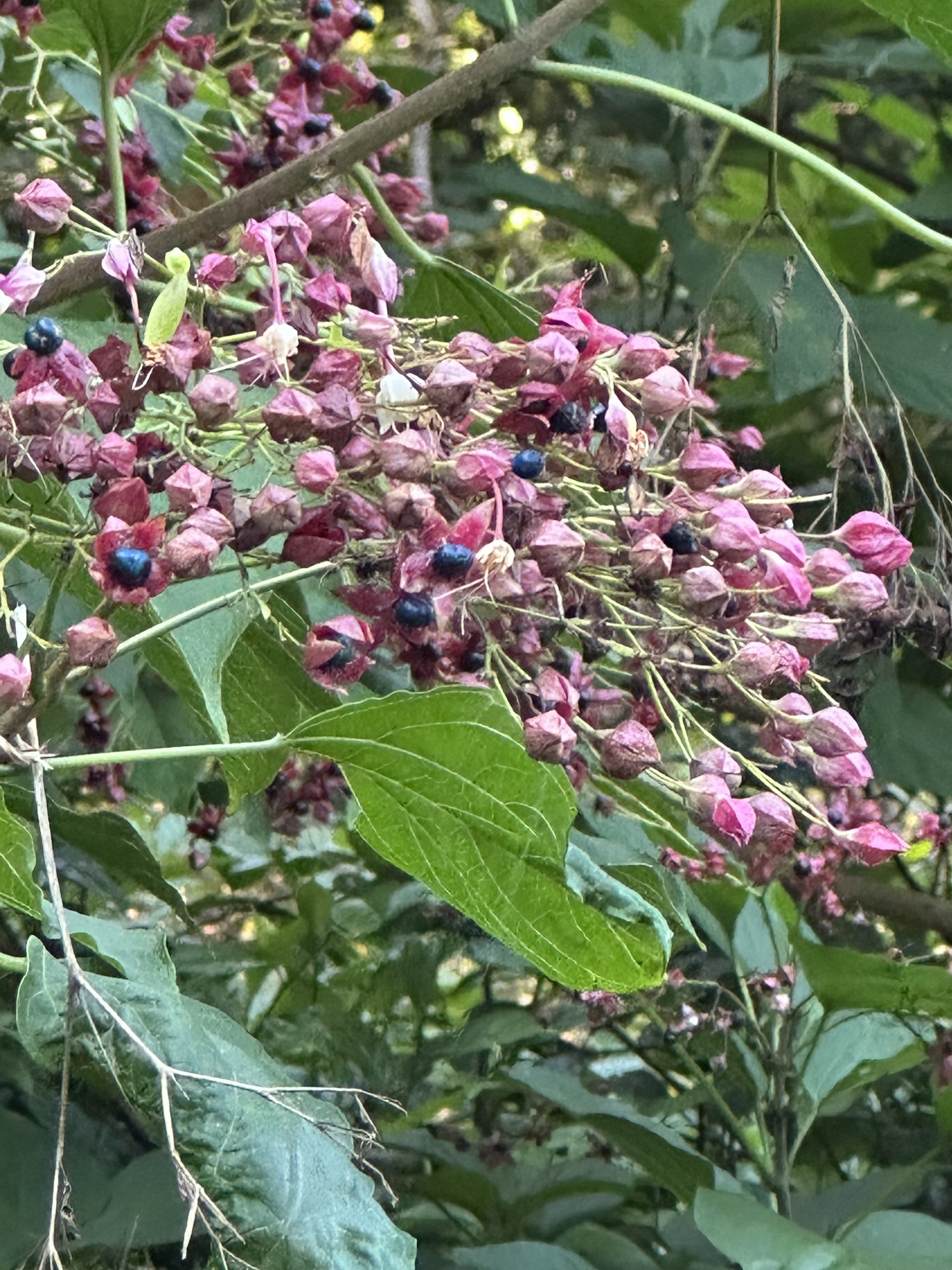
This plant is called the Harlequin Glorybower, also known as the Peanut Butter Tree due to its peanut butter scent. The berries are toxic to human and animals.
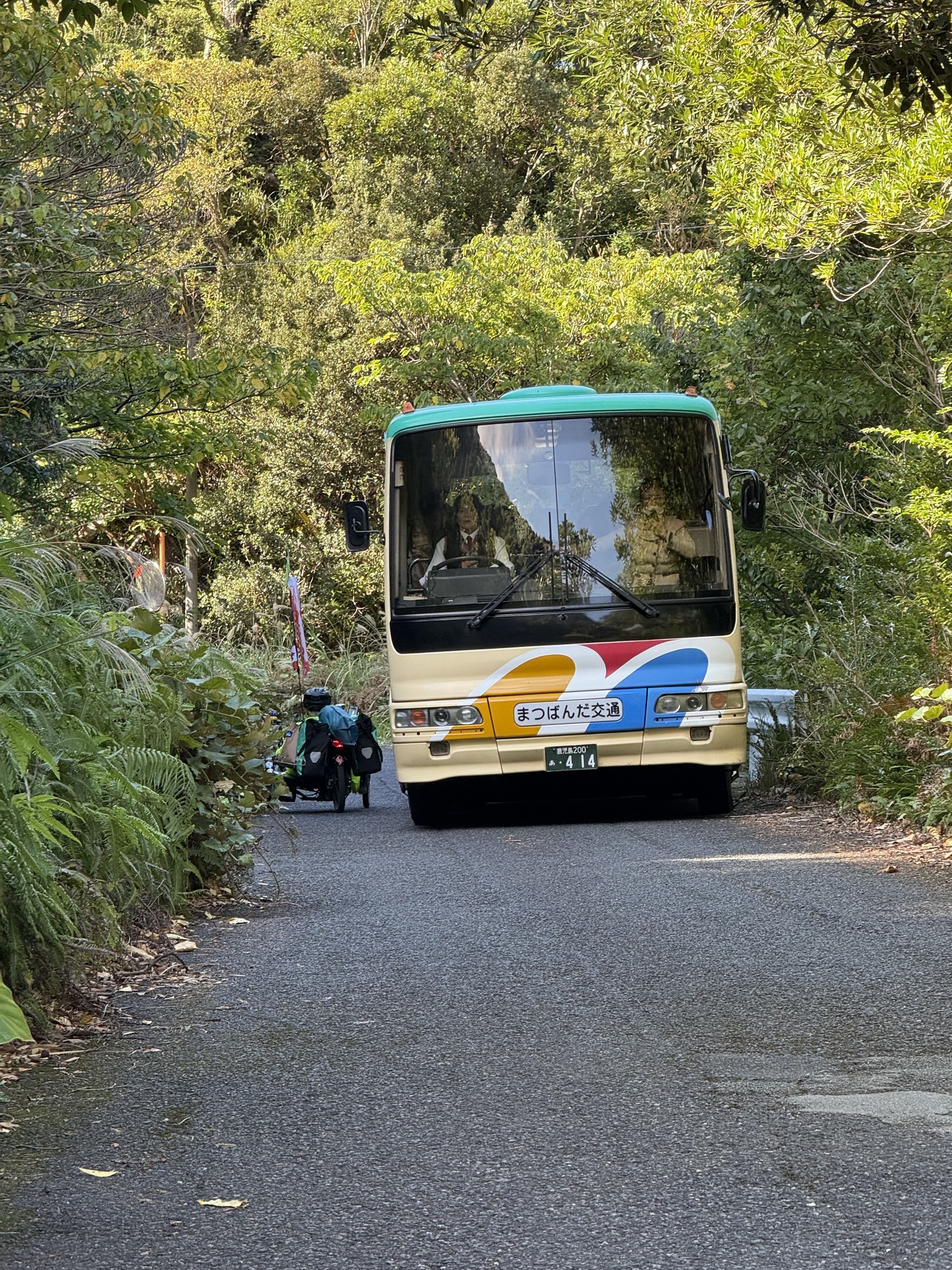
Well, this was a shock! We have seen just a few vehicles, but this tour bus is the width of the road. I guess it is a way for people to see this coast, but thankfully this was the only one we encountered. Now back to the solitude of this piece of paradise.
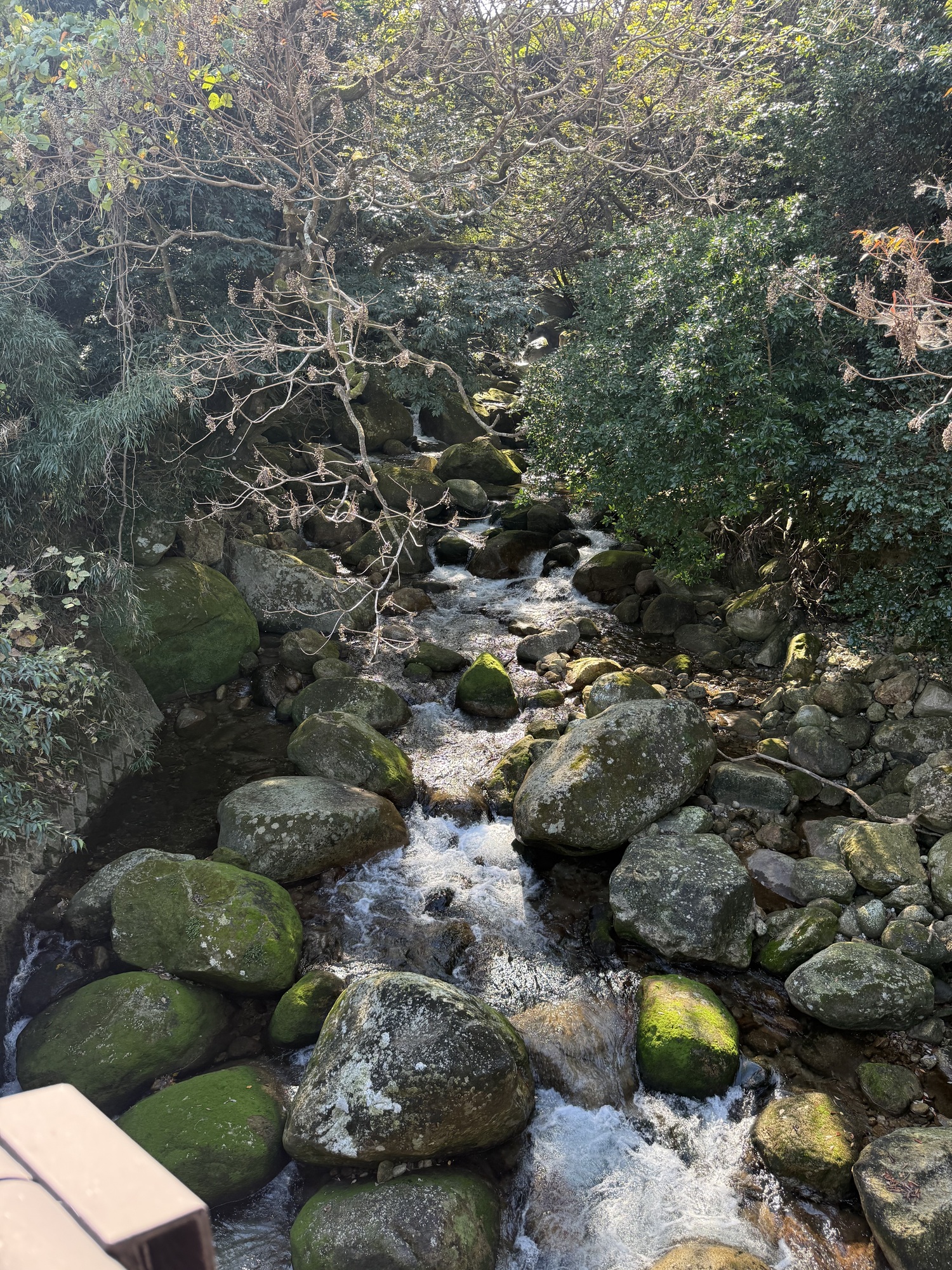
As you are riding along, the sound of cascading water is a common companion. Waterfalls and streams continually make their way down to the road and the coast.
We aren’t making much distance as there is so much to see. We are constantly stopping to read signs describing the view or features of where we are, to listen to the water coming down the mountain, visiting with monkeys and deer, and just acknowledging what a special place we are in.…
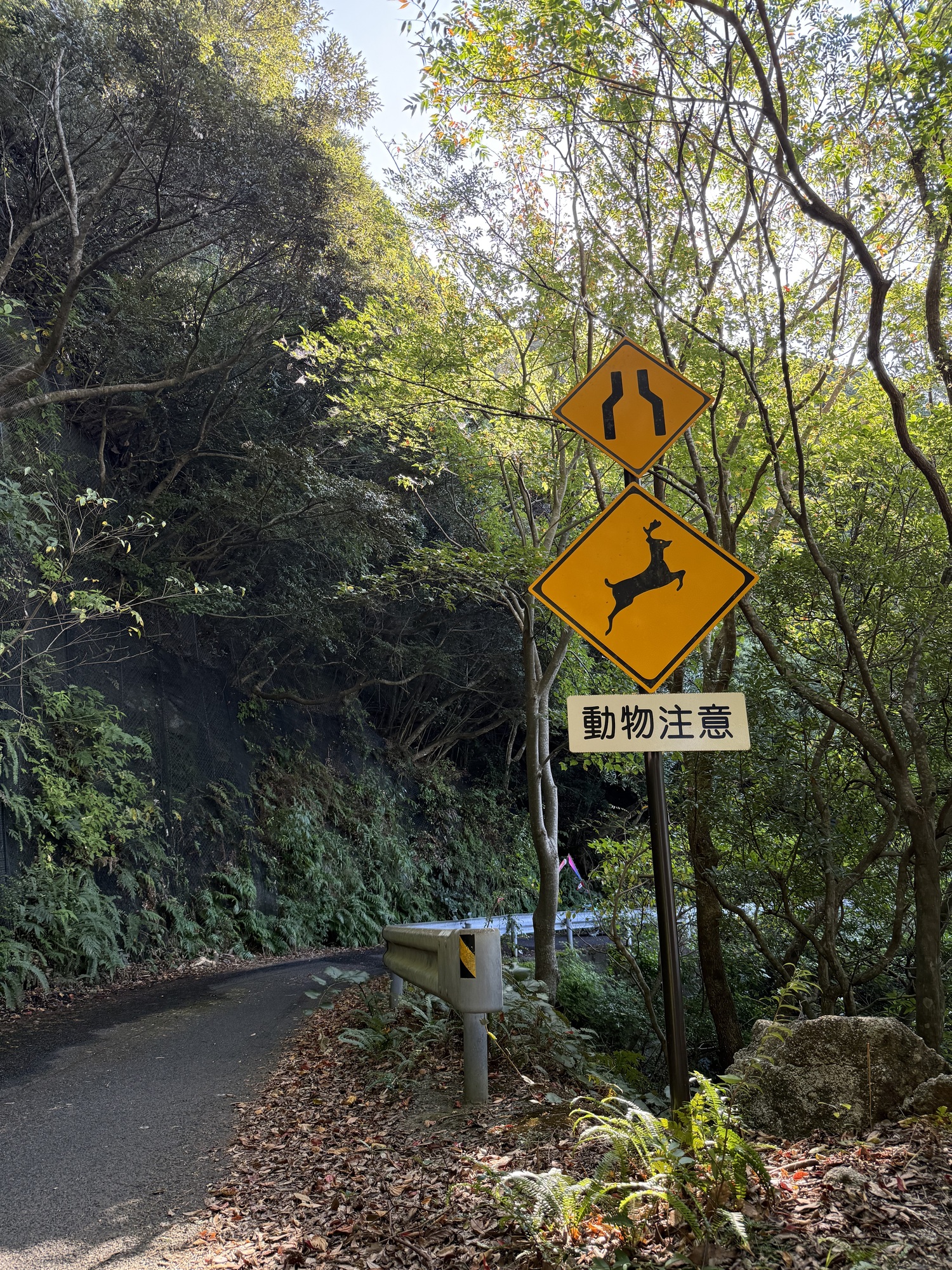
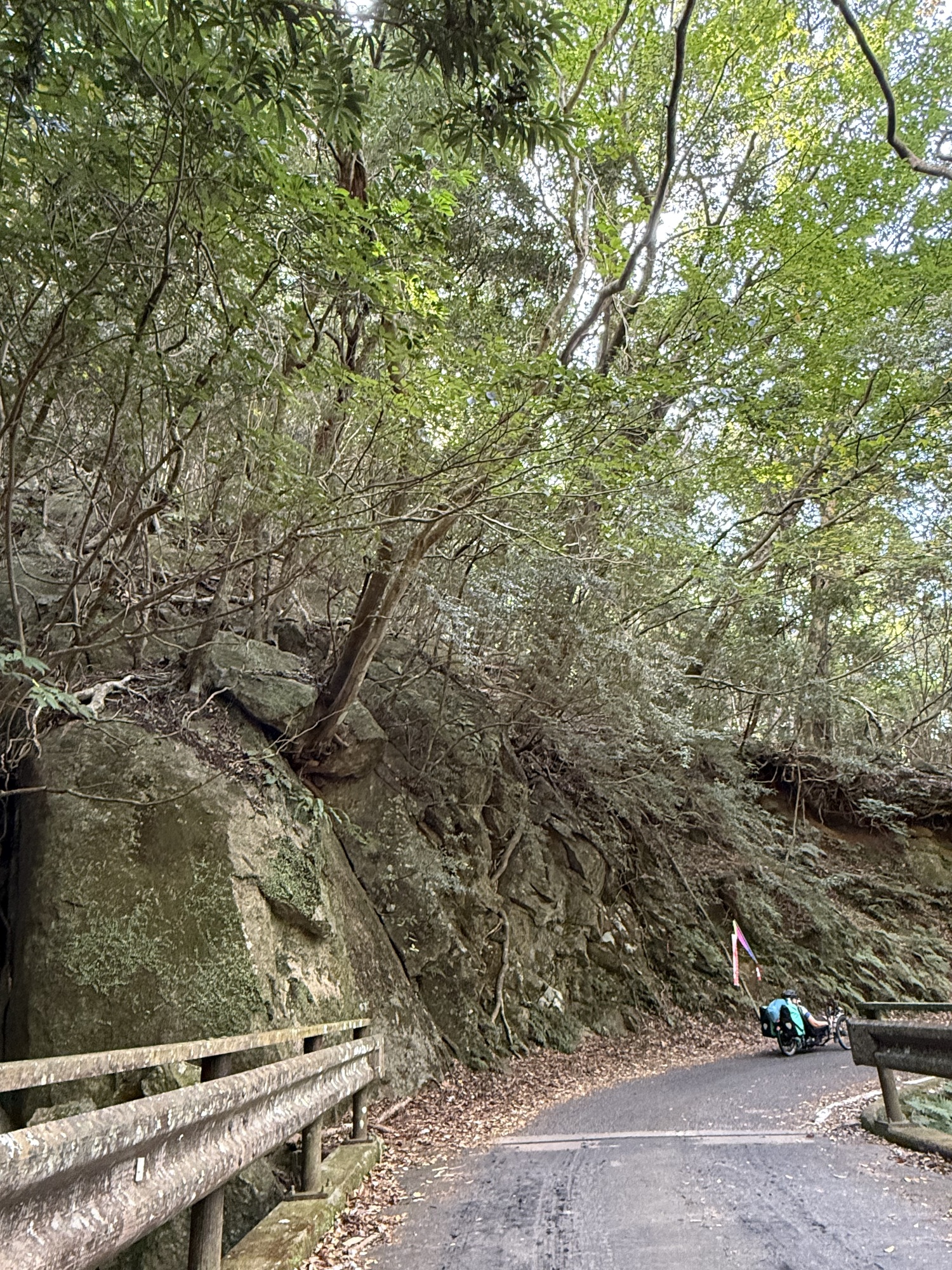
Rock walls right up to the road…the road is getting narrower which makes two way traffic a challenge. The good thing is slow travel is necessary here, especially with wildlife so close.
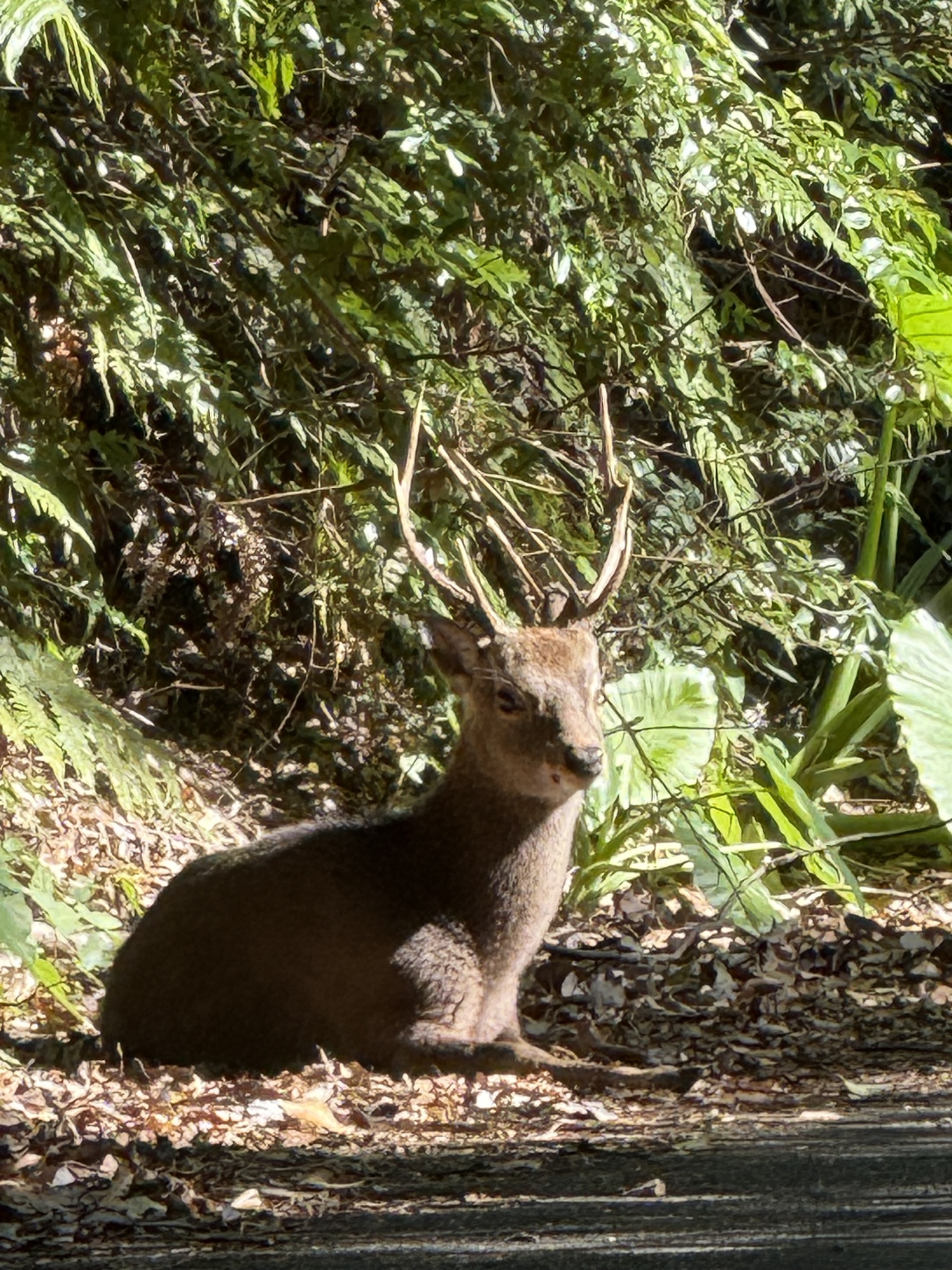
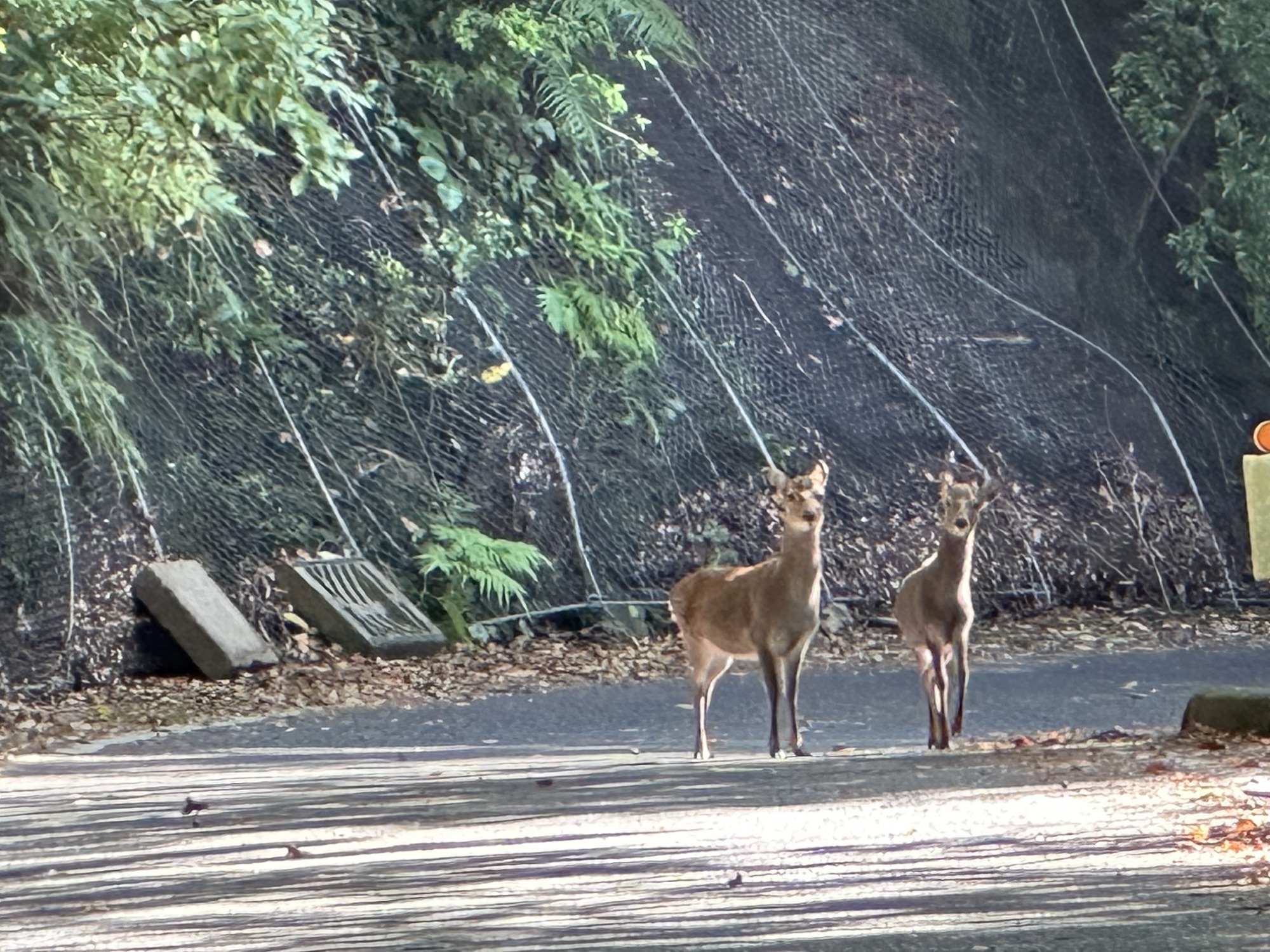
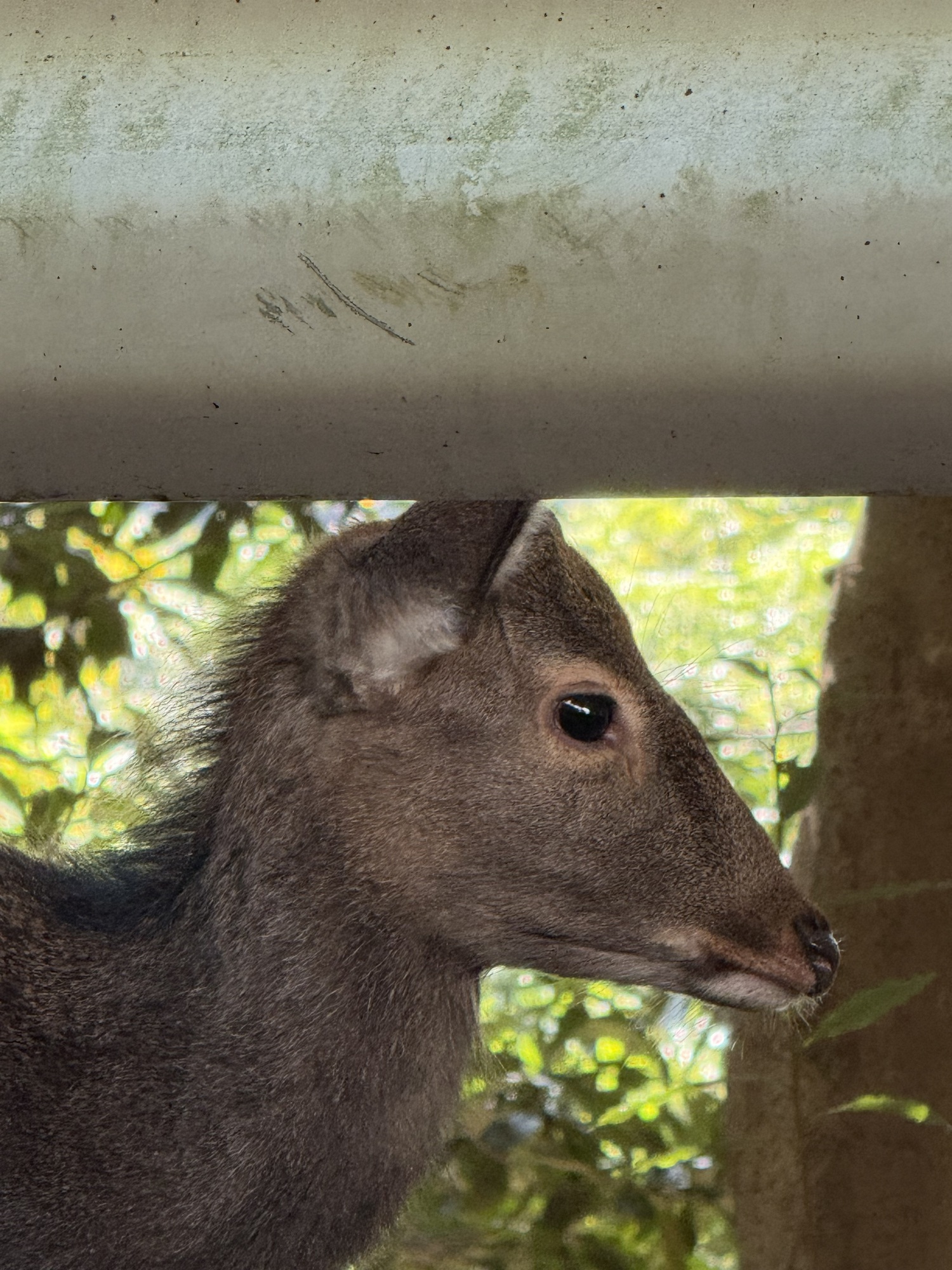
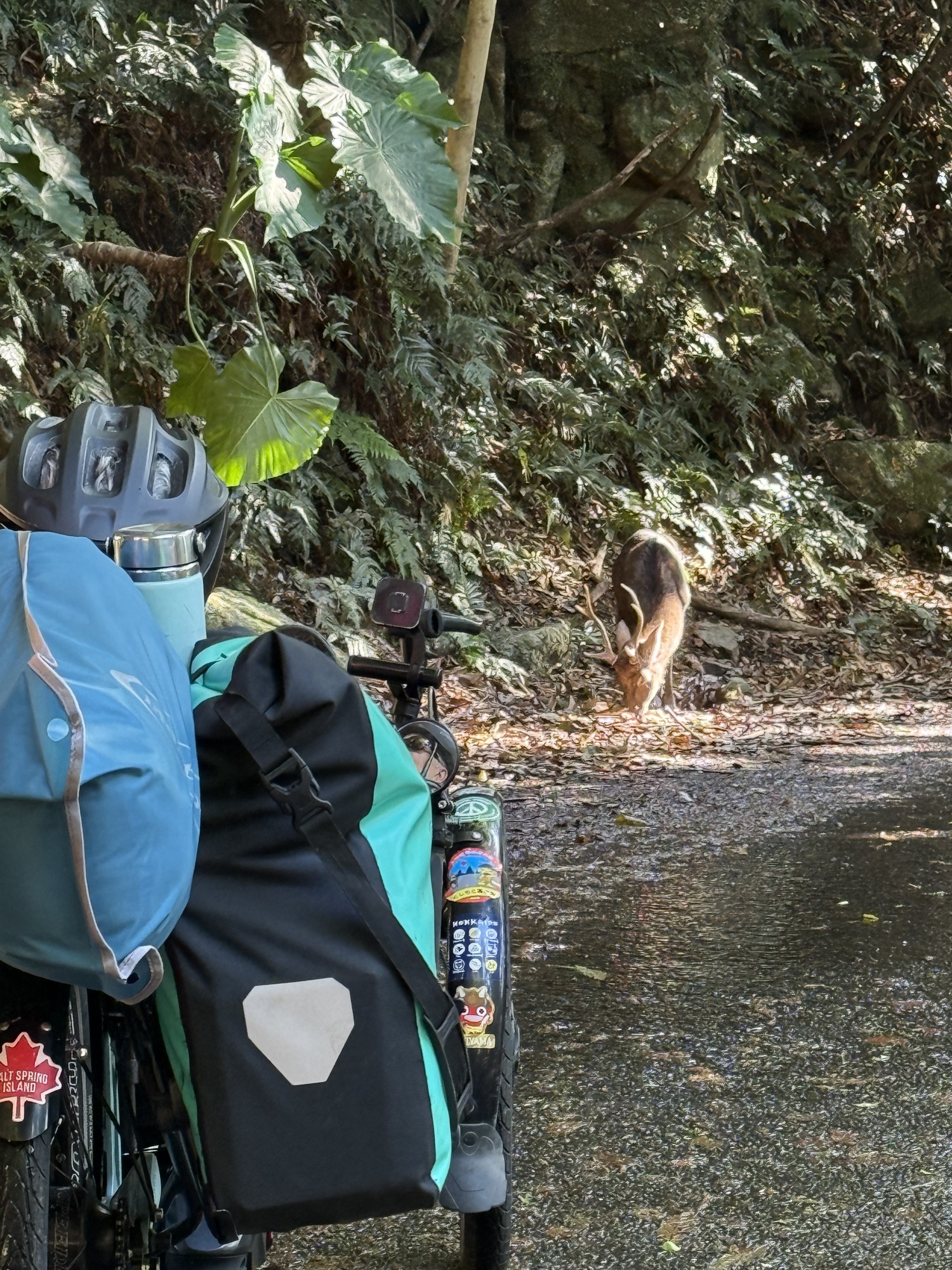
No monkeys but we do get our first sighting of a sika deer enjoying the sun. We seem to not be a threat to them on our trikes. They certainly keep an eye on us but they don’t flee when we arrive. As we were leaving, we had no option to give him space, but he wasn’t bothered. Cars will be a different thing.
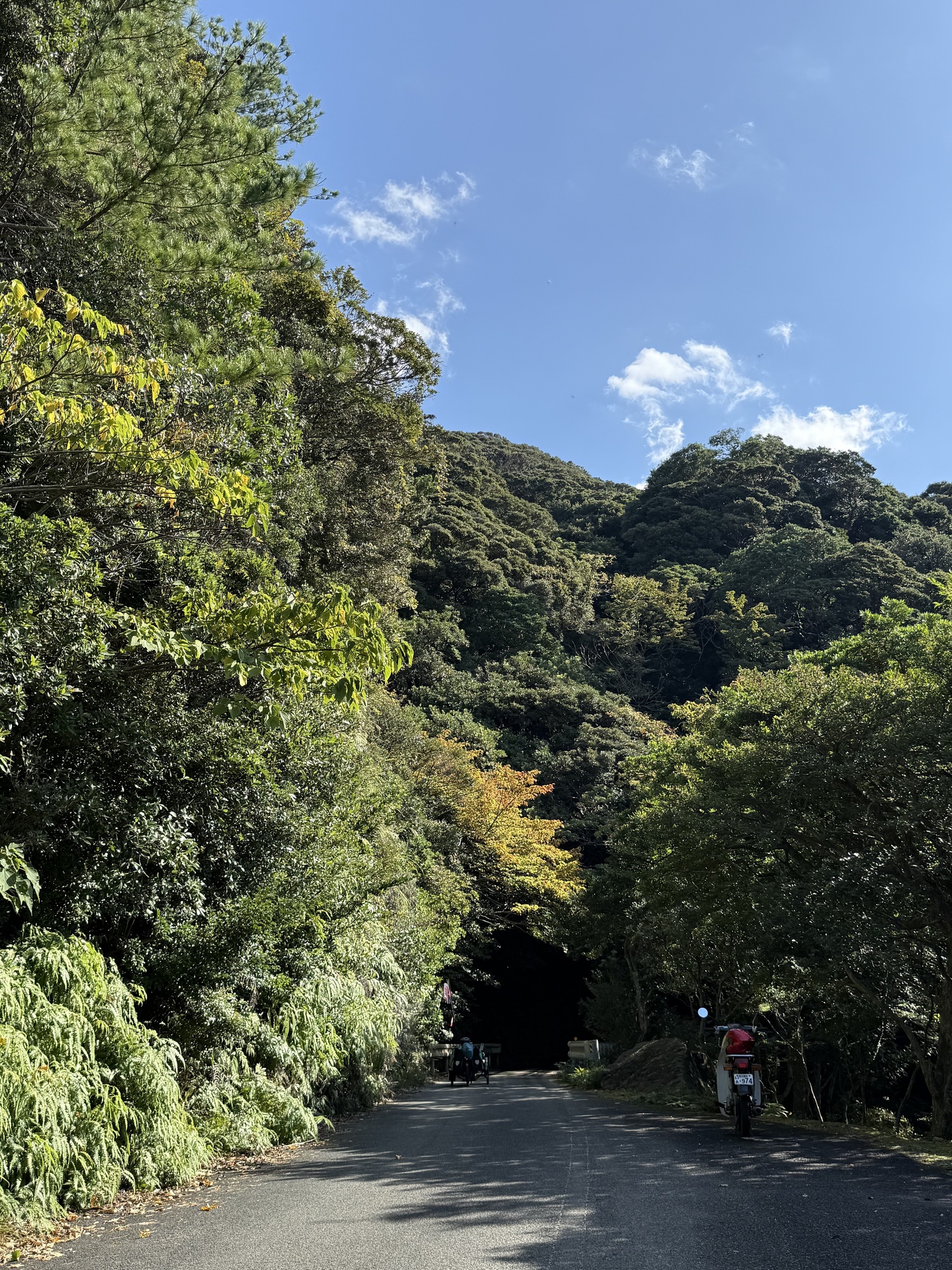
The occasional bridge is welcome as it gives us a great view of the cavern below and the ocean. We appreciate not having to do the long descent and climb here.
Did I say not many cars…they are all here! Drivers have to be patient as many of the corners and areas are not wide enough for cars in both directions.
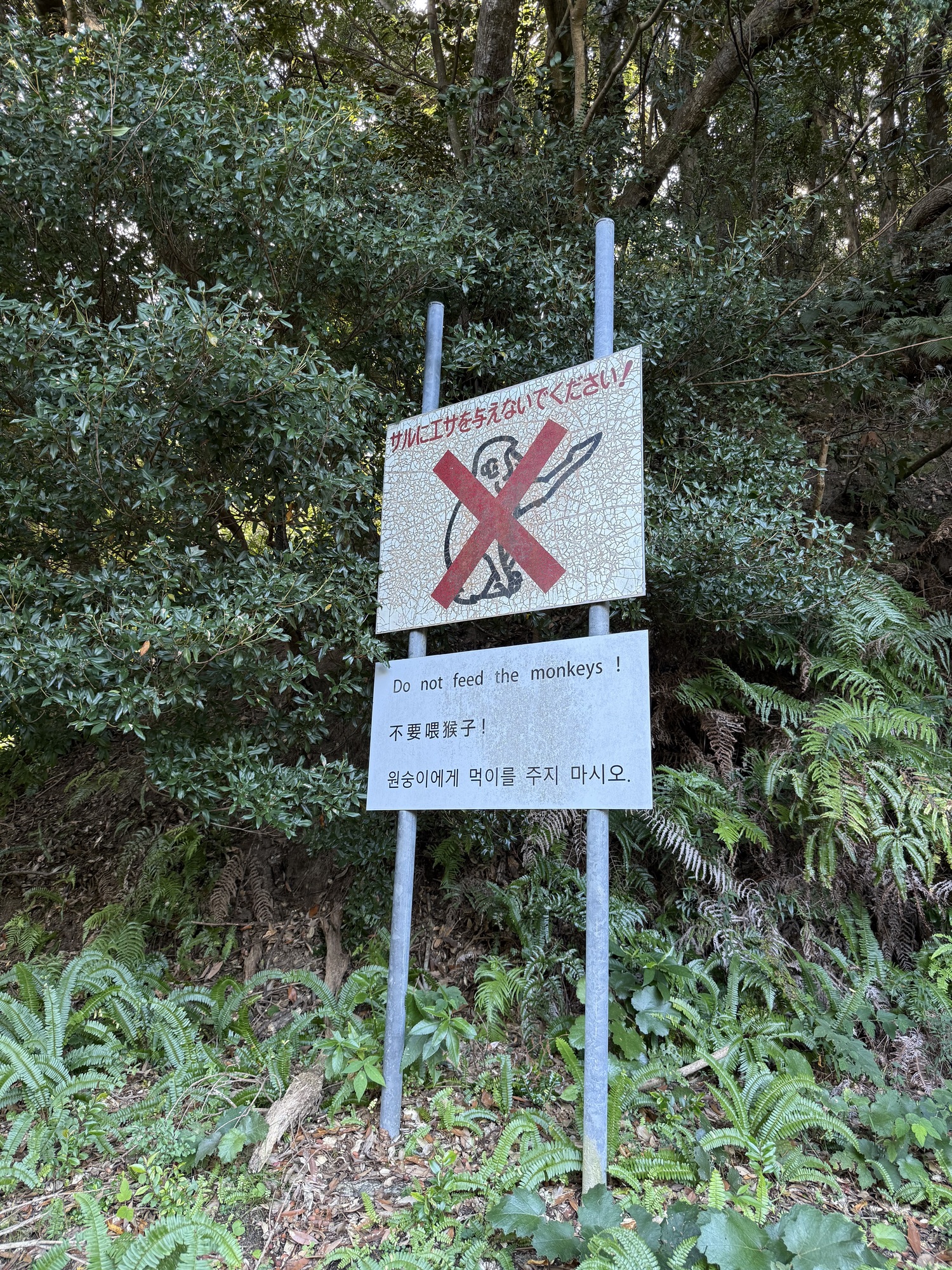
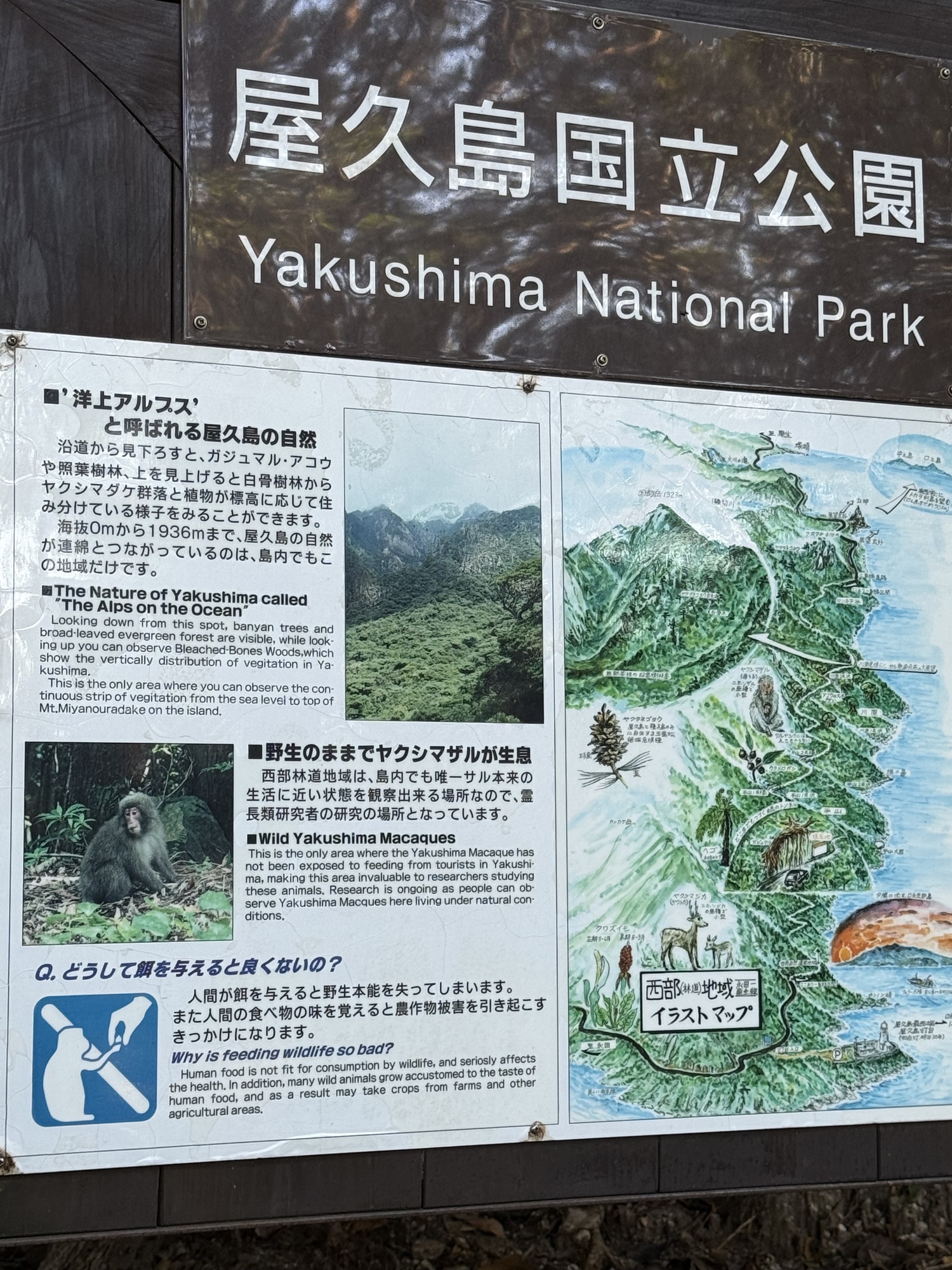
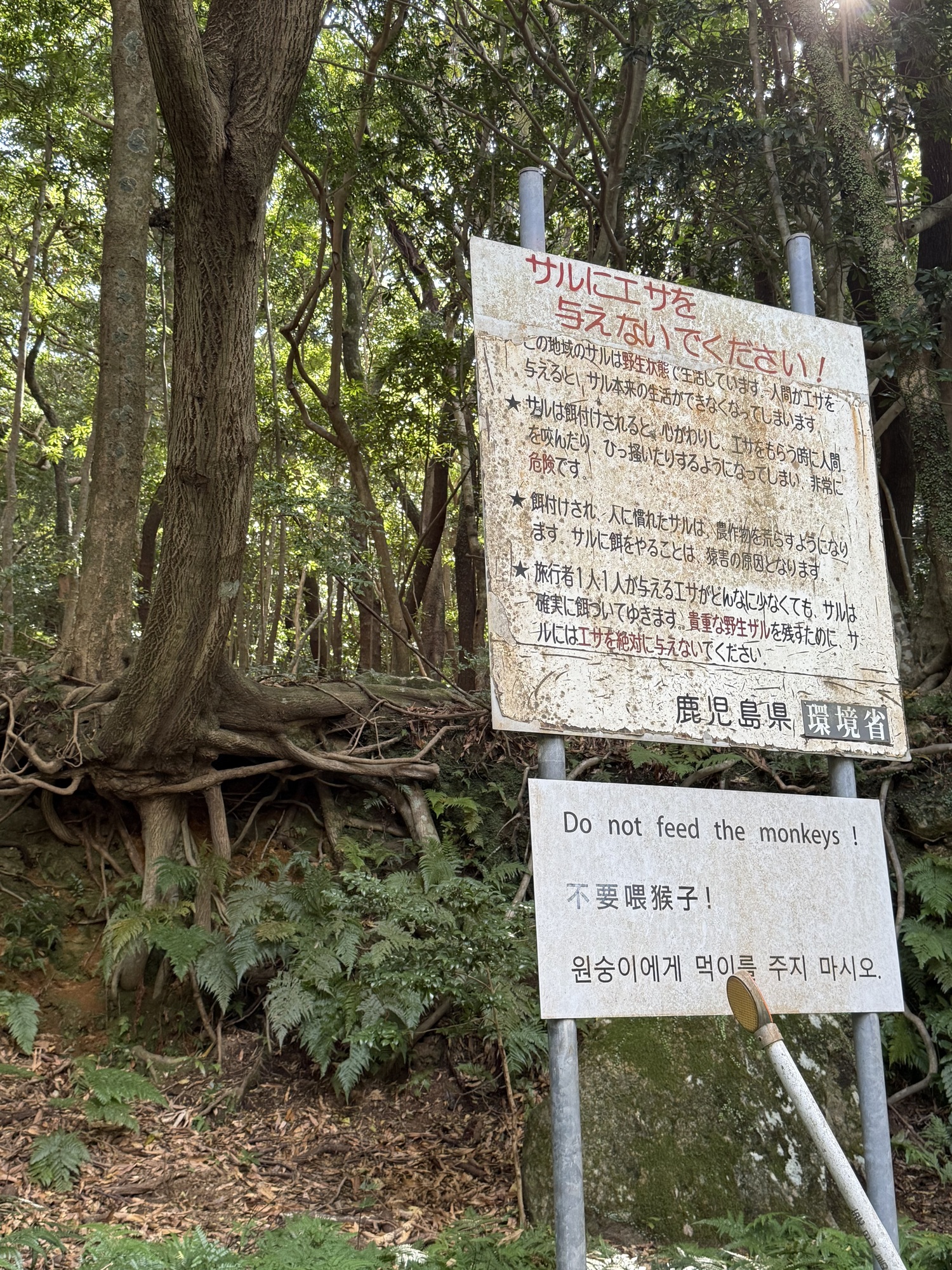
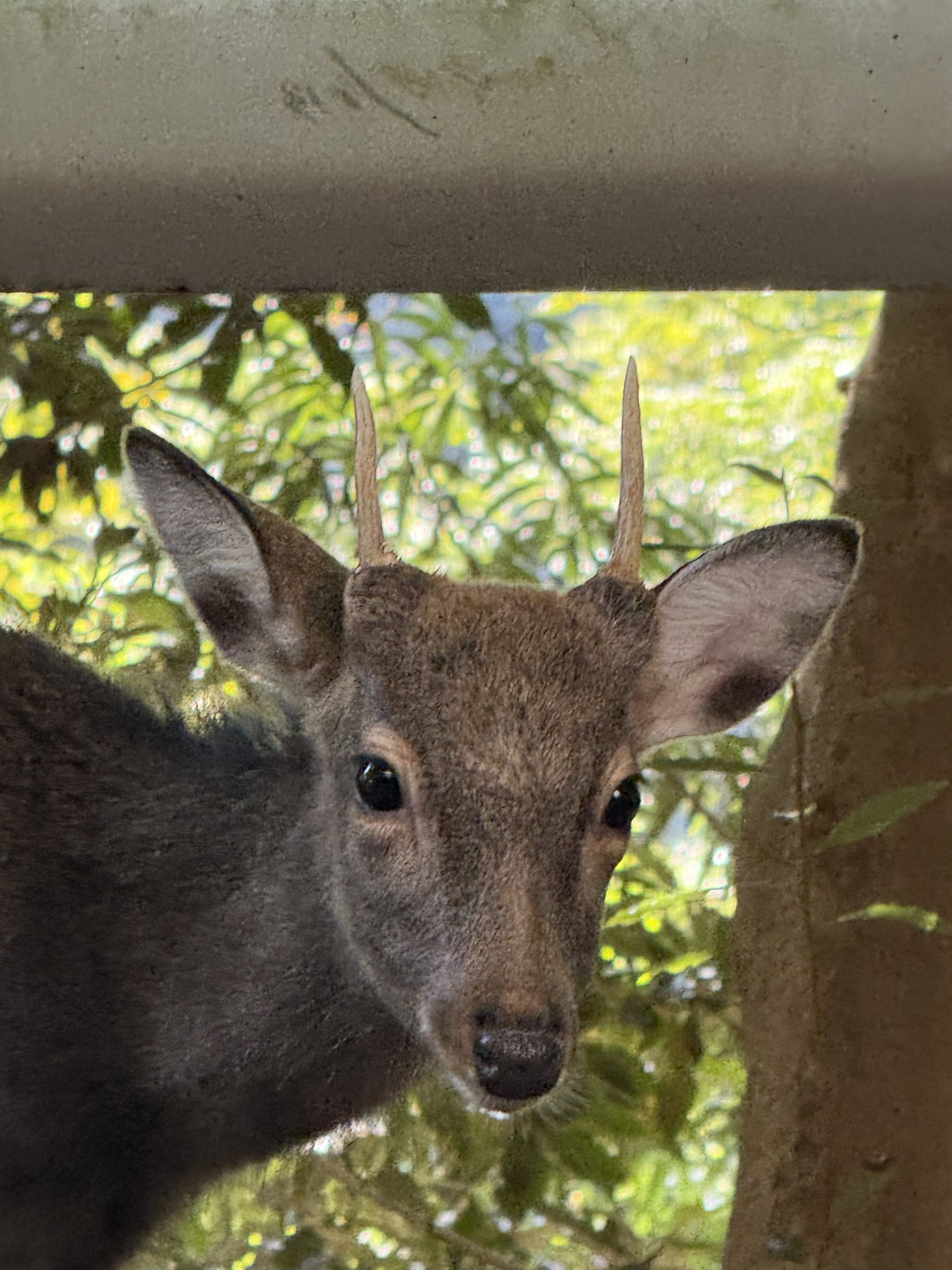
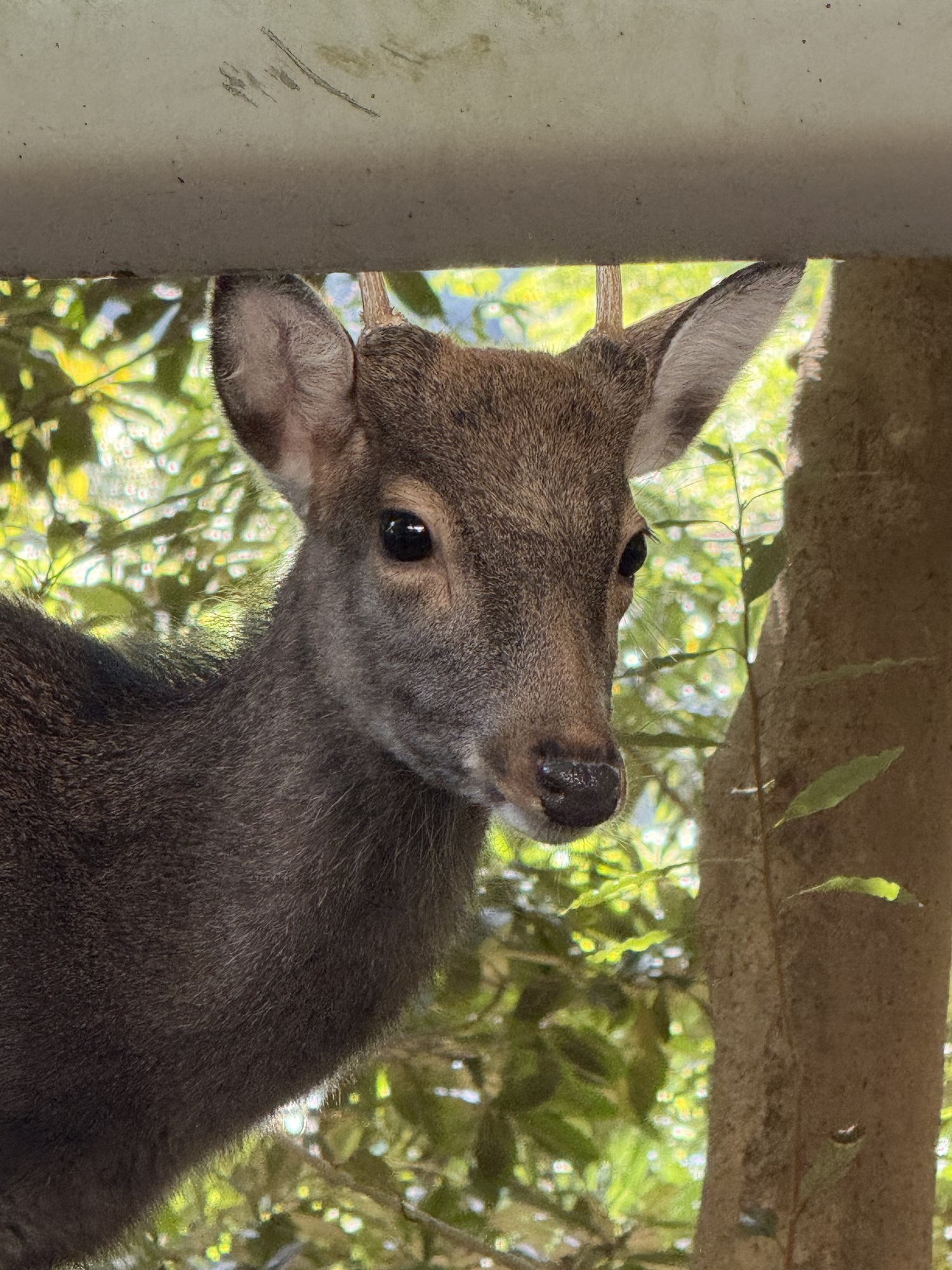
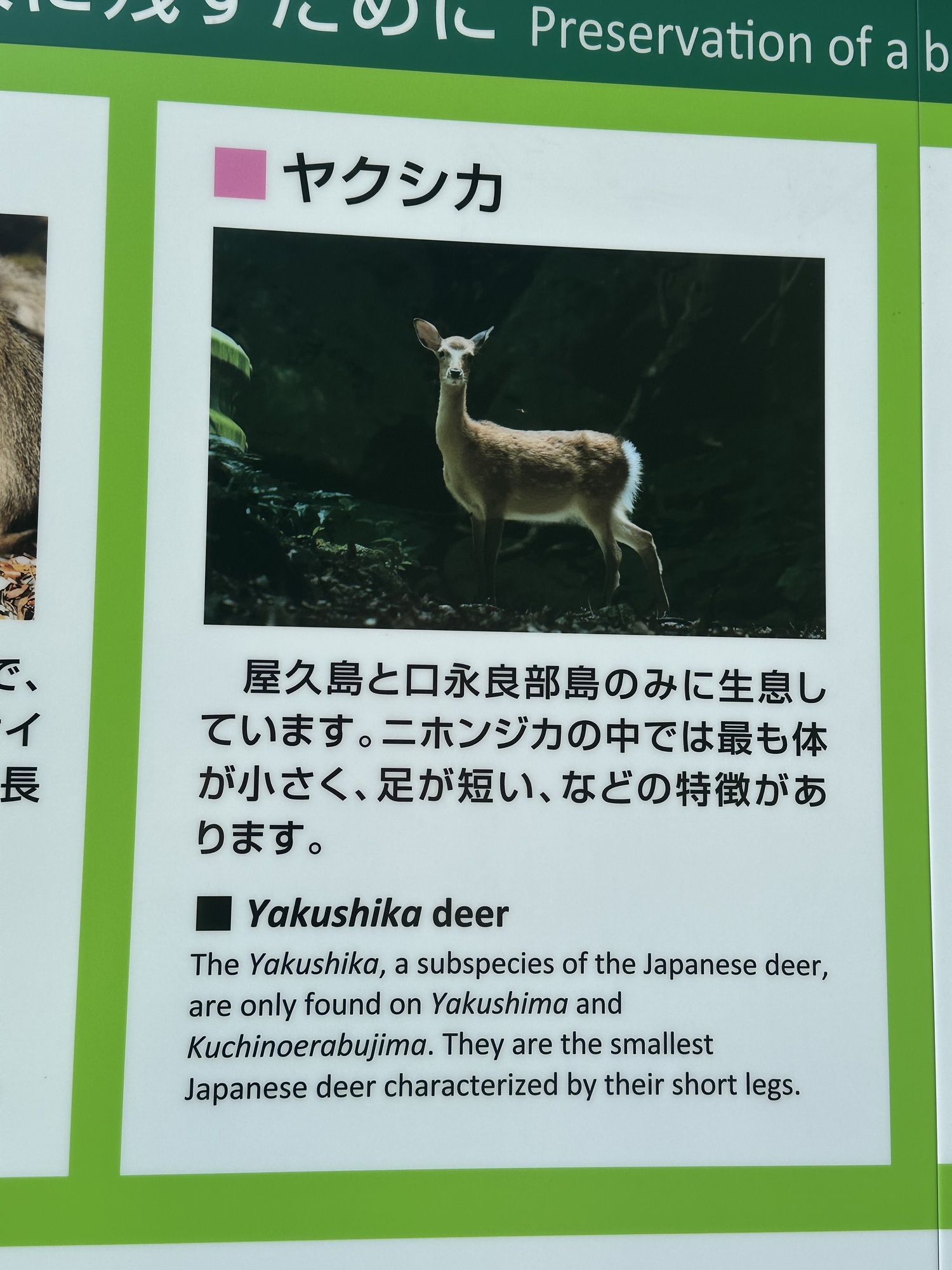
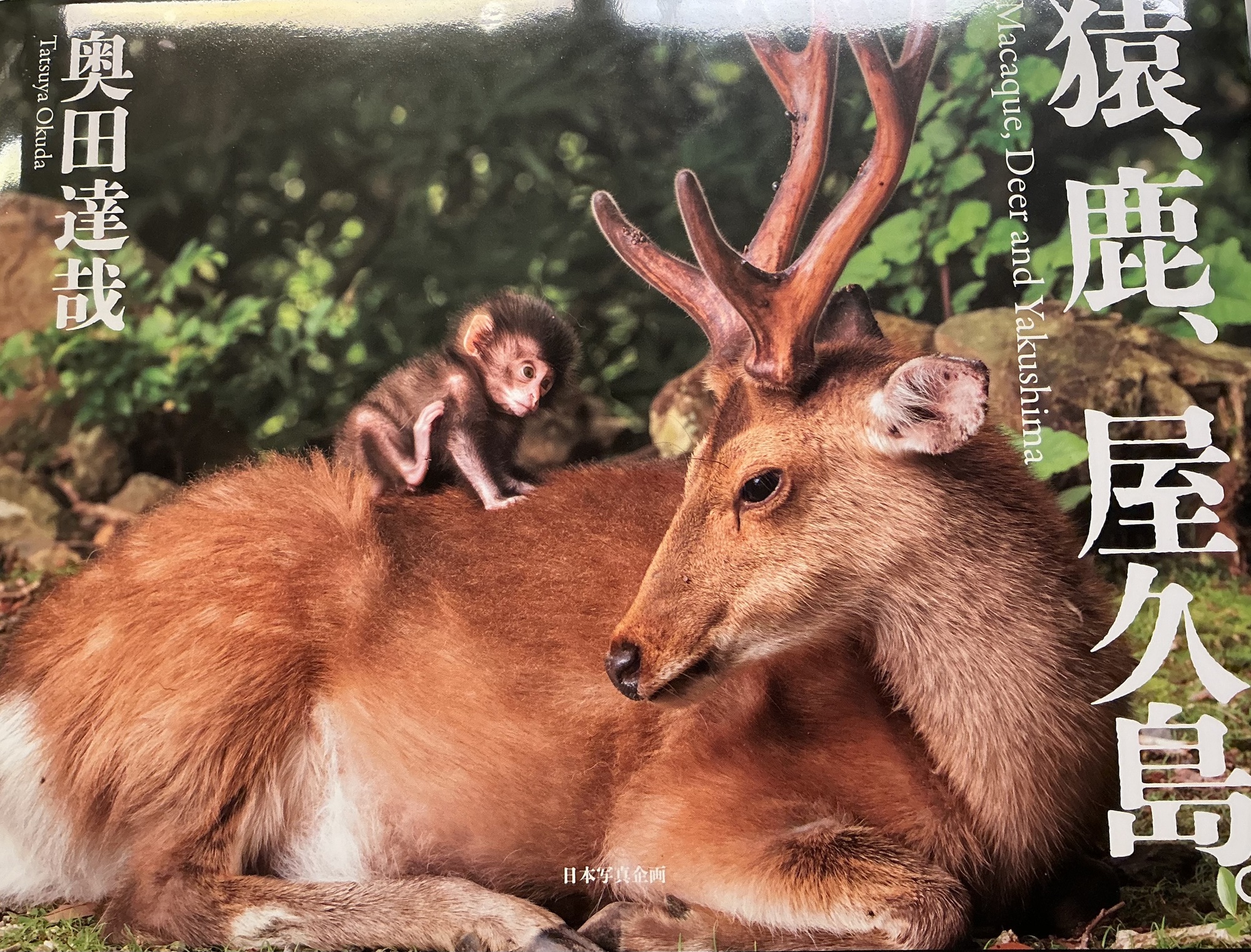
The beautiful Yakushima Sitka Deer is often regarded as a symbol of Yakushima Island. The deer is featured in local folklore and traditions. We were shocked when we first heard its loud high pitched vocalizations. There is a strong island policy of not feeding the deer and monkeys, so they make no connection with food when come into contact with humans. The estimated deer population on Yakushima fluctuates between 10,000 and 20,000. These deer only live on Yakushima and Kuchinoerabujima Island.
This deer is so close I could touch it, which I won’t. It is magical to be here and not pose a threat to them. They are curious about us and our weird trikes.
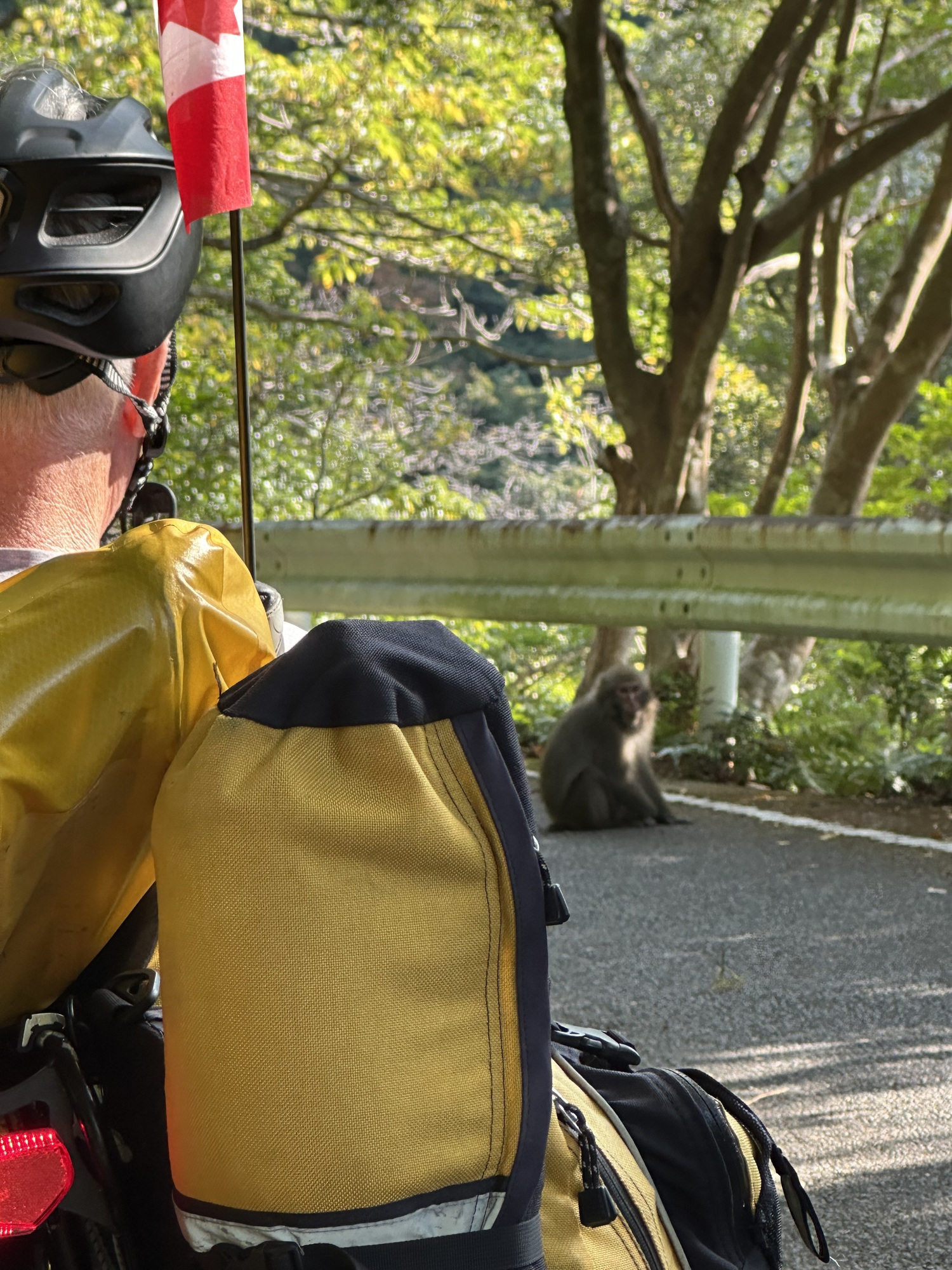
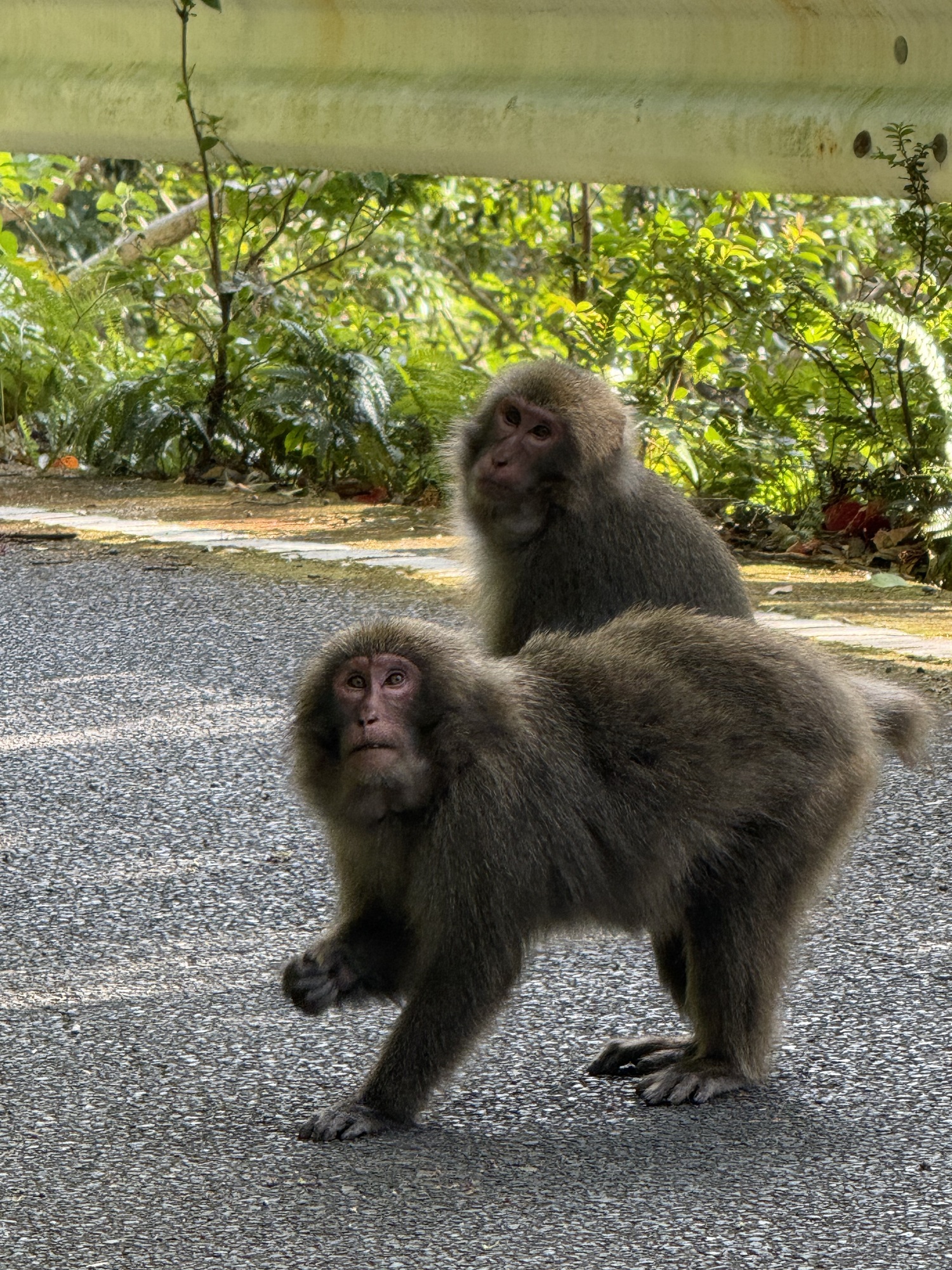
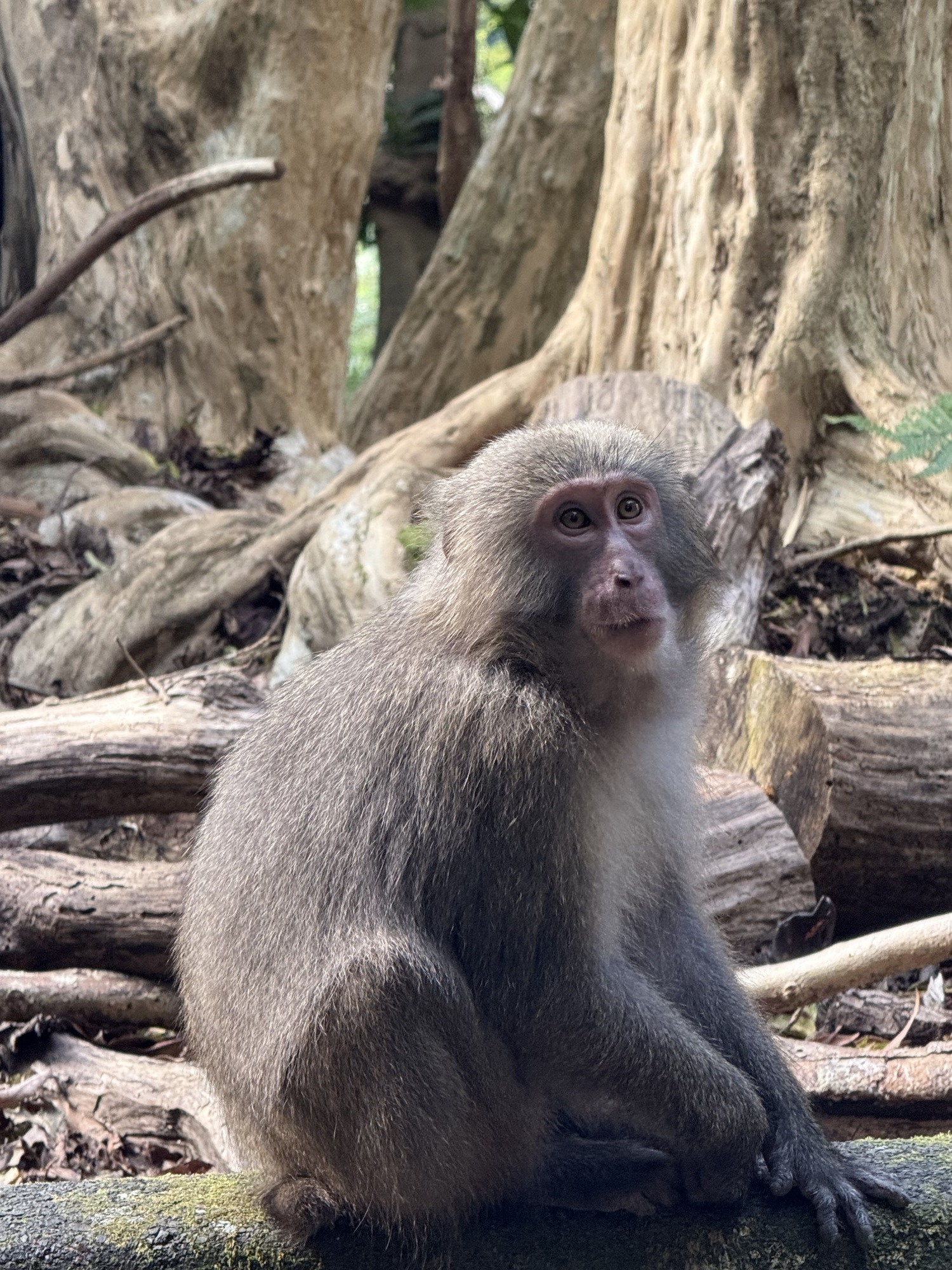
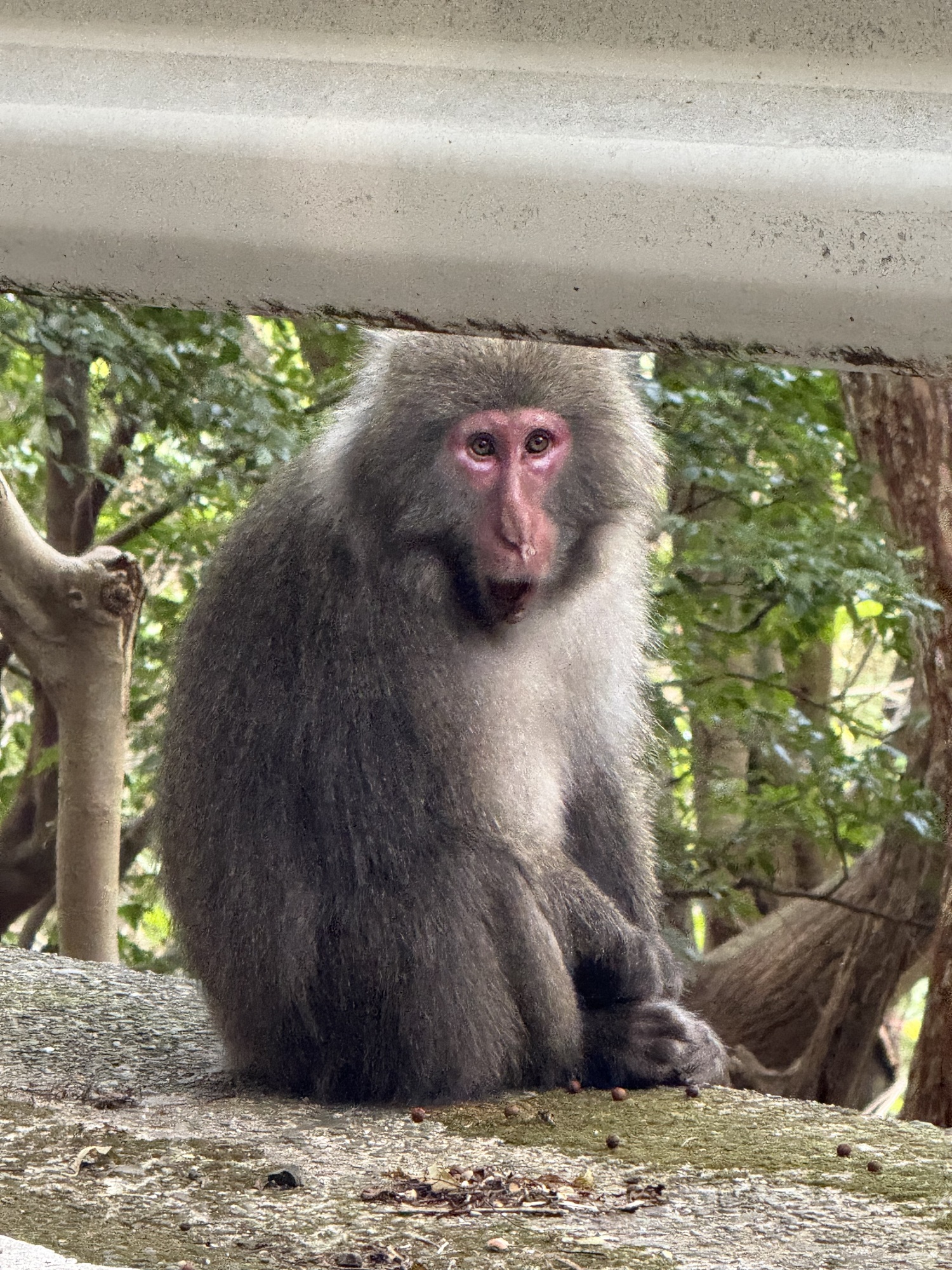
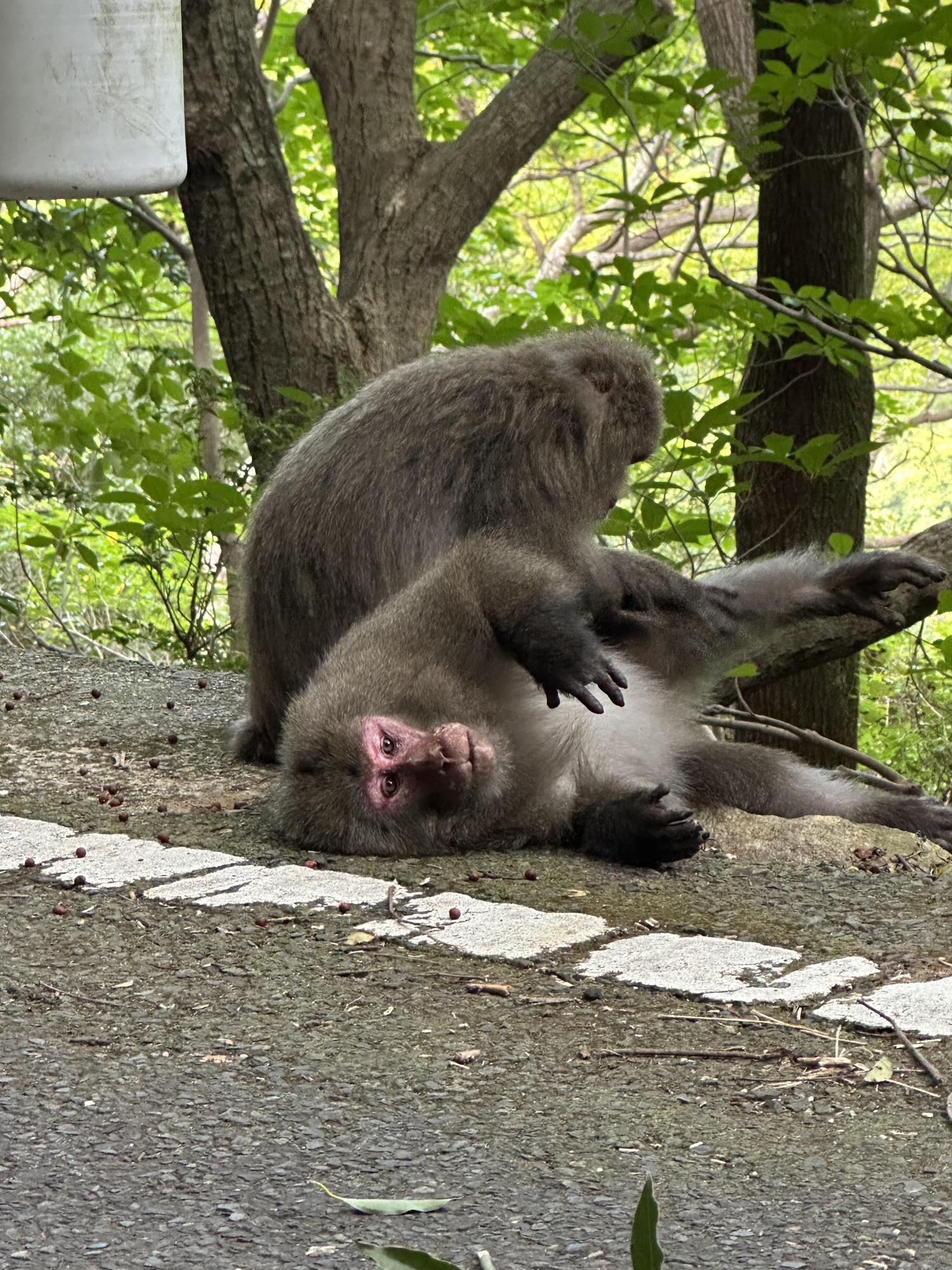
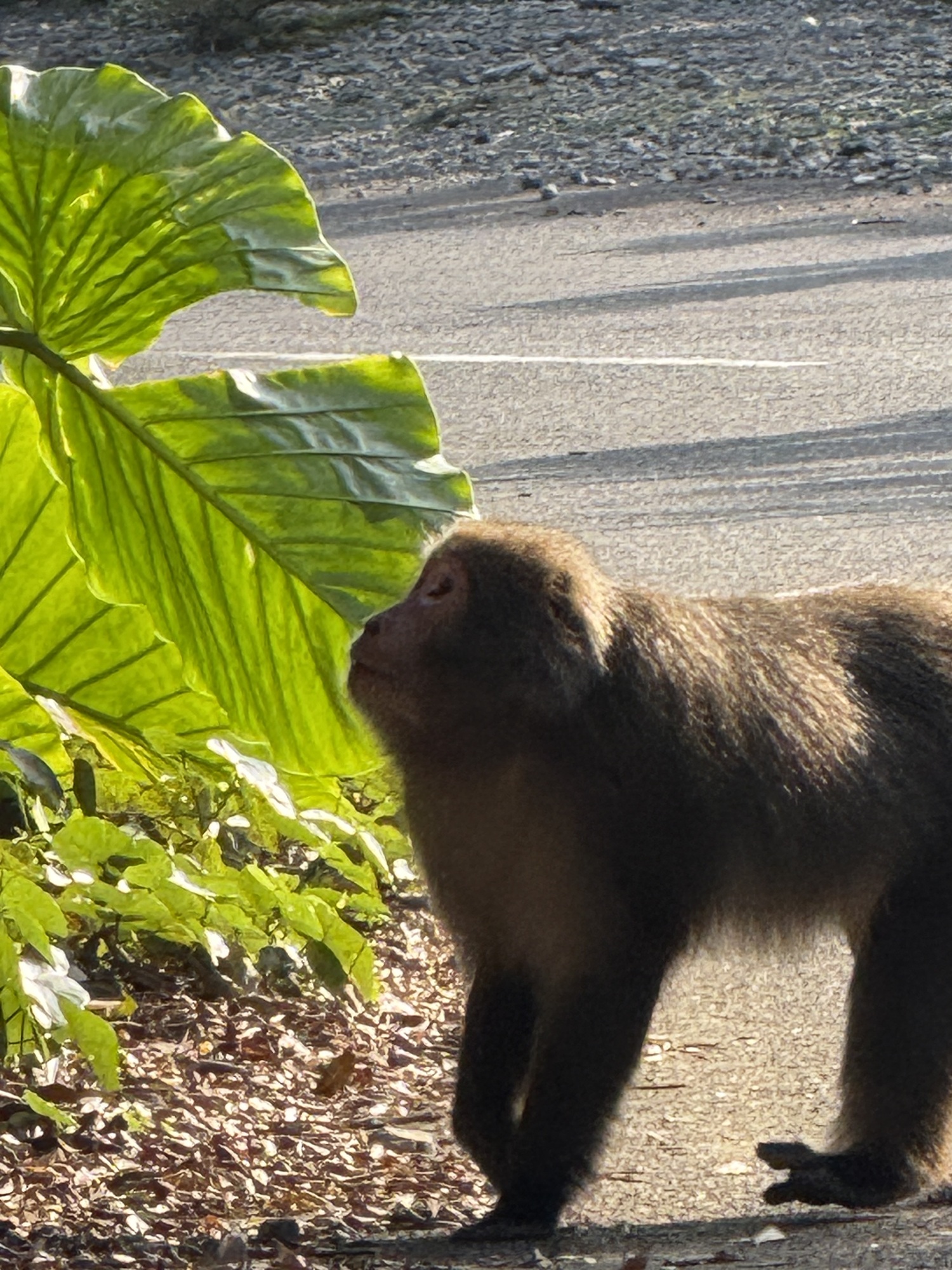
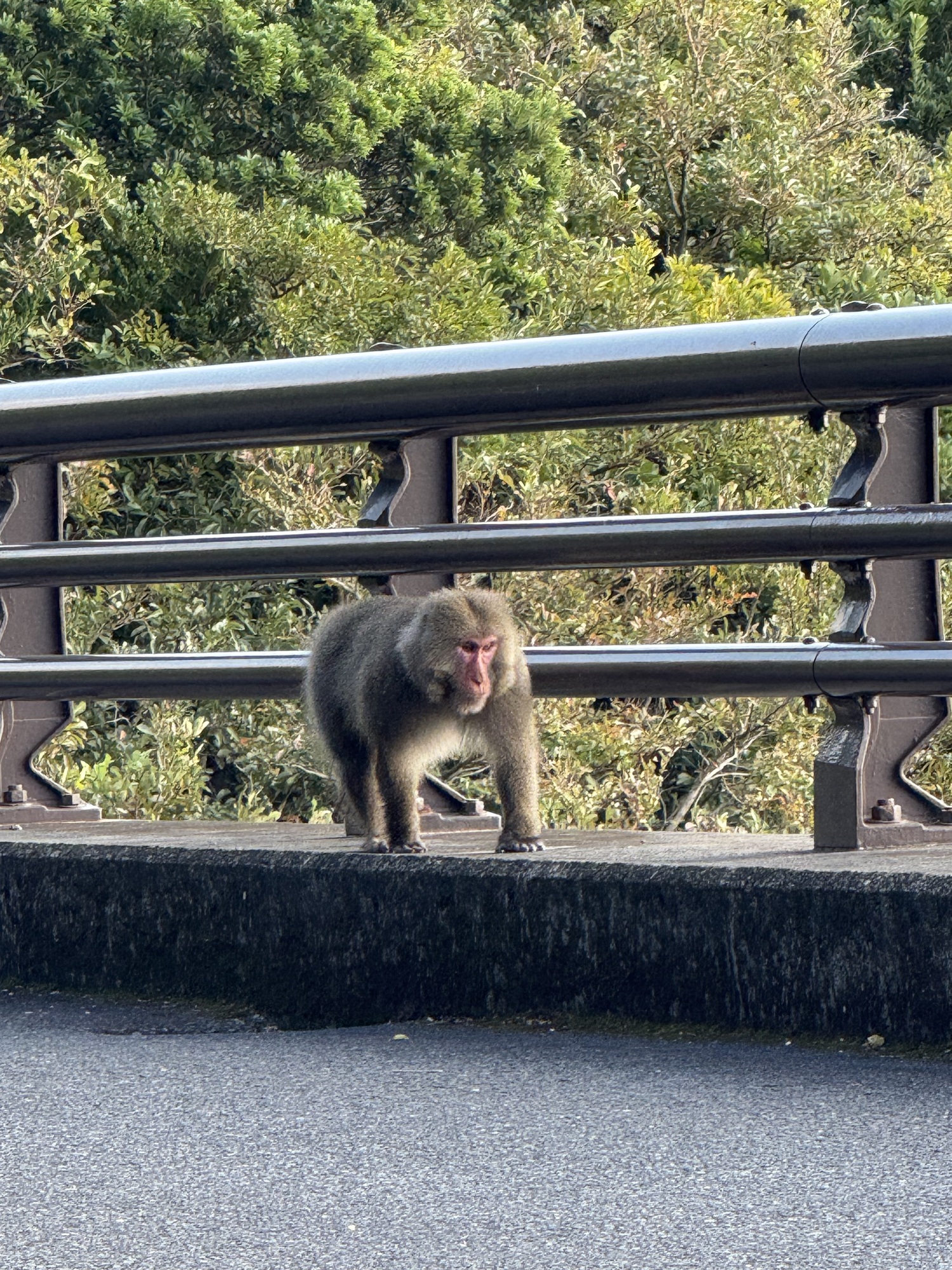
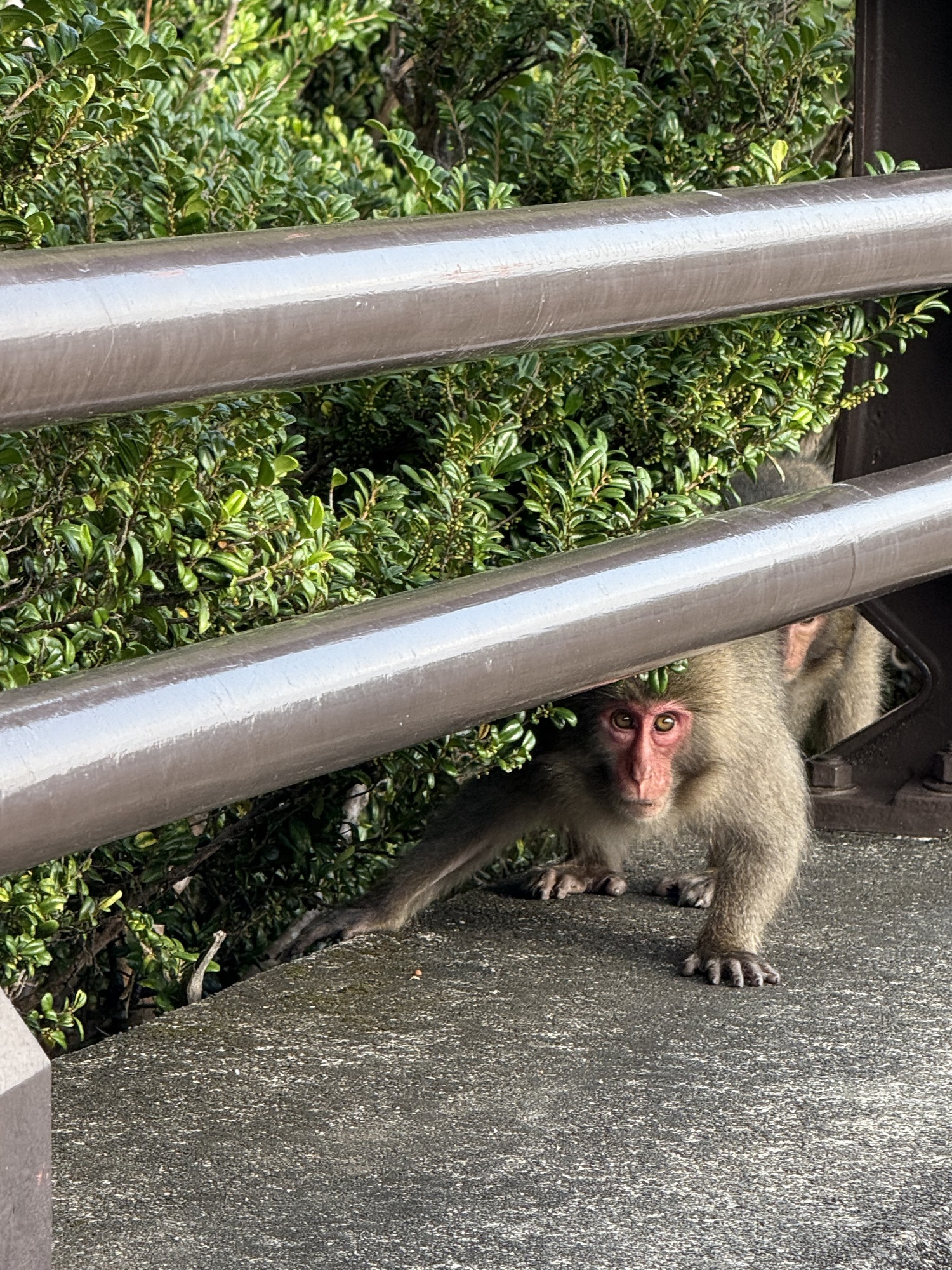
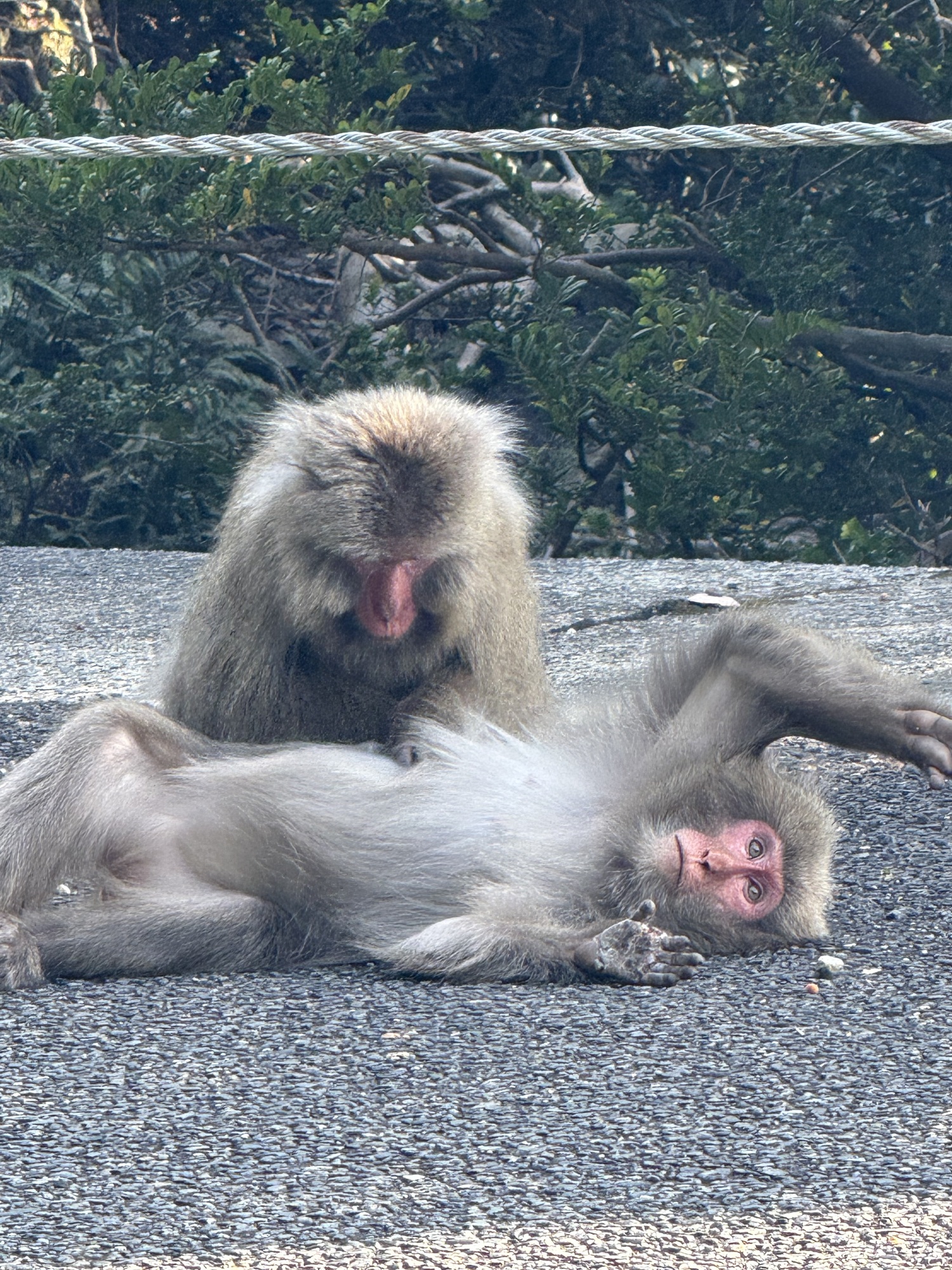
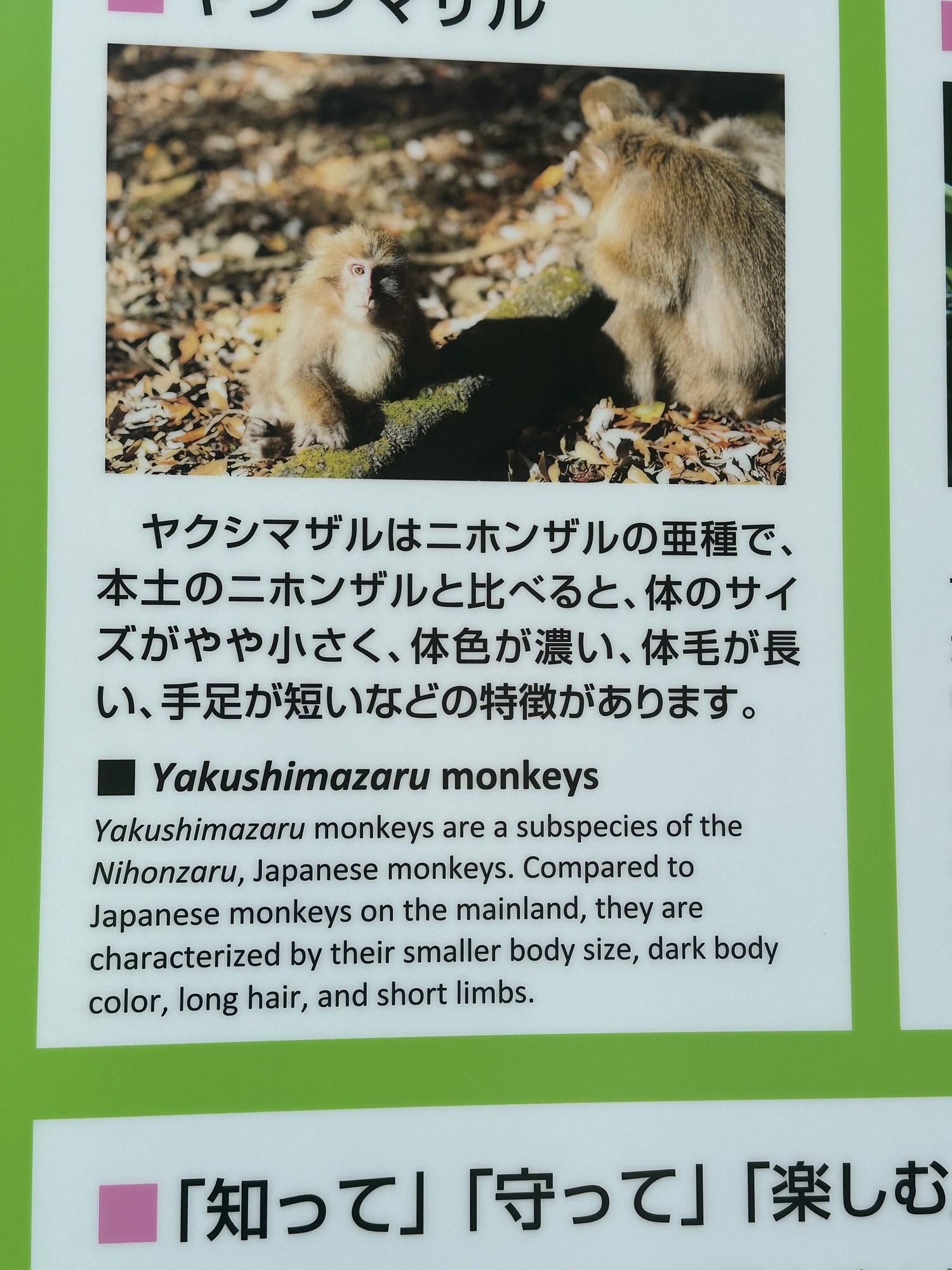
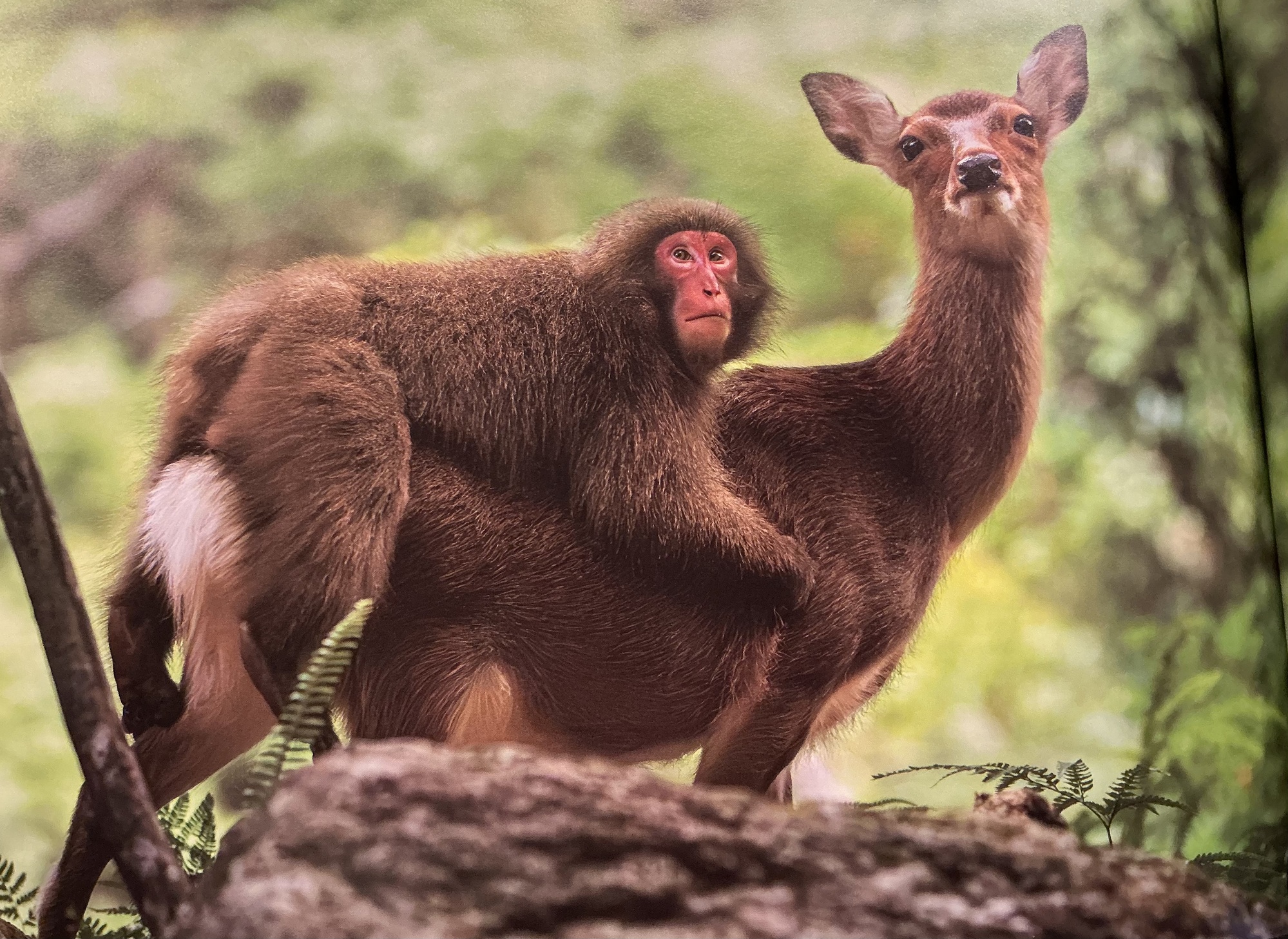
The Yakushima Macaque monkey is a unique subspecies of the Japanese Macaque that lives only Yakushima. Compared to native macaques of mainland Japan, the Yaku monkeys ares smaller. They are known to enjoy hot springs, especially when the weather turns cold. It was an amazing experience watching the monkeys doing their own thing without them being interested in what we were doing.
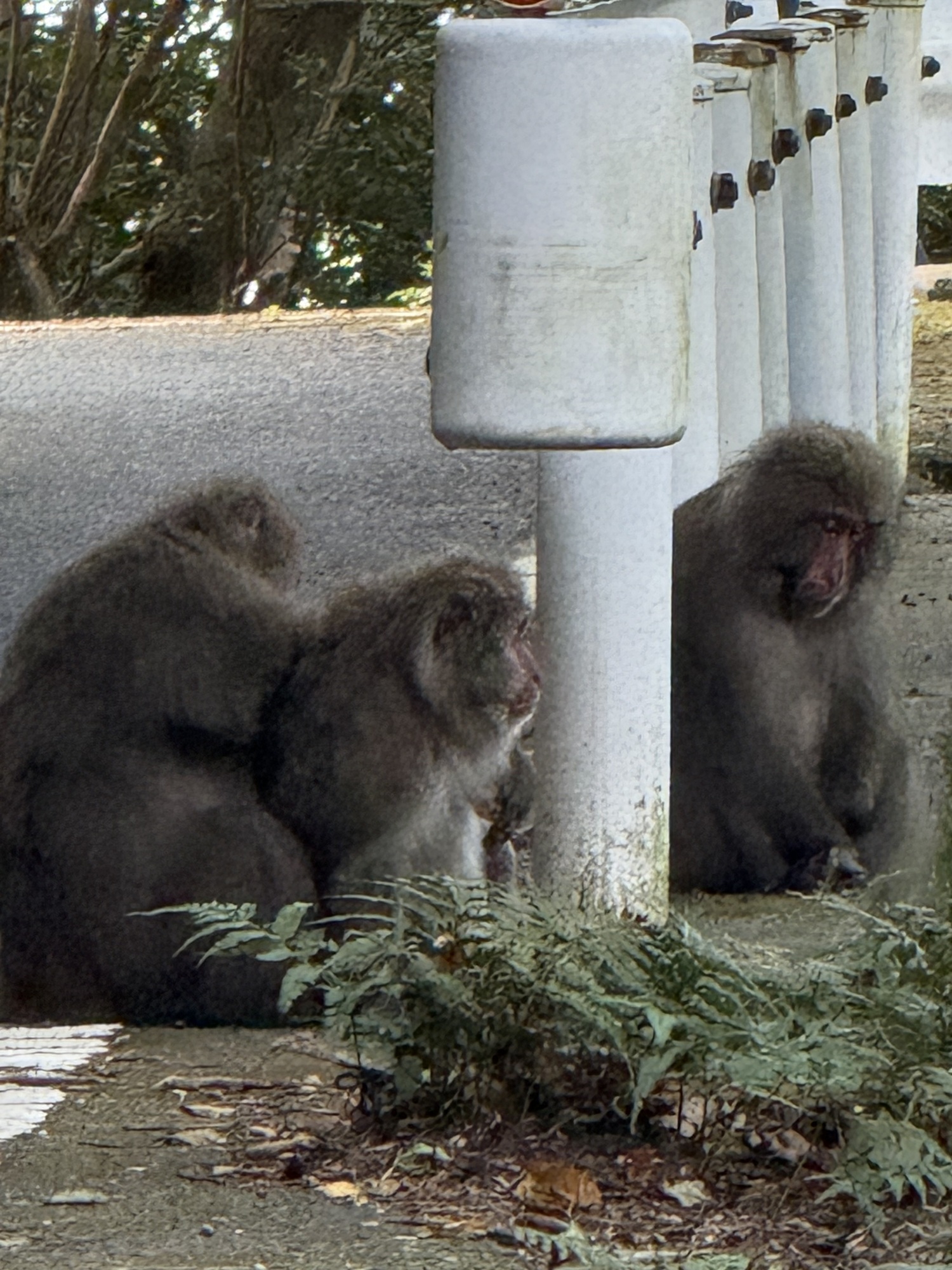
Curiosity on both sides…for us and them. Thankfully, we are a curiosity but their focus is primarily on their day, grooming each other, eating etc.
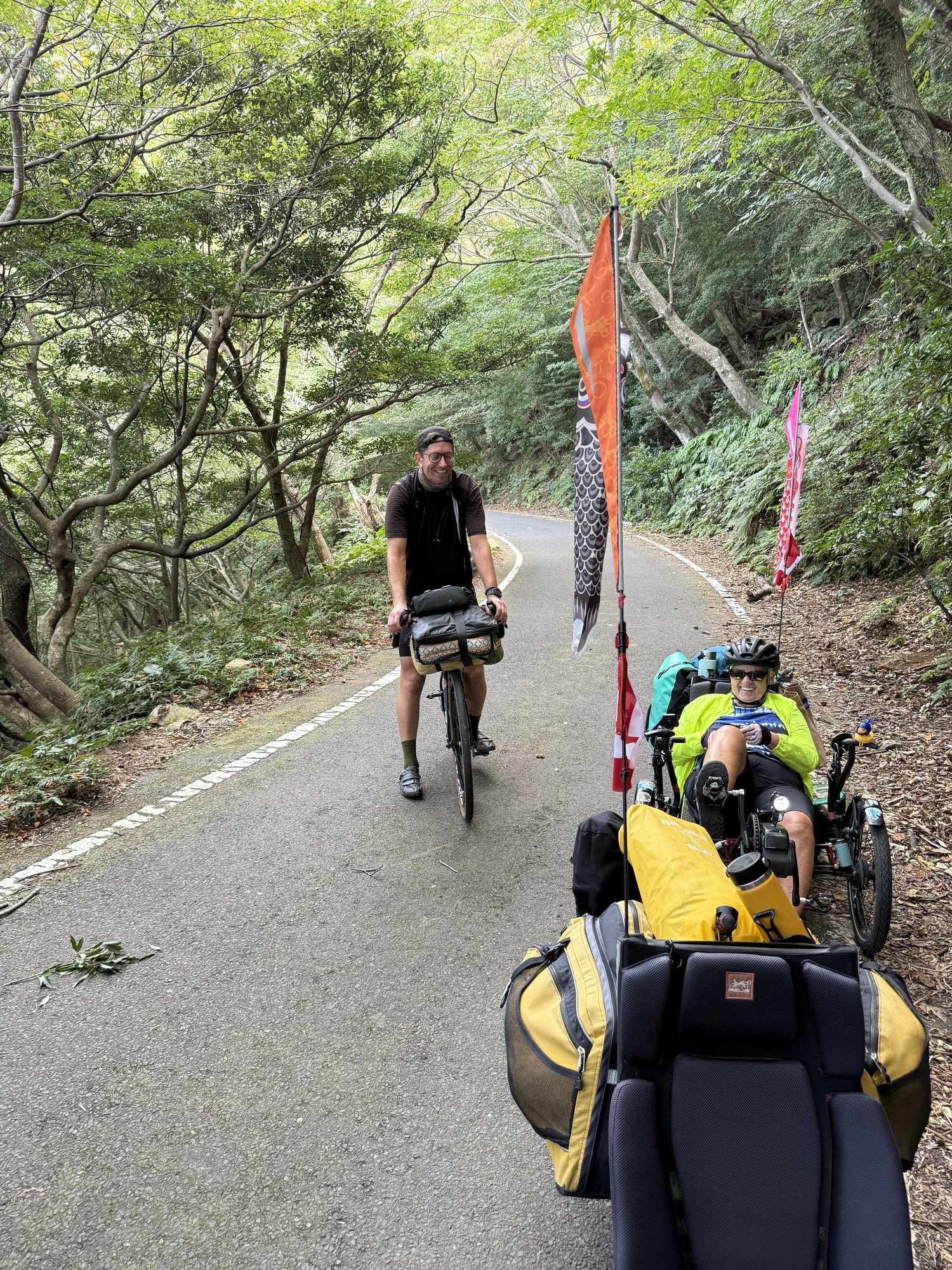
How nice, we met another cyclist touring Yakushima. He is from Australia. We seem to be a rare breed in these parts. You can see how narrow the road is. How do cars manage here?
We are in an area where we are seeing larger family groups of monkeys along the road taking advantage of the sun. We come around a corner, see a crowd of them and just stop. Always fascinating.
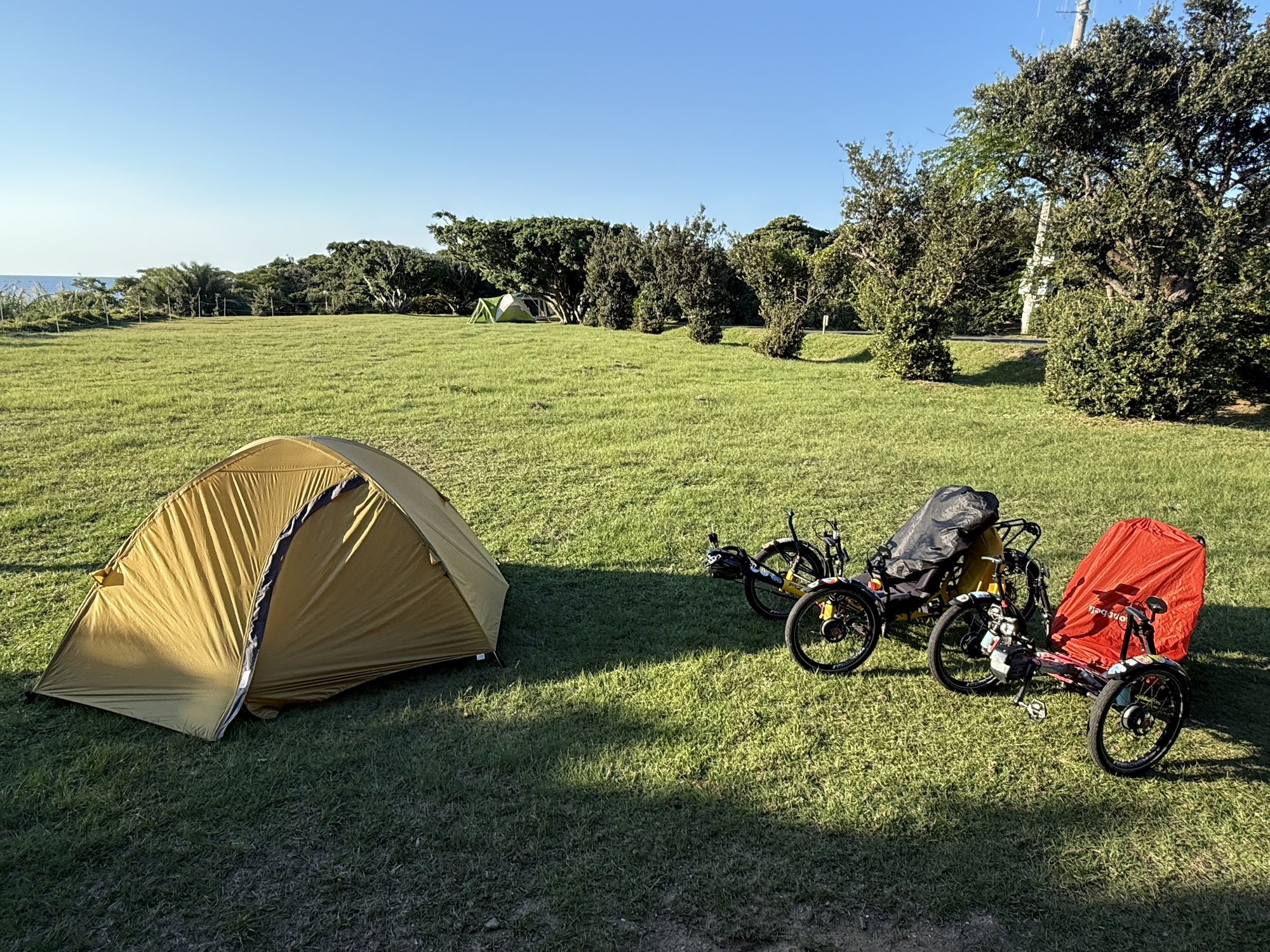
Well, we could not find a place to stay. We explored the nearby town and most were closed or out of business. We have returned to the campground that is closed and will camp here. It is a beautiful spot but there is no electricity…which means no charging of our devices or our batteries. We are both out of battery charge as we didn’t charge them last night as we thought today was not a great distance. We neglected to consider the constant hills. Oh well, we’ll figure something out. It is critical as I know I can’t go far without pedal assist with the state of my knees.